
India Travel Budget Calculator
Estimate Your India Trip Cost
Based on current 2026 pricing data from the article
Your Estimated Costs
Save $150+ by: Staying 2km inland, eating at local eateries, and using trains instead of flights.
How Your Costs Compare
For a 7-day trip:
Five years ago, a week in Goa cost less than $200 - meals, beach shacks, a basic room, and local transport included. Today, that same week? Around $450. Not because India suddenly became expensive, but because the world caught up. The question isn’t whether India is still cheap to visit - it’s whether you’re still paying the old prices.
Beaches Still Cost Less Than Almost Anywhere Else
India’s coastline stretches over 7,500 kilometers. From the golden sands of Gokarna to the calm waters of Puri, the beaches haven’t changed. But the prices around them have. A simple coconut water still costs 30 rupees - about 35 cents. A basic beach shack meal of fish curry and rice? 150 rupees, or $1.80. A clean, air-conditioned room in a mid-range resort in Varkala? $35 a night. Compare that to Bali, where the same room runs $75, or Thailand, where it’s $60. India still wins.
But here’s the catch: the cheapest spots are no longer the most popular ones. In Goa, Anjuna and Baga are now packed with international tourists, boutique hotels, and $15 cocktails. If you want real value, head south. Marari Beach in Kerala? You can get a private cottage with a sea view for $25 a night, and fresh seafood delivered to your door for under $5. The locals still eat there. You should too.
What’s Gone Up - And Why
Flight prices have jumped. A round-trip from Dubai to Mumbai used to be $300. Now it’s $550. From London? $700 instead of $450. That’s not India’s fault - it’s global fuel costs, currency shifts, and demand. But it changes the math. If you’re flying from the U.S. or Europe, your biggest cost isn’t the hotel - it’s the ticket.
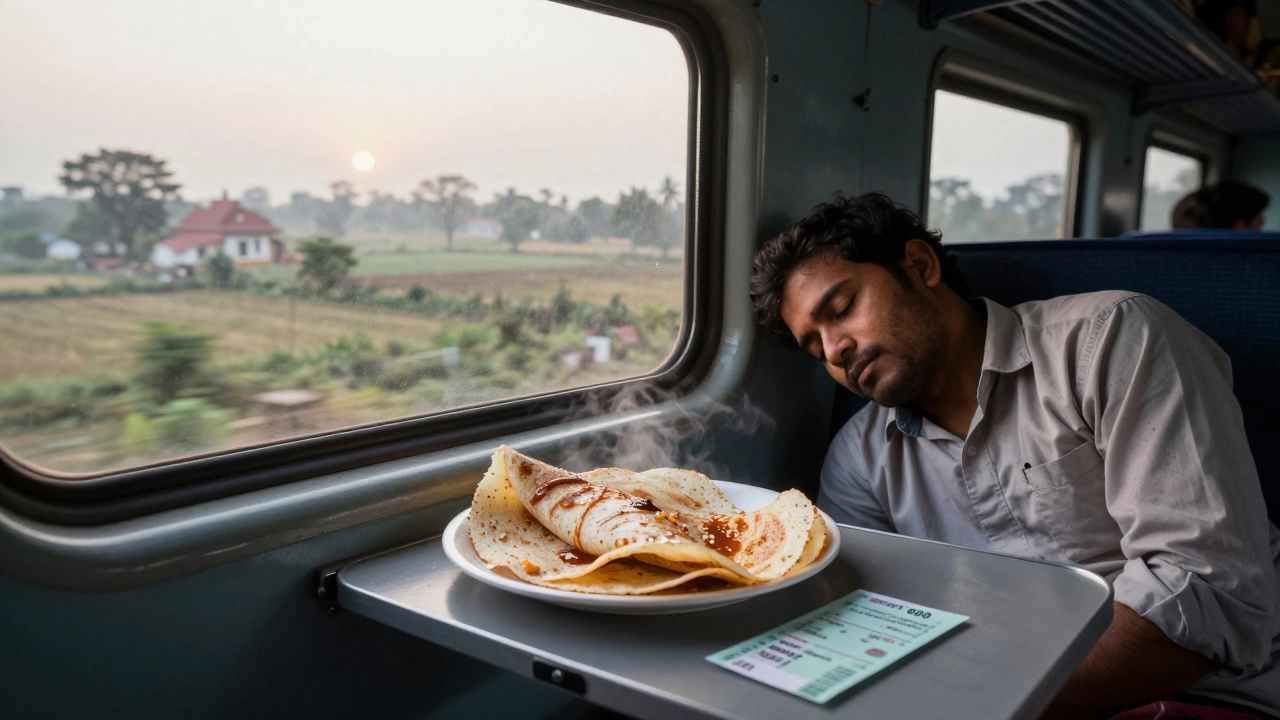
Domestic flights? They’ve gotten pricier too. A one-way from Kochi to Goa used to be 2,500 rupees. Now it’s 5,500. That’s still cheaper than flying between U.S. cities, but it’s no longer a bargain. Train travel? Still unbeatable. A sleeper class ticket from Mumbai to Goa (12 hours) costs 600 rupees - $7. You get a bed, AC, and a meal. No other country offers that.
Accommodation has split into two worlds. The budget hostels and homestays? Still at 2019 prices. But the ones with Instagram-worthy pools and rooftop bars? Those have doubled. A 4-star beach resort in Kovalam that charged $60 in 2020 now charges $120. It’s not inflation - it’s branding. You’re paying for the view, not the room.
Food: Still the Bargain
Food is where India still feels like a steal. A street vendor’s vada pav? 20 rupees. A plate of dosa with sambar in a local eatery? 80 rupees. A full meal at a seafood restaurant in Chennai with grilled prawns, rice, and mango lassi? 300 rupees - $3.50. You can eat like a king for under $10 a day.
But avoid tourist traps. Restaurants near the main beach entrance in Goa? They’ll charge you $15 for a pizza that tastes like cardboard. Walk 10 minutes inland. Find a place where the staff speaks only Malayalam or Konkani. That’s where the real food is. And it’s still dirt cheap.

Transport: Trains Win, Taxis Lose
Auto-rickshaws are still cheap - but only if you know how to use them. In Pondicherry, a 3-kilometer ride used to be 50 rupees. Now it’s 80. Still, that’s $1. Not bad. But drivers now expect you to use the app. Ola and Uber are everywhere. They’re reliable, transparent, and often cheaper than haggling.
For longer trips, trains are still the smart choice. A 24-hour journey from Chennai to Kolkata in AC 3-tier? 1,800 rupees - $21. You get a bed, meals, and a window seat. No other country lets you cross half a continent for less than $25. Buses? They’ve gotten more comfortable, but prices have crept up. A 10-hour bus from Bangalore to Mysore now costs 800 rupees - up from 500. Still, it’s a third of what you’d pay in Europe.
Hidden Costs You Can’t Ignore
There’s a new expense no one talks about: service fees. Many hotels now add a 10% service charge. Restaurants add 5-8%. Even beach shacks sometimes tack on a ‘cleaning fee’. It’s not illegal - it’s just new. Always check the final bill. That $30 dinner? With fees, it’s $36.
Then there’s the visa. India’s e-visa is $100 for most nationalities. It’s non-refundable and valid for five years. That’s a big upfront cost, but it spreads out. If you’re planning multiple trips, it’s worth it. If you’re only going once? Factor it in. It’s not cheap - but it’s not the biggest part of your budget.
Who Still Finds India Cheap?
If you’re traveling slow, eating local, and avoiding tourist zones - yes, India is still cheap. Backpackers who stay in homestays, ride trains, and eat at roadside stalls can easily spend $25 a day. That’s less than a hotel in a small U.S. town.
If you want luxury - pools, spas, private drivers, fine dining - then India costs what any luxury destination costs. A 7-night stay at a 5-star beach resort in Kerala? $1,200. That’s not cheap. But it’s still $400 less than the same stay in the Maldives.
And if you’re Indian? You’ve always known this. The real cost of living hasn’t changed. The rupee hasn’t collapsed. The prices you see in guidebooks? Those are for tourists. Locals still pay 1/10th of that for the same services.
How to Travel Cheap in India Today
- Travel off-season: Avoid December-January. Go in February or September. Beaches are quieter, prices drop 30-40%.
- Book trains early: Use the IRCTC app. Book 120 days ahead. Sleeper class is always available. AC classes sell out fast.
- Stay inland: Skip the beachfront bungalows. Stay 2 kilometers back. You’ll save 50% and get the same view.
- Eat where locals eat: Look for places with no English menu. No pictures on the wall. Just a chalkboard and a pot of rice.
- Use apps: Ola for cabs, Zomato for food, MakeMyTrip for flights. No haggling. No surprises.
Is It Worth It?
India isn’t the cheapest country on Earth anymore. But it’s still one of the most valuable. You can swim in the Arabian Sea for free. You can eat fresh lobster for $3. You can sleep in a cottage with a sea breeze for $20. You can ride a train across three states for less than a Uber ride in New York.
The real question isn’t whether India is cheap. It’s whether you’re willing to travel like a local. If you are - yes, it’s still cheap. If you want everything handed to you on a silver platter - then no, it’s not. But you wouldn’t be in India anyway. You’d be somewhere else.
Is India still affordable for budget travelers in 2026?
Yes, but only if you avoid tourist hotspots and stick to local options. Budget travelers who eat at street stalls, ride trains, and stay in homestays can still manage $25-$35 a day. The real savings come from skipping luxury resorts and tourist restaurants.
Which Indian beaches are the cheapest to visit?
Marari Beach in Kerala, Gokarna in Karnataka, and Kovalam’s quieter side are the most affordable. You’ll find clean rooms for under $30, seafood meals for $5, and no crowds. Avoid Goa’s Baga and Anjuna if you want low prices - they’ve become expensive by design.
Are flights to India more expensive now?
Yes. Round-trip flights from the U.S. or Europe now average $700-$900, up from $450-$600 five years ago. But once you land, daily costs remain low. The ticket is your biggest expense - not your stay or food.
Is it cheaper to travel by train or flight within India?
Trains are far cheaper. A 12-hour journey from Mumbai to Goa in AC 3-tier costs $20. A flight? $100. Even a 24-hour trip across southern India in sleeper class is under $30. Trains are the smart way to move around India on a budget.
Should I avoid India because prices have gone up?
No. Prices have gone up, but so have expectations. India still offers more value per dollar than almost any beach destination. You’re not paying for luxury - you’re paying for culture, food, and space. If you adjust your expectations, India remains one of the best travel bargains on the planet.