Indian Chicken Cultural Compatibility Tool
This tool helps travelers understand when chicken is culturally appropriate to eat in India. Based on the article, chicken is the most consumed meat globally and the only meat that crosses religious and regional divides in India.
Result: Cultural Compatibility
When you think about food in India, you might picture spicy curries, fragrant biryanis, or buttery naan. But here’s something most travelers don’t realize: chicken is the most eaten meat in the world-and it’s also the most common meat in Indian households, even in places where beef and pork are avoided. This isn’t just a dietary fact. It’s a cultural thread that ties together festivals, street food, family dinners, and religious traditions across the country.
Why Chicken Leads the World
Over 98 billion chickens are raised and eaten globally every year. That’s more than all other meats combined. Why? It’s cheap, fast to raise, and versatile. A single chicken can feed a family of four for less than $5 in most developing countries. In India, where over 60% of the population lives in rural areas, that affordability matters. You won’t find a village fair, wedding, or temple offering without some form of chicken-whether it’s grilled, curry-style, or fried.
Compare that to beef. In India, cows are sacred to Hindus, who make up 80% of the population. Eating beef isn’t just taboo-it’s legally banned in 20 of 28 states. Pork? It’s avoided by Muslims, who account for about 15% of India’s population. That leaves chicken as the only meat that crosses religious, economic, and regional lines without friction.
Chicken in Indian Culture: More Than Just Food
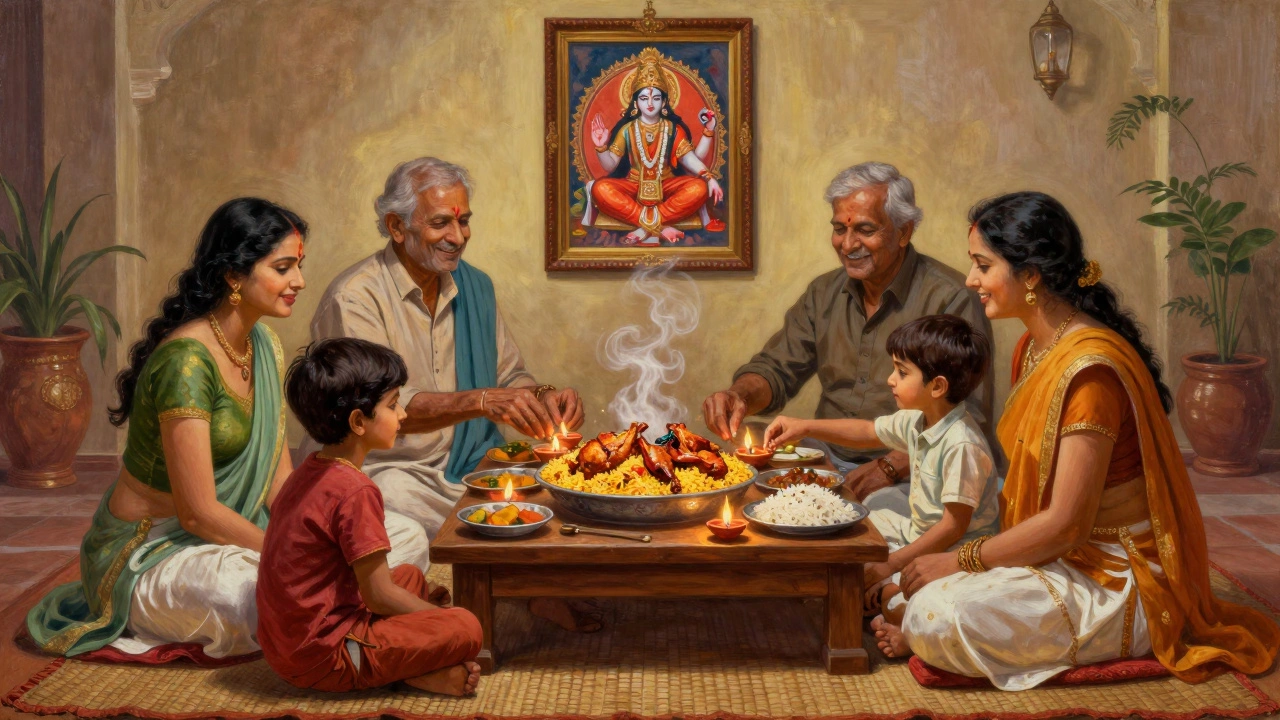
In Kerala, chicken curry is served with appam during Onam. In Punjab, tandoori chicken is the star of Diwali feasts. In Bengal, chicken shorshe is a must-have during Durga Puja. Even in vegetarian households, chicken is often cooked separately for non-vegetarian guests during festivals. It’s the one meat that doesn’t cause conflict.
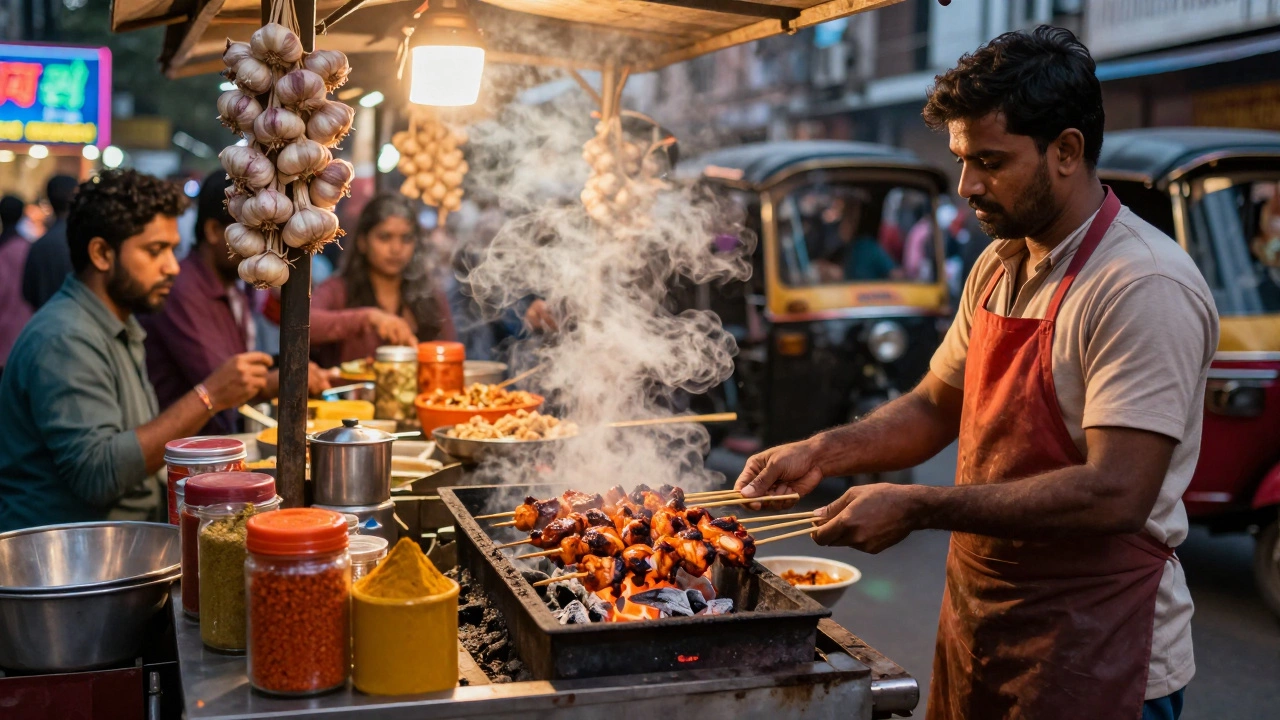
Street food vendors across India rely on chicken. From Delhi’s butter chicken rolls to Mumbai’s chicken tikka sandwiches, it’s the backbone of urban snacking. You’ll find it in roadside stalls, railway platforms, and airport food courts. Tourists who expect only vegetarian options are often surprised-and delighted-by how widespread chicken dishes are.
And it’s not just about taste. Chicken is tied to rituals. In many tribal communities in Odisha and Jharkhand, chicken sacrifice is part of ancestral worship. In Christian communities in Goa and Northeast India, roast chicken is central to Christmas meals. Even in urban apartments, chicken is the go-to for birthday parties because it’s easy to order, share, and eat with your hands.
How This Shapes Cultural Tourism
If you’re planning a cultural tour of India, skipping chicken means missing half the story. Food isn’t just fuel here-it’s identity. When you eat chicken biryani in Hyderabad, you’re tasting Mughal history. When you try chicken 65 in Chennai, you’re tasting 1960s restaurant innovation. When you share a plate of grilled chicken with a family in Rajasthan, you’re participating in a tradition older than modern borders.
Many cultural tours focus on temples, palaces, and textiles. But the real connection happens at the table. Tour operators who offer cooking classes with local women in Varanasi or home dinners in Pondicherry know this. The most memorable experiences aren’t the ones where you see something-you’re the ones where you taste something.
Even vegan travelers often end up eating chicken when they’re invited to a home. It’s not about persuasion-it’s about hospitality. Refusing chicken can feel like refusing connection. That’s why many guides now include a simple phrase in their pre-trip briefings: “You don’t have to eat meat, but don’t say no to chicken unless you’re ready to explain why.”
The Hidden Numbers Behind the Plate
India consumes over 5 million metric tons of chicken annually. That’s more than the entire beef and pork consumption of the United States. And it’s growing. In the last five years, chicken consumption in India has risen by 37%, mostly because of rising incomes and urbanization. More young Indians are moving to cities, living alone, and choosing quick, affordable meals. Chicken delivers.
Supermarkets now sell pre-marinated chicken packs labeled “for biryani,” “for curry,” or “for tandoor.” Even in remote towns, you’ll find frozen chicken in local kirana stores. It’s the only meat that’s universally accessible, regardless of income level or religion.
What This Means for Travelers
If you’re visiting India and want to understand its culture through food, start with chicken. Don’t assume vegetarian means “no meat.” Ask where the chicken comes from. Who cooked it? Why is it served this way? You’ll learn more about caste, migration, and trade in one meal than you will in a museum.
Try this: Visit a local market in Jaipur or Lucknow and watch how chicken is sold. It’s not in plastic trays like in Western supermarkets. It’s hanging from hooks, still feathered, with the head and feet on. Vendors clean it right in front of you. The smell is strong. The process is raw. And that’s the point-it’s real. This isn’t industrial food. It’s personal. Every chicken has a story.
When you eat it, you’re not just eating protein. You’re eating centuries of adaptation. You’re eating the quiet compromise between faith and hunger. You’re eating the future of a nation that feeds its people without tearing itself apart.
What Else Is Eaten in India? (And Why It Matters)
Yes, there’s goat meat-especially in the south and among Muslim communities. Lamb is common in Kashmir and Hyderabad. Fish dominates coastal areas like Kerala and West Bengal. But none of these match chicken’s reach.
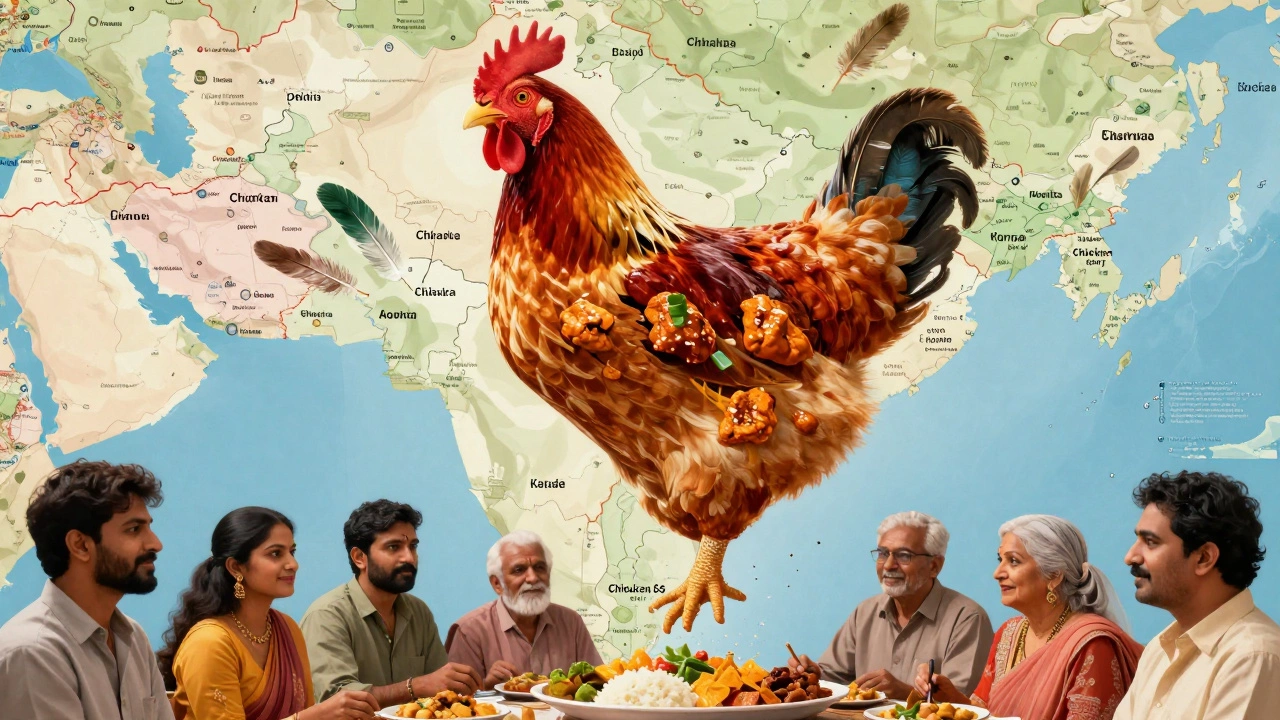
Beef? Not in most of the country. Pork? Limited to Christian and tribal regions. Duck? Only in the northeast. Chicken is the only meat that appears in every state, every language, every religion. It doesn’t divide. It unites.
That’s why, when you ask locals what they eat on a daily basis, the answer is almost always the same: “Rice and chicken.” Not “rice and dal.” Not “roti and paneer.” Chicken. Always chicken.
Final Thought: The Meat That Binds
India is a country of contradictions. It’s ancient and modern. Spiritual and commercial. Divided by language and united by flavor. And in the middle of it all, there’s chicken. Not as a symbol of power or wealth. But as a quiet, everyday solution to a big problem: how to feed billions without breaking tradition.
If you want to understand India beyond the Taj Mahal and the Himalayas, sit down with a plate of chicken curry. Don’t think about religion. Don’t think about politics. Just taste it. Then ask: Why does this work? The answer might surprise you.