India's Architecture Comparison Tool
Discover which Indian city has the most beautiful architecture based on functional design, historical depth, and cultural integration—not just aesthetics. The article explains that beauty in architecture is about how well it works for people and environment, not just how it looks.
Rate each criterion's importance for architectural beauty (0-100)
Results
Results will appear here after calculation
When you think of India’s architecture, you don’t just see buildings-you see stories carved in stone, painted in color, and shaped by centuries of empires, trade, and faith. But if you had to pick one city with the most beautiful architecture in India, the answer isn’t just about looks. It’s about depth, diversity, and how deeply the design is woven into daily life.
Jaipur: The Pink City That Still Breathes History
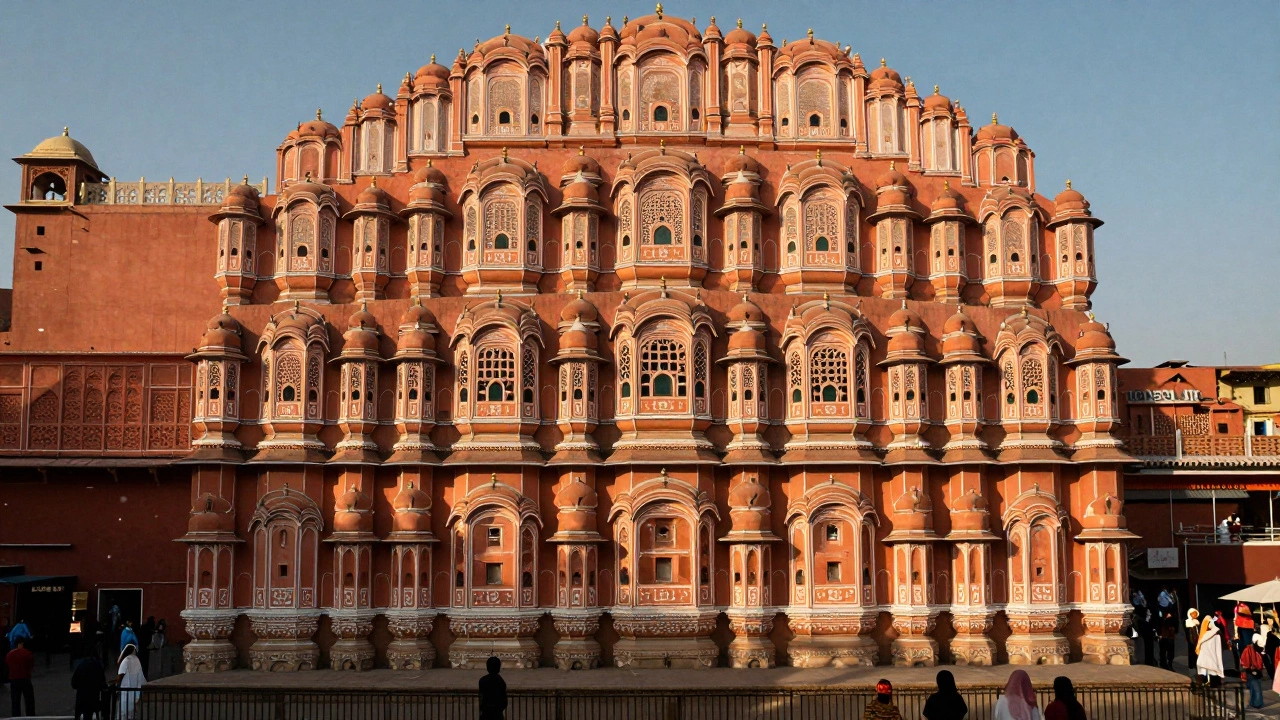
Jaipur doesn’t just look like a painting-it feels like one. Founded in 1727 by Maharaja Jai Singh II, the entire city was planned with geometric precision, following Vastu Shastra principles. The walls, gates, and streets aren’t random; they align with the stars and the sun. The Hawa Mahal, with its 953 small windows, wasn’t built for views. It was designed so royal women could watch street festivals without being seen. That’s not decoration-that’s culture engineered into stone.
The City Palace still holds royal artifacts, but its blend of Rajasthani and Mughal styles is what draws architects from around the world. The Jantar Mantar observatory? It’s not a museum piece. It’s a working 18th-century instrument made of marble and brass that still measures time with startling accuracy. Jaipur’s architecture doesn’t sit still. It still functions.
Agra: Where Love Became Stone
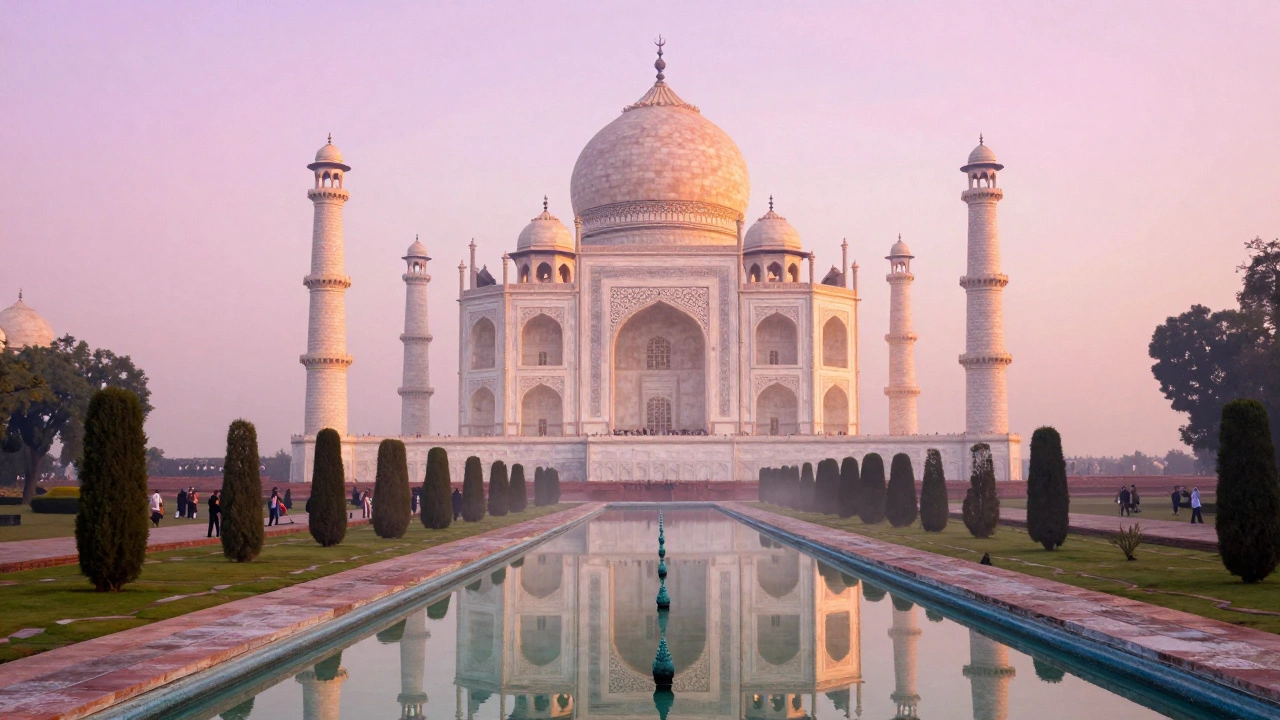
If you’ve seen the Taj Mahal in photos, you think you know it. But standing in front of it at sunrise, when the marble turns from white to pink to gold, you realize no photo captures the scale. It took 20,000 workers 22 years to build. The white Makrana marble was brought from 400 kilometers away. The inlay work uses over 28 types of semi-precious stones-lapis lazuli from Afghanistan, turquoise from Tibet, jade from China. This isn’t just a tomb. It’s a global artifact built with materials from across Asia.
But Agra isn’t just the Taj. The Agra Fort, built by Akbar and later modified by Shah Jahan, is a massive red sandstone complex with palaces, mosques, and gardens. Inside, the Diwan-i-Khas has a ceiling so intricately carved that light filters through like stained glass. The city’s architecture isn’t just beautiful-it’s a record of power, grief, and ambition layered over 400 years.
Khajuraho: Sculptures That Speak Without Words
Most people think of temples as quiet places of worship. Khajuraho’s temples from the 10th century turn that idea upside down. The walls are covered in over 600 sculptures-gods, dancers, animals, and yes, intimate scenes. But these aren’t just erotic art. They’re part of a spiritual philosophy that saw pleasure as a path to enlightenment. The Kandariya Mahadeva Temple alone has 87 sculptures of women in different poses, each representing a stage of life.
The craftsmanship is insane. Carvers didn’t use power tools. They worked with chisels and hammers on sandstone, shaping figures so detailed you can see the folds in fabric and the muscles in limbs. The temples survived invasions, neglect, and time because they were built on high platforms, hidden in forests. When rediscovered in 1838, British officers thought they were hallucinating.
Varanasi: Architecture That Lives in the River
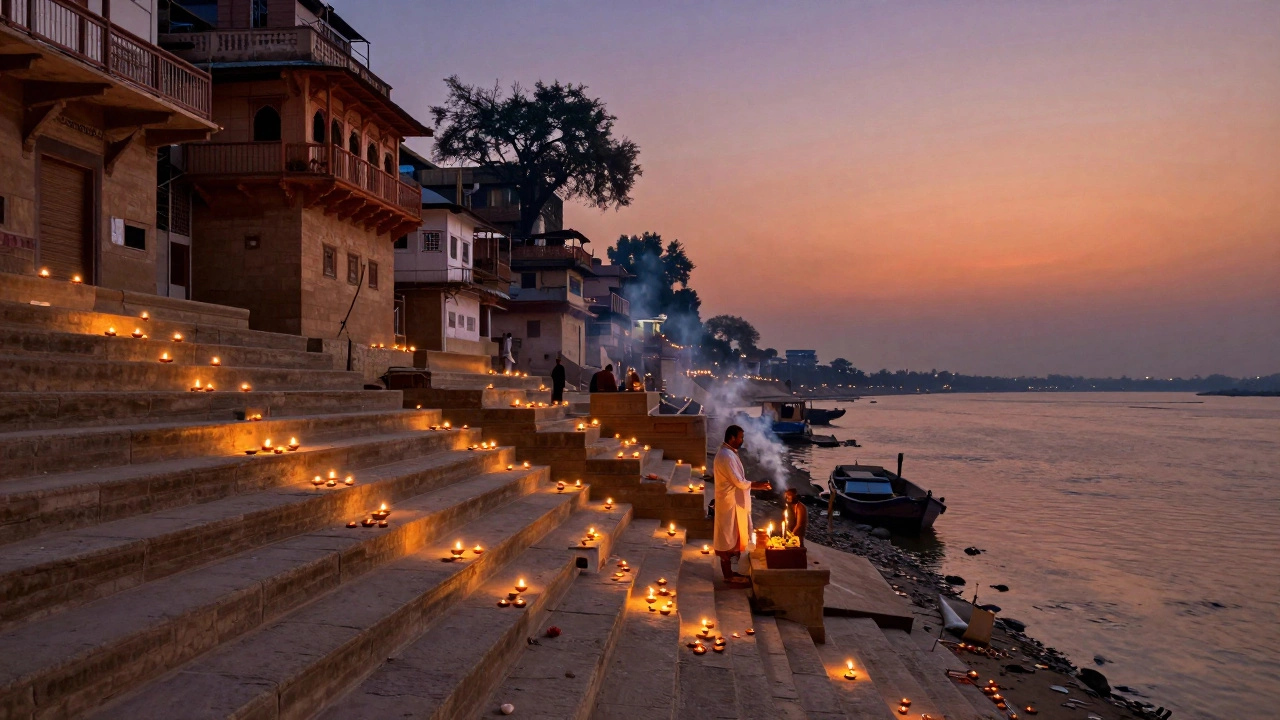
Varanasi isn’t about grand palaces or marble domes. It’s about ghats-stone steps leading down to the Ganges. There are 84 of them, each built over centuries by different rulers. The Dashashwamedh Ghat, with its 14 arches, was rebuilt by the Peshwas in the 18th century. The Manikarnika Ghat is where cremations happen daily. The architecture here isn’t meant to impress tourists. It’s meant to serve a rhythm older than empires.
The narrow alleys between the ghats are lined with centuries-old homes with wooden balconies, carved pillars, and terracotta tiles. Many of these houses are still lived in by families who’ve resided there for generations. The buildings lean, crack, and fade-but they’re never torn down. In Varanasi, architecture isn’t preserved. It’s lived in.
Chandigarh: The Modernist Miracle
Most people don’t expect modern architecture to be part of India’s heritage. But Chandigarh, planned by Le Corbusier in the 1950s, changed everything. After Partition, Punjab needed a new capital. Instead of copying old styles, India chose bold, functional design. The Capitol Complex-with the High Court, Secretariat, and Assembly Building-is made of raw concrete, sharp angles, and sweeping curves. The Open Hand Monument, a symbol of peace, stands as the city’s centerpiece.
Le Corbusier didn’t just design buildings. He designed the whole city: wide roads, green belts, sector-based neighborhoods, and public spaces meant for people, not cars. The Rock Garden, made from recycled industrial waste, shows how creativity can turn trash into art. Chandigarh proves that beauty doesn’t have to come from the past. It can be made in the present.
Why Jaipur Wins-But Not Just Because of the Taj
So which city has the most beautiful architecture in India? Many will say Agra because of the Taj Mahal. And yes, it’s breathtaking. But beauty isn’t just one monument. It’s a whole city that still works the way it was meant to.
Jaipur has the Taj’s elegance, the Khajuraho’s detail, the Varanasi’s continuity, and the Chandigarh’s innovation-all in one place. You can walk from a 300-year-old stepwell to a modern art gallery in 20 minutes. The pink walls aren’t just for show. They were painted with terracotta and lime to repel insects and keep homes cool. Every detail has a purpose.
Other cities have stunning buildings. Jaipur has a living, breathing architectural ecosystem. It’s not frozen in time. It’s evolving-while still honoring every layer of its past.
What Makes Architecture Beautiful? It’s Not Just Looks
Beautiful architecture doesn’t mean it’s ornate or expensive. It means it’s honest. It responds to climate, culture, and community.
- In Jaipur, the thick walls and jharokhas (overhanging balconies) keep interiors cool in 45°C heat.
- In Khajuraho, the elevated platforms protect temples from monsoon floods.
- In Varanasi, the ghats are built to handle thousands of people daily without collapsing.
- In Chandigarh, the concrete structures use natural ventilation to cut electricity use by 60%.
Beauty is in how well it works-not just how it looks.
Where to Go If You Only Have One Day
If you’re short on time, here’s what to prioritize:
- Start at Jantar Mantar in Jaipur at sunrise-watch the shadows move across the instruments.
- Walk the Pink City walls to Amer Fort-climb the ramparts and look back at the city below.
- Visit the City Palace museum-don’t miss the mirror room with its 18th-century glasswork.
- End at a rooftop café in Johari Bazaar as the sun sets and the pink walls glow.
You won’t need to go anywhere else. Jaipur holds the full spectrum of India’s architectural soul.
Is the Taj Mahal the most beautiful building in India?
The Taj Mahal is undoubtedly one of the most famous and visually stunning buildings in India. But beauty in architecture isn’t just about one monument. The Taj is a single masterpiece, while cities like Jaipur offer hundreds of structures that work together as a living, breathing system. The Taj moves you. Jaipur makes you understand how architecture shapes daily life over centuries.
Are there other cities in India with great architecture?
Absolutely. Agra has the Red Fort and Mehtab Bagh. Khajuraho’s temples are unmatched in sculptural detail. Varanasi’s ghats are a spiritual architecture unlike anywhere else. Chandigarh brings modernist brilliance. But few cities combine Mughal, Rajput, colonial, and contemporary styles as seamlessly as Jaipur-making it the most complete example of India’s architectural journey.
Why is Jaipur called the Pink City?
In 1876, the city was painted pink to welcome Prince Albert, the future King Edward VII. Pink was chosen because it symbolized hospitality in Rajasthani culture. The tradition stuck. Today, the municipal code requires all buildings in the old city to maintain the pink hue. It’s not just a color-it’s a law, a cultural promise, and a visual identity that’s lasted over 140 years.
Can you visit all these architectural sites in one trip?
Yes, but not in one day. Jaipur is a great base-it’s well-connected by road and rail to Agra (2.5 hours), Khajuraho (8 hours), and Varanasi (12 hours). For a focused trip, spend 3 days in Jaipur, then take a train to Agra for 2 days. Skip Khajuraho and Varanasi unless you have a full week. Chandigarh is best visited separately-it’s in the north and has a totally different vibe.
Is photography allowed in all these heritage sites?
Most sites allow photography for personal use, but some restrict flash or tripods. The Taj Mahal bans commercial photography without a permit. Inside the City Palace in Jaipur, photography is free unless you’re using a drone or professional gear. Always check signs or ask at the ticket counter. Some temples, like in Khajuraho, prohibit photos inside the inner sanctum out of respect.
What to Do Next
If you’re planning a trip, start with Jaipur. Book a heritage hotel in the old city-places like Rambagh Palace or Alsisar Haveli let you sleep in restored 18th-century mansions. Walk the streets early in the morning before the crowds. Talk to shopkeepers-they’ll tell you which buildings were restored by royal families and which were saved by local communities.
Don’t rush. Sit on a stepwell ledge. Watch the light change on a carved jali screen. Listen to the call to prayer echo off sandstone walls. That’s when you’ll understand why Jaipur isn’t just beautiful-it’s alive.