When people say "the heart of USA," they’re not talking about politics, money, or pop culture. They’re talking about a quiet town in the middle of nowhere - a place where the land rolls gently, cornfields stretch forever, and the clock ticks a little slower. That place is Kansas, specifically the town of Leavenworth - no, wait, that’s not right. Let’s clear this up.
It’s Not Kansas City - It’s Smith Center
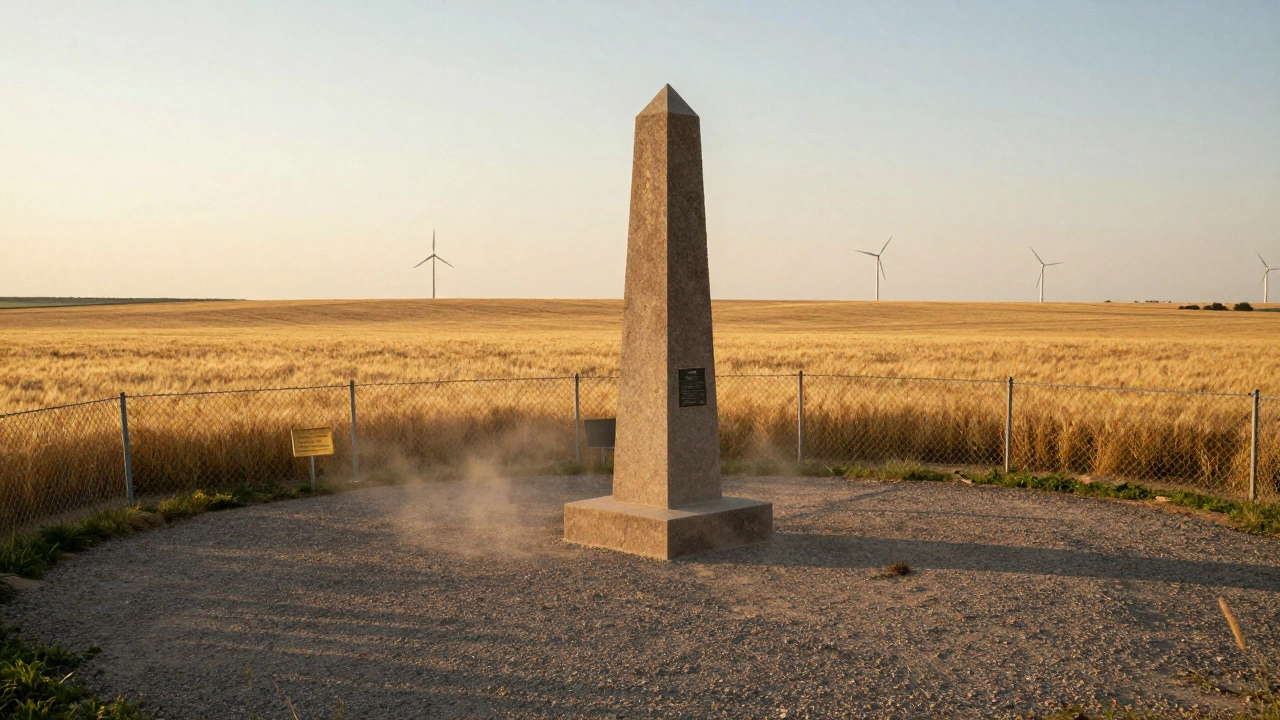
Many assume the "heart of America" is a big city. Chicago? St. Louis? Columbus? Nope. The actual geographic center of the contiguous United States is a small, unmarked spot in Smith Center, Kansas. In 1918, the U.S. Coast and Geodetic Survey calculated it using weighted maps and early surveying tech. The point? Latitude 39°50′N, Longitude 98°35′W. It sits on a farm, about 100 miles west of Salina, surrounded by wheat and wind turbines.You won’t find a tourist trap here. No giant heart-shaped sign. No gift shop selling "I Heart USA" t-shirts. Just a simple stone monument, placed in 1920, and a plaque that says: "Geographic Center of the Contiguous United States." Locals know it. Tourists rarely do.
Why Does This Matter?
This isn’t just geography trivia. The heart of a country isn’t always where the action is. It’s where the roots are. Smith Center doesn’t have skyscrapers, but it has something more lasting: stability. The U.S. Census Bureau says over 60% of Americans live within a 500-mile radius of this point. That means most people - whether they’re in New York, Texas, or Oregon - are closer to this quiet Kansas field than to any coast.Think about it: the first transcontinental railroad passed through here. The Oregon Trail cut nearby. The Dust Bowl hit hardest here. This land fed the nation during two world wars. When the country needed grain, it came from fields like these. When it needed soldiers, they came from towns like this one.
What Makes a Place the "Heart"?
Some say the heart of America is in the Midwest. Others point to Appalachia, or the Deep South. But the real answer lies in function, not feeling. The geographic center isn’t chosen for its beauty or history - it’s calculated with math. And math doesn’t lie.Compare it to the geographic center of India. That’s near Varanasi - a spiritual hub, not a statistical point. The U.S. doesn’t have a spiritual heart in the same way. It has a center of mass. And that center is rural, unglamorous, and deeply American.
It’s not about cities. It’s about land. About soil. About the quiet, hardworking people who keep the country running without ever asking for a spotlight.
Other Claims to the Title
You’ll hear different answers. Some say St. Louis because of the Gateway Arch - a symbol of westward expansion. Others say Chicago because of its railroads and factories. Indianapolis gets a nod for its central location and NASCAR culture. Omaha is home to Warren Buffett, who’s called it "the best place to live in America."But none of these are the actual center. The U.S. Geological Survey, the same group that mapped Everest and tracked tectonic plates, confirmed Smith Center’s spot in 1918. They remeasured it in 1924, again in 1959, and once more in 2000. Each time, the point didn’t move. The Earth shifted. The population moved. But the center? It stayed put.
What You’ll Find There Today
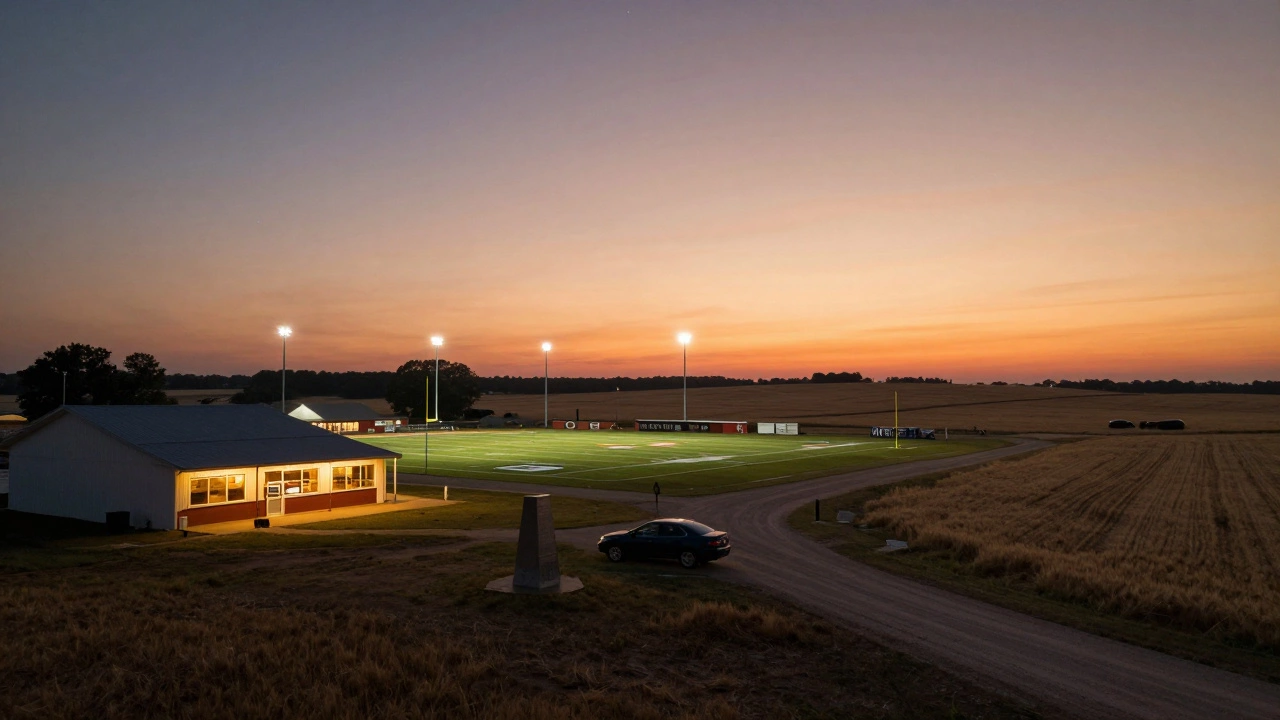
Smith Center has a population of under 2,000. The local diner serves pie with coffee for $3.50. The high school football team plays under Friday night lights. The town’s main attraction? That little stone monument, surrounded by a chain-link fence and a gravel path. Visitors leave notes, rocks, and sometimes flowers. One man from Florida drove 1,200 miles just to stand on it. He said, "I needed to feel like I was standing where the whole country begins."There’s no museum. No guided tour. No Wi-Fi hotspot. But there’s peace. And truth.
Why People Get It Wrong
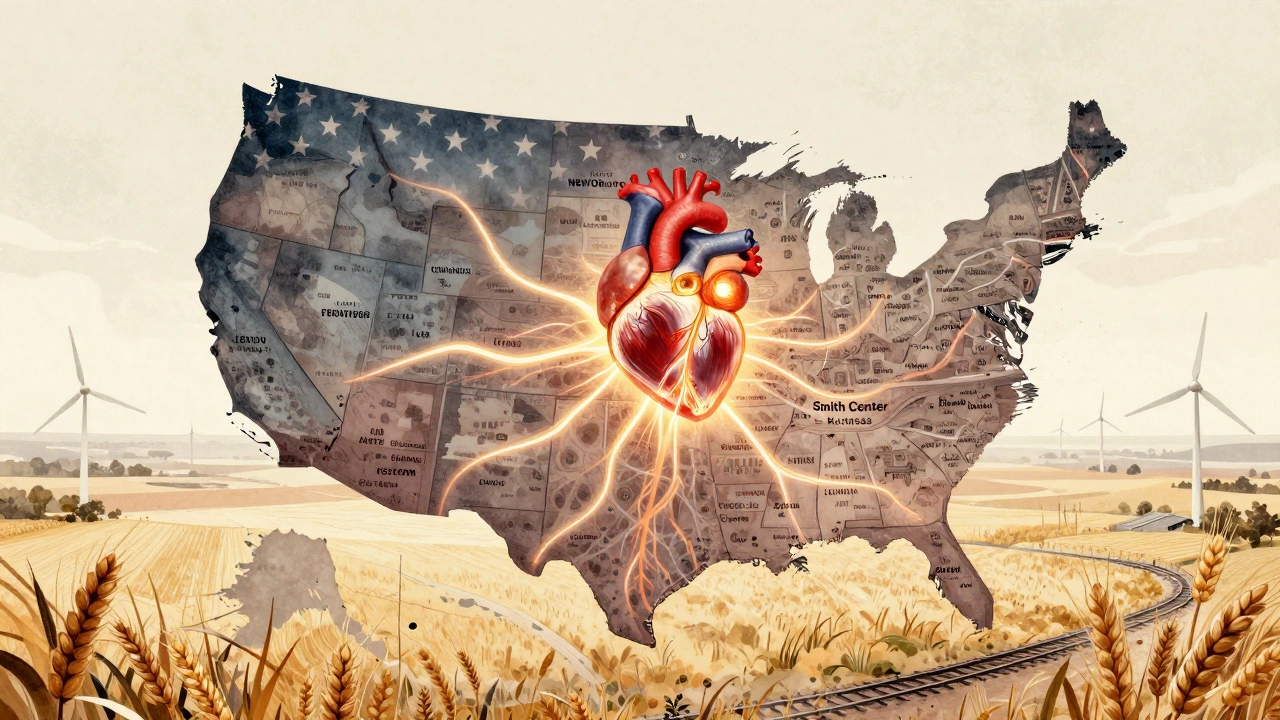
The confusion comes from mixing up "heart" with "hub." Big cities are hubs. They’re where things happen. But the heart? The heart is what keeps things alive. It doesn’t shout. It doesn’t advertise. It just beats.Think of the U.S. as a body. New York is the brain. Silicon Valley is the nervous system. The Gulf Coast is the lungs. But the heart? That’s the quiet, steady muscle in the middle - pumping grain, water, electricity, and values across the whole system.
Is There a Cultural Heart Too?
If you’re looking for the cultural heart, you might find it in Appalachia, where folk music still echoes in hollows. Or in the Black Belt of Alabama, where the civil rights movement was born. Or in the Navajo Nation, where ancient traditions outlasted empires.But those are emotional hearts. The geographic heart? That’s the one you can measure with GPS. And that one? It’s in Kansas. Not because it’s special. But because it’s exactly in the middle.
Why This Still Matters in 2026
In a world of polarized politics and digital noise, the geographic center of the U.S. is a reminder: we are all connected by land, not by ideology. The same rain falls on Smith Center and Seattle. The same wind blows through Kansas and Maine. The same roads carry trucks from coast to coast.When you stand on that stone in Smith Center, you’re not standing in a tourist spot. You’re standing in the literal center of a nation of 330 million people - each with their own story, their own struggles, their own dreams. And somehow, they all tie back to this quiet field.
That’s the real heart of the USA.
Is Kansas City the heart of the USA?
No. Kansas City is a major city on the border of Kansas and Missouri, but it’s not the geographic center. The actual center is in Smith Center, Kansas - a small town about 150 miles west. Kansas City is a hub for culture and transportation, but not the mathematical heart of the country.
Can you visit the geographic center of the USA?
Yes. The monument is located on private farmland, but it’s publicly accessible. There’s a dirt road off Highway 183, and a small parking area. Visitors are welcome to walk up and stand on the stone marker. No fees, no crowds, no lines. Just quiet reflection.
Why isn’t the center in a bigger city?
Because the geographic center is calculated using the shape and weight of the landmass, not population. Cities grow, populations shift, but the land stays the same. The center is based on the physical outline of the 48 contiguous states, not where people live.
Does Alaska or Hawaii change the center?
Yes - but only if you include them. The center of the entire United States, including Alaska and Hawaii, is in the Pacific Ocean near the Aleutian Islands. But when people say "heart of the USA," they almost always mean the contiguous 48 states. That’s the version everyone uses in maps, textbooks, and monuments.
Is there a monument or sign there?
Yes. A 12-foot tall stone obelisk, erected in 1920 by the U.S. Coast and Geodetic Survey, marks the spot. It’s surrounded by a low fence and has a brass plaque with the coordinates. Locals maintain it. Visitors leave small tokens - coins, notes, stones. It’s not flashy, but it’s real.
Next time someone asks you where the heart of the USA is, don’t say New York. Don’t say Chicago. Don’t even say Kansas City. Tell them about Smith Center. Tell them about the quiet stone in the middle of the wheat. That’s where the country’s pulse has always been.