Himalayan Trek Cost Calculator
The Himalayan Trek is India's longest walking trail at over 1,700 km. This calculator estimates costs for different sections based on the article's detailed cost breakdown.
Select Trek Sections
7-10 days • Best: May-June, Sept-Oct
8-12 days • Requires acclimatization
10-14 days • High-altitude desert
12-16 days • Tibetan Buddhist culture
14-18 days • Monsoon zone
20-25 days • Highest passes
Estimated Costs
Select sections to view costs
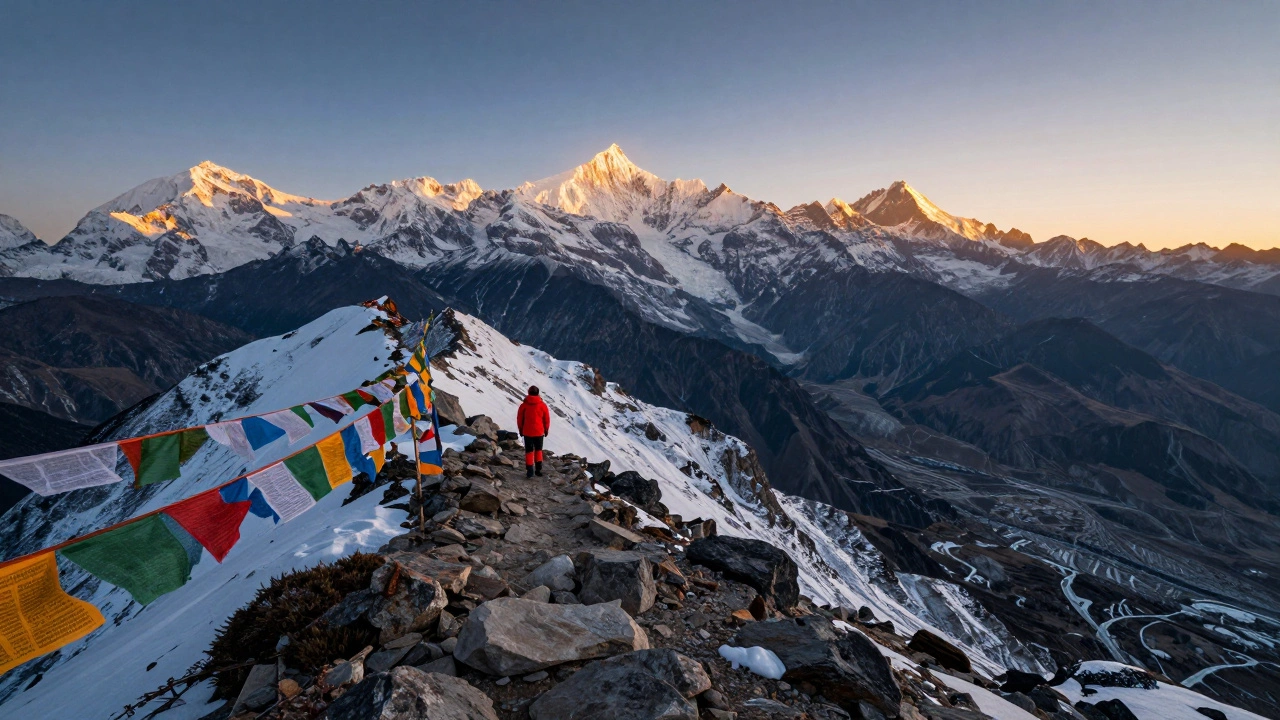
When people ask about the longest walking trail in India, they’re not just looking for a number on a map. They want to know where they can spend weeks under open skies, crossing rivers, climbing passes, and sleeping in villages that haven’t changed in centuries. The answer isn’t a single marked path like the Appalachian Trail. It’s a connected network - a journey that stretches over 1,700 kilometers across the Himalayas, from the western edge of Uttarakhand to the eastern border of Arunachal Pradesh. This isn’t just a hike. It’s the Himalayan Trek, unofficially called the Trans-Himalayan Trail.
What makes the Himalayan Trek the longest walking trail?
The Himalayan Trek isn’t one continuous road. It’s a chain of ancient trade routes, pilgrim paths, and military tracks stitched together by local guides and trekking organizations. It starts at Kedarnath in Uttarakhand, climbs over the Kedarnath Pass at 5,300 meters, crosses into Himachal Pradesh through the Baralacha La, then dips into Spiti Valley. From there, it heads northeast through Kinnaur, crosses the Sela Pass into Arunachal Pradesh, and ends near Tawang - right on the border with Bhutan.
Each section has its own name: the Kedarnath-Gangotri Link, the Spiti Circuit, the Tawang Loop. But together, they form the longest unbroken walking route in the country. No other trail in India comes close. The famous Valley of Flowers Trek? About 40 kilometers. The Roopkund Trek? 50. The Hampta Pass? 60. The Himalayan Trek is 30 times longer.
What sets it apart isn’t just distance. It’s elevation. You’ll walk through valleys at 2,500 meters and over peaks above 5,500. You’ll cross 17 major passes. You’ll walk past glaciers, prayer flags, monasteries older than Columbus, and villages where the only power comes from the sun and the wind.
Who walks this trail - and why?
Most people who attempt the full route are either serious trekkers with years of experience or local herders and traders. Pilgrims walk parts of it too - especially between Kedarnath and Badrinath. But the full route? Only about 200 people complete it each year. Why? Because it’s not just physically demanding. It’s logistically brutal.
You won’t find ATMs after Manali. There are no guesthouses every few kilometers. You’ll need to carry food, fuel, and medical supplies for weeks. Weather shifts fast. One day you’re in sunshine, the next you’re stuck in a snowstorm. Altitude sickness is real. People have died on this trail - not from accidents, but from underestimating it.
But those who make it say it changes them. One trekker from Bangalore told me, "I didn’t realize how loud silence could be until I spent three weeks without hearing a car engine." Another, a retired army officer from Pune, said, "I’ve seen war zones. This is the only place where I felt truly at peace - even when I was scared."
How is the trail broken down?
Most trekkers don’t do the whole thing at once. They break it into chunks. Here’s how the trail splits naturally:
- Kedarnath to Gangotri (180 km) - Sacred Hindu route. Steep climbs, glacial rivers, and ancient temples. Best walked in May-June or September-October.
- Gangotri to Baralacha La (220 km) - Enters Himachal. Rocky terrain, high-altitude lakes, and nomadic herders. Requires acclimatization stops.
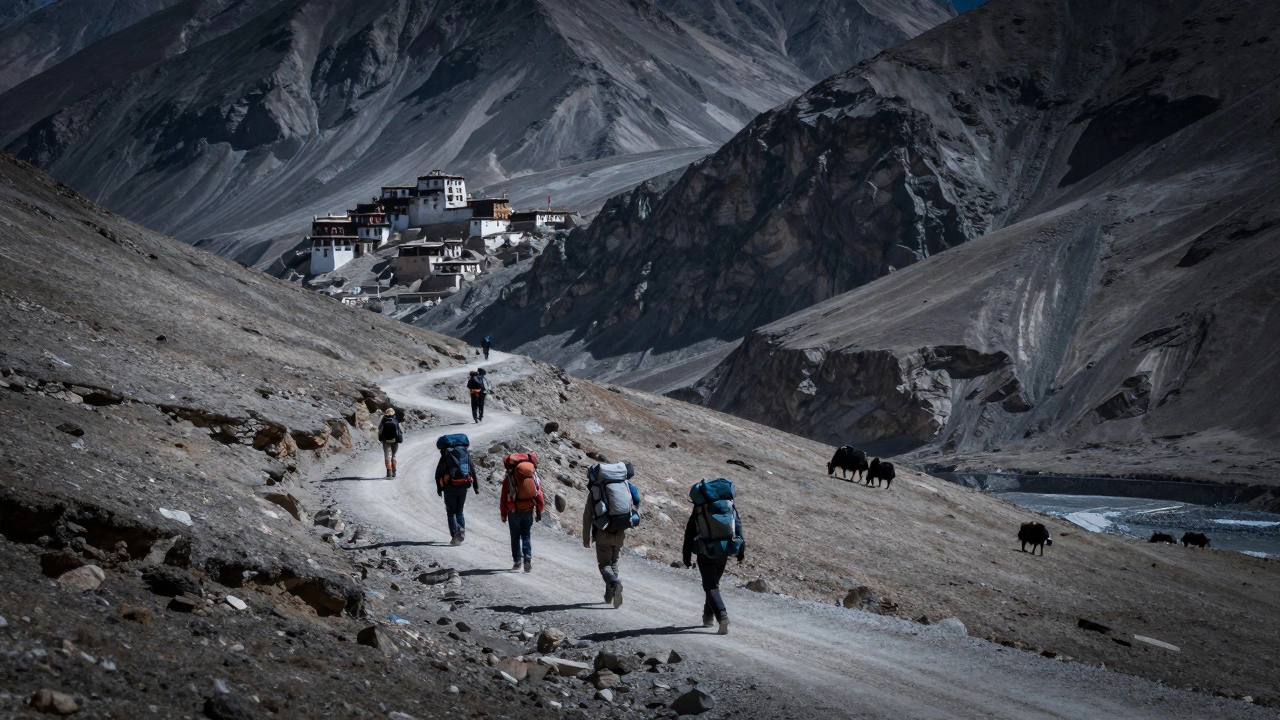
- Baralacha La to Spiti Valley (190 km) - Dry, lunar-like landscape. Cold desert. No trees. Just rocks, wind, and monasteries like Key and Dhankar.
- Spiti to Kinnaur (250 km) - Narrow valleys, terraced fields, and Tibetan Buddhist culture. The road here is barely wider than a donkey.
- Kinnaur to Sela Pass (310 km) - Enters Arunachal. Lush green hills, tribal villages, and the first signs of monsoon rain.
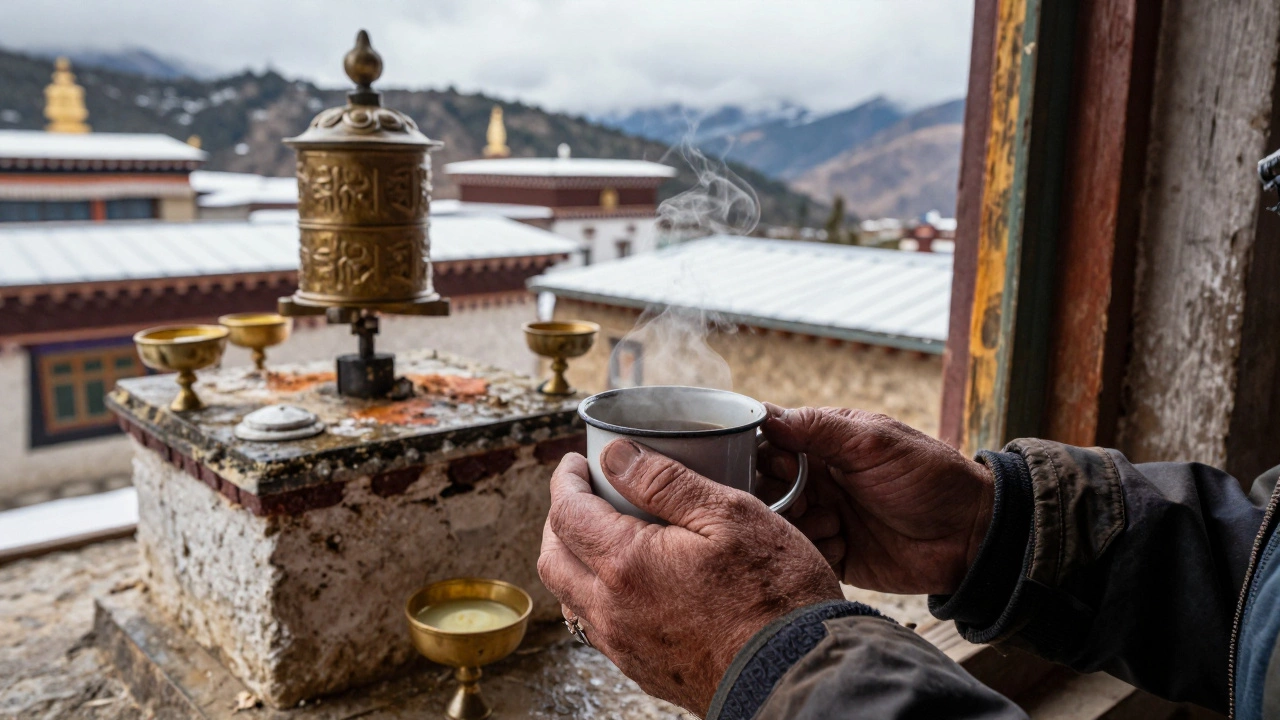
- Sela Pass to Tawang (550 km) - The final stretch. High passes, prayer wheels, and the Tawang Monastery - one of the largest in the world outside Tibet.
Each segment takes 7 to 14 days. Most people do one or two per year. Completing the whole thing takes 4 to 6 years if you’re doing it seasonally.
What do you need to prepare?
If you’re thinking of attempting even one section, here’s what you actually need - not the gear lists you see online, but what works on the ground:
- Permits - You need Inner Line Permits for Arunachal Pradesh. These take 15-20 days to process. No exceptions. No last-minute fixes.
- Shoes - Waterproof, broken-in mountaineering boots. Not hiking shoes. Not trail runners. Your feet will be wet for days. You need ankle support and grip that won’t fail on ice.
- Food - Carry high-calorie, non-perishable food. Nuts, dried meat, oatmeal, chocolate. Local shops sell rice and lentils, but not enough for a week. You’ll be carrying 3-5 kg extra per day.
- Altitude meds - Diamox helps. But don’t rely on it. Acclimatize properly. Rest for two days every 500 meters of gain.
- Communication - Satellite phone. No cell service after Manali. Solar charger. Batteries die fast in the cold.
- Guide - Not optional. Local guides know the safe crossings, the hidden springs, the villages that will take you in when the storm hits. Pay them well. They’re your lifeline.
When is the best time to go?
There are only two windows each year:
- May to June - Snow is melting. Rivers are high, but trails are clear. Wildflowers bloom in the lower valleys. This is peak season for pilgrims too.
- September to October - After the monsoon. Air is crisp. Skies are clear. Nights are cold, but days are warm. This is when most serious trekkers go.
Avoid July and August. Monsoon turns trails into mudslides. November to April? Too snowy. Many passes are closed. You’ll be walking on ice with no safety nets.
What’s the real cost?
Forget the $50-a-day tours you see on Instagram. This isn’t a package holiday. Here’s what it actually costs for a 30-day section:
| Item | Cost (INR) | Notes |
|---|---|---|
| Permits (Inner Line + Forest) | 2,500 | Non-negotiable. Must be arranged in advance. |
| Guide + Porter (30 days) | 45,000 | Includes food and basic gear. Pay more for experience. |
| Food & Supplies | 18,000 | Carry your own. Local food is limited. |
| Accommodation | 6,000 | Basic guesthouses or homestays. No luxury. |
| Equipment rental | 12,000 | Sleeping bag, tent, stove - if you don’t own them. |
| Transport to start / from end | 8,000 | From Delhi to Kedarnath, Tawang to Guwahati. |
| Emergency fund | 20,000 | Helicopter rescue, medical evacuation - don’t skip this. |
| Total | 111,500 | ~$1,350 USD |
This doesn’t include flights to India. That’s extra.
What you won’t find on this trail
No Wi-Fi. No Starbucks. No souvenir shops. No Instagram backdrops with perfect lighting. You won’t find a clean bathroom for days. You’ll share a room with goats in some villages. You’ll eat the same dal and rice for 10 days straight. You’ll get lost. You’ll cry. You’ll wonder why you’re doing this.
And then, on a clear morning at 5,000 meters, you’ll stand on a ridge and see the sun rise over a hundred snow peaks - all silent, all untouched. And you’ll understand why this trail, brutal and lonely as it is, is the longest - and most meaningful - walk in India.
What comes next?
If you’re serious about this trail, start small. Do the Kedarnath to Gangotri section first. Then Spiti. Then Kinnaur. Build your strength. Learn the rhythm. Talk to locals. Listen to their stories. The trail isn’t just about distance. It’s about connection - to the land, to the people, to yourself.
There are no medals for finishing. No certificates. Just your name, your boots, and the mountains that remember you.
Is the Himalayan Trek officially recognized as India’s longest walking trail?
No, it’s not officially designated by any government body. But it’s the longest continuous, walkable route across India’s Himalayas, spanning over 1,700 kilometers. Trekking associations and local guides have mapped it as a unified route, even if it’s not marked on official maps.
Can a beginner attempt any part of this trail?
Beginners can do short sections like Kedarnath to Gangotri (5-7 days) if they’re in good shape and go with a guide. But anything above 4,000 meters requires prior high-altitude experience. Never attempt the full trail without months of training.
Are there any guided tours for the full Himalayan Trek?
No commercial tour operator offers the full route. It’s too long, too remote, and too risky. Some agencies offer 10-15 day segments, but full completion requires self-planning, local guides, and months of logistics.
What’s the biggest danger on this trail?
Altitude sickness. Many trekkers push too hard too fast. Others underestimate weather changes. Snowstorms can hit without warning. The remoteness means rescue can take days. Proper acclimatization and a satellite phone are non-negotiable.
Do I need a visa to walk the Himalayan Trek?
You need an Indian visa to enter the country. For the trail, you’ll also need Inner Line Permits (ILP) for Arunachal Pradesh and additional permits for protected forest areas. These are not tourist visas - they’re regulated by local authorities and require advance applications.
Is it safe to walk alone on this trail?
Not recommended. Even experienced trekkers carry a guide. The terrain is unpredictable, villages are far apart, and communication is limited. A guide knows safe crossings, hidden water sources, and where to find shelter. Walking alone increases risk dramatically.
How do I get to the start of the trail?
The most common starting point is Kedarnath. Reach it by road to Gaurikund, then a 16-kilometer trek. You can fly to Dehradun or Haridwar, then take a bus or taxi. The final destination, Tawang, is accessible by road from Guwahati or Tezpur - but the drive takes 12+ hours on rough terrain.