Religious Institution Wealth Calculator
Compare Religious Institution Wealth
See how different religious institutions in India manage their wealth and what your donation could achieve.
Your Donation Amount
Wealth Comparison
Your Donation Impact
Enter your donation amount and select a religious institution to see the impact.
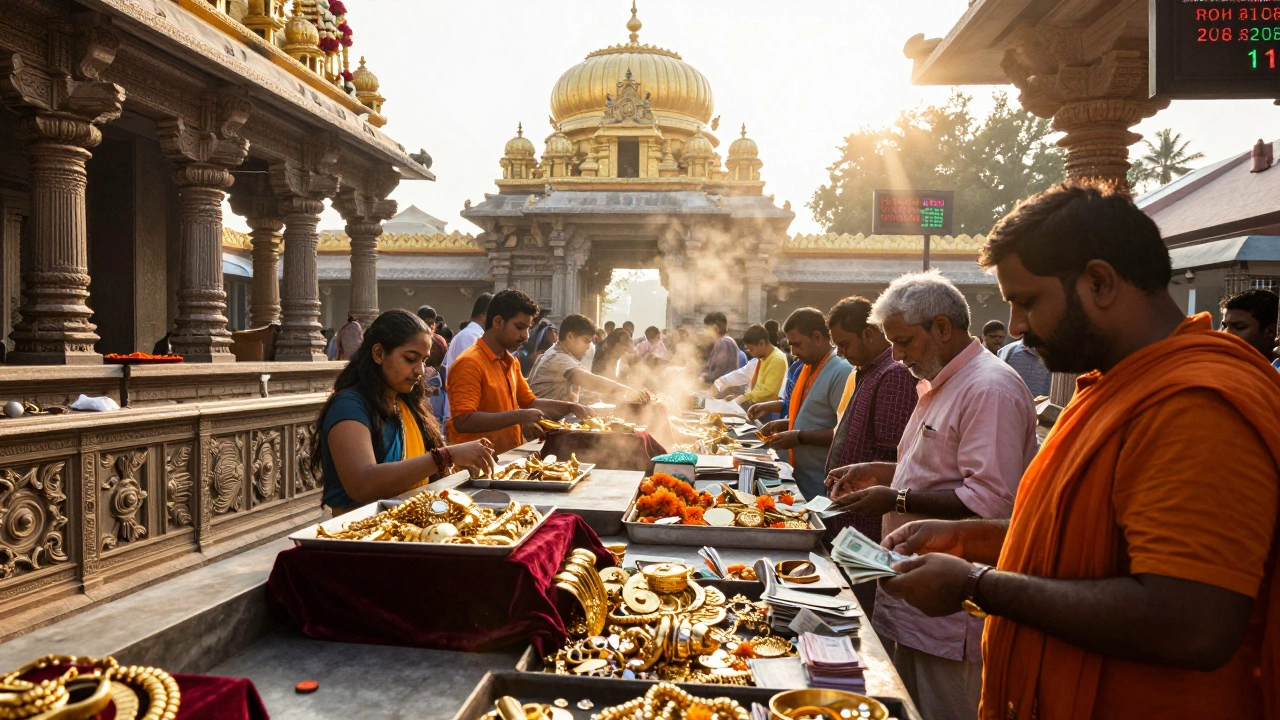
When you walk into the Tirupati Balaji temple, you see lines stretching for kilometers. Pilgrims offer gold jewelry, cash, and even cars. At the Golden Temple in Amritsar, thousands of visitors drop coins into the langar’s donation box every hour. These aren’t just religious sites-they’re financial powerhouses. So which religion in India holds the most wealth? The answer isn’t about belief-it’s about scale, history, and how money flows through sacred spaces.
The Hindu Temple Economy
Hindu temples in India control an estimated $40 billion in assets, according to the 2023 report by the Indian Institute of Public Finance. That’s more than the annual budget of several small countries. The Tirumala Tirupati Devasthanams (TTD), which runs the Venkateswara Temple in Andhra Pradesh, alone earned over $1.2 billion in 2024 from offerings, donations, and property rentals. They own over 1,200 properties across India and operate hospitals, schools, and even a TV channel.
Why so much money? Hindu temples have been centers of economic activity for over a thousand years. Kings and merchants donated land, gold, and jewels to gain spiritual merit. Over time, those gifts turned into vast real estate portfolios. In Tamil Nadu alone, more than 35,000 temples hold land worth over $15 billion. Many of these temples are legally registered as trusts, which means they’re exempt from taxes and can invest in stocks, bonds, and commercial real estate.
The Tirupati temple receives about 30,000 kg of gold annually from devotees. That’s enough to make 150 Olympic-sized gold bars. It’s not just gold-there’s cash, diamonds, and even luxury cars. One donor gave a Rolls-Royce in 2022. The temple sells some of these offerings to fund its operations. The money goes back into feeding millions of pilgrims, maintaining temples, and running charitable programs.
The Sikh Gurdwara Model
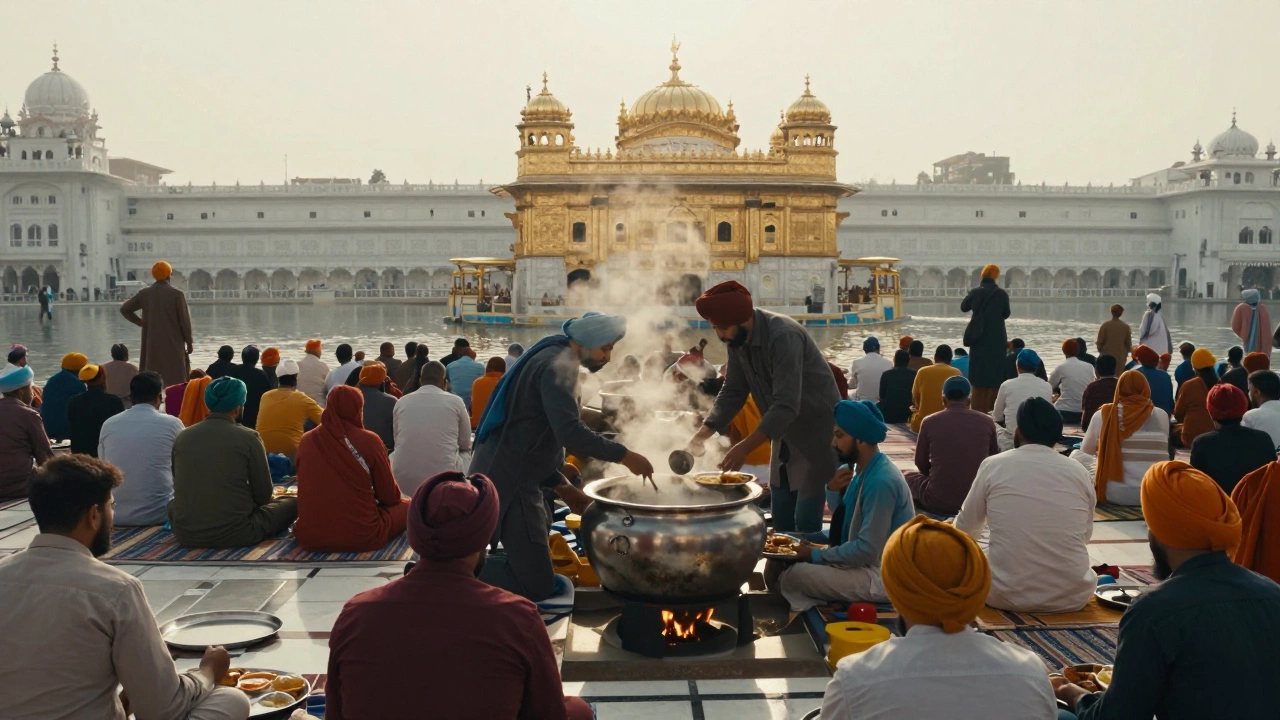
If Hindu temples are private trusts with royal histories, Sikh gurdwaras are community-run financial engines. The Golden Temple in Amritsar, managed by the Shiromani Gurdwara Parbandhak Committee (SGPC), handles over $300 million in annual donations. Unlike Hindu temples, gurdwaras don’t hoard wealth. Every rupee collected goes into the langar-the free kitchen that feeds 100,000 people daily, regardless of religion, caste, or income.
But behind the generosity is a massive financial structure. The SGPC owns over 1,200 gurdwaras, 200 schools, and a network of hospitals and publishing houses. They also manage land worth an estimated $8 billion. In 2023, the SGPC invested $200 million in renewable energy projects, solar farms, and water treatment plants. Their wealth isn’t hidden-it’s used to serve the public.
What makes Sikh gurdwaras unique is their transparency. Donations are recorded publicly. The langar’s budget is audited annually. There’s no personal gain. Even the head priest doesn’t receive a salary. The system is built on trust, not accumulation.
Christian Churches and Their Assets
Christian churches in India hold far less wealth than Hindu temples or Sikh gurdwaras-but they’re not poor. The Catholic Church alone owns over 1,800 schools, 600 hospitals, and dozens of seminaries. The Archdiocese of Mumbai controls property worth $1.5 billion, including prime real estate in South Mumbai. The St. Thomas Christians in Kerala have owned land since the 4th century, with some churches dating back to the arrival of St. Thomas the Apostle.
Unlike Hindu temples, most Christian churches in India are registered as nonprofit trusts. They rely on donations from congregations, overseas aid, and endowments. Their wealth isn’t flashy. There’s no gold-covered idols or car donations. Instead, their assets are institutions: schools that educate 2 million children annually, hospitals that treat 5 million patients, and orphanages that care for 300,000 kids.
They don’t advertise their wealth. But if you visit a church-run hospital in Bangalore or a school in Delhi, you’re seeing the result of centuries of accumulated resources.
Muslim Mosques and the Lack of Wealth Accumulation
India’s 200 million Muslims have over 300,000 mosques. Yet, the total wealth held by Islamic institutions is estimated at less than $500 million. Why the gap?
Islamic teachings discourage the accumulation of wealth in religious buildings. Mosques are meant to be simple, open spaces for prayer. Donations go directly to the poor, not to property or investments. The Wakf Board, which manages Muslim religious properties, holds about $4 billion in land, but much of it is underutilized or tied up in legal disputes.
There’s no equivalent to Tirupati’s gold offerings. No mosque in India has a million-dollar donation box. The focus is on zakat-mandatory charity-given directly to individuals in need. The wealth is distributed, not stored.
What About Jain Temples?
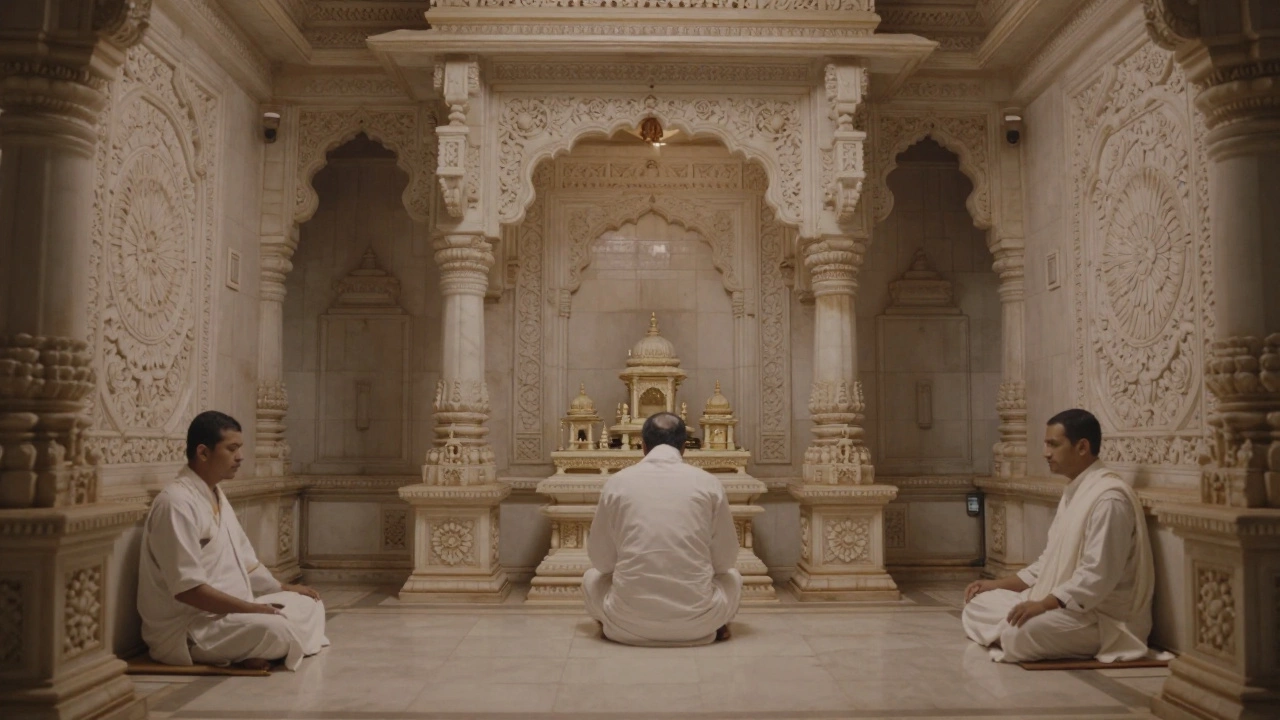
Jain temples are among the most ornate in India, covered in gold leaf and marble. The Shatrunjaya and Dilwara temples are architectural wonders. Yet, their wealth is modest compared to Hindu temples. Jains believe in non-attachment. Even their temples are maintained through community contributions, not large-scale endowments.
The Jain community is small-about 4.5 million people-but highly educated and affluent. Many Jain families donate generously, but they prefer funding education, hospitals, and animal shelters over temple expansions. Their wealth supports society, not structures.
Who Really Has the Most Wealth?
By every measurable standard, Hinduism holds the most wealth in India’s religious institutions. The $40 billion in temple assets dwarfs all others. Sikh gurdwaras come second, with $8-10 billion in land and infrastructure-but they use it all for public service. Christian churches hold $2-3 billion in institutional assets. Muslims and Jains have far less in tangible wealth, not because they’re poor, but because their faiths prioritize giving over storing.
It’s not about who’s richer. It’s about what they do with the money. Hindu temples build hospitals and schools but also keep gold vaults. Sikh gurdwaras feed the hungry without keeping a single rupee for themselves. Christian churches educate and heal. Muslim mosques offer prayer and charity. Jain temples inspire simplicity.
If you’re on a temple tour in India, you’re not just visiting a place of worship. You’re walking through a living economic system shaped by centuries of belief, tradition, and social responsibility.
What You’ll See on a Temple Tour
On a temple tour, you’ll notice the differences:
- In Tirupati, you’ll see gold-plated idols and donation counters with digital screens showing real-time offerings.
- In Amritsar, you’ll eat a free meal in a hall that seats 10,000, all paid for by anonymous donors.
- In Goa, you’ll find colonial-era churches with stained glass and quiet chapels, their wealth hidden in schools and clinics.
- In Mount Abu, Jain temples shine with marble and gold, but you won’t find a single donation box.
The richest religion isn’t the one with the most gold. It’s the one with the most influence-and that influence comes from how wealth is used, not how much is kept.
Is the Tirupati Temple the richest temple in India?
Yes, the Tirumala Venkateswara Temple in Tirupati is the richest temple in India. It receives over $1.2 billion in annual offerings, owns more than 1,200 properties, and holds thousands of kilograms of gold donated by devotees. It’s managed by TTD, one of the largest religious trusts in the world.
Do Sikh gurdwaras have more money than Hindu temples?
No. While Sikh gurdwaras, especially the Golden Temple, manage billions in assets, their total wealth is estimated at $8-10 billion, compared to Hindu temples’ $40 billion. But gurdwaras spend nearly all their income on public services like free meals, education, and healthcare, while Hindu temples retain and invest large portions of their income.
Why don’t Muslim mosques in India have much wealth?
Islamic teachings emphasize that religious spaces should remain simple and focused on worship. Wealth is meant to be given directly to the poor through zakat, not stored in buildings. While the Wakf Board manages land worth $4 billion, most of it is underused or legally contested. Mosques rarely accept large donations for construction or decoration.
Are Christian churches in India wealthy?
Yes, but their wealth is institutional, not flashy. The Catholic Church in India owns over 1,800 schools and 600 hospitals. Their assets are worth $2-3 billion, mostly tied to education and healthcare. Unlike temples, they don’t display wealth through gold or jewels-they invest in services.
Can I donate gold to any temple in India?
Yes, many major Hindu temples accept gold donations. Tirupati, Sabarimala, and Padmanabhaswamy Temple have special counters for gold offerings. Some gurdwaras and churches also accept valuables, but they’re rare. Always check the temple’s official website or ask staff before donating. Don’t give cash or jewelry to unofficial collectors.
What to Do Next
If you’re planning a temple tour in India, don’t just visit for the architecture. Look at how money flows. Ask where donations go. Watch how volunteers serve food. Notice the silence in a Jain temple versus the buzz of a crowded Hindu shrine. The richest religion isn’t the one with the most gold-it’s the one that changes lives with what it gives away.