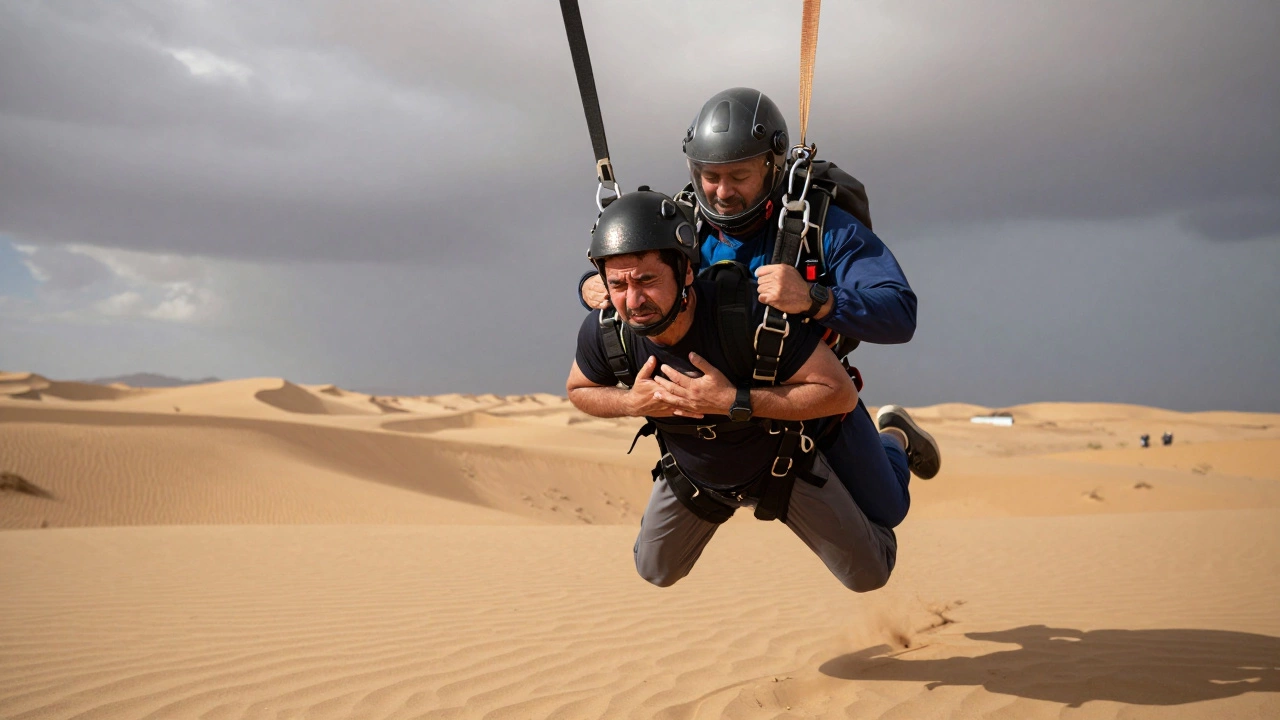
Skydiving in India isn’t just a thrill-it’s a life-changing moment for thousands each year. From the desert dunes of Rajasthan to the hills of Goa, the freefall experience draws people from all walks of life. But not everyone should jump. For some, the risks aren’t worth the rush. If you’re thinking about skydiving, knowing who should not skydive could save your life-or someone else’s.
Heart Conditions and Blood Pressure Issues
If you have a history of heart disease, irregular heartbeat, or uncontrolled high blood pressure, skydiving is not for you. The sudden drop in air pressure and the surge of adrenaline can push your heart into dangerous territory. A 2023 study from the Indian Journal of Aviation Medicine found that over 60% of medical emergencies during tandem skydives in India involved participants with undiagnosed or poorly managed cardiovascular conditions. Even if you feel fine, a silent arrhythmia or plaque buildup could turn a fun jump into a medical emergency mid-air.Doctors don’t always ask about skydiving during routine checkups. If you’ve ever been told to avoid strenuous activity, or if you’ve had a stent, pacemaker, or heart attack-even years ago-skip the jump. Tandem instructors can’t restart your heart if it stops during freefall. No parachute can fix that.
Severe Spinal or Neck Injuries
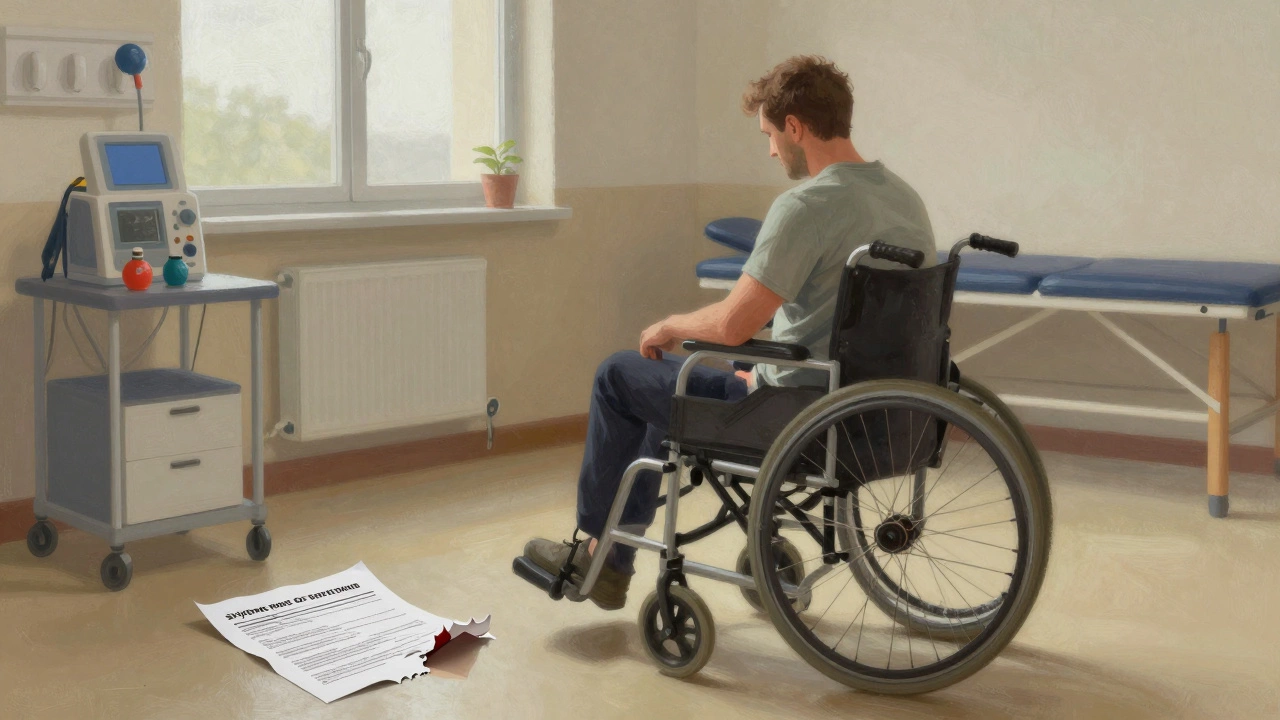
Skydiving isn’t gentle on the spine. Even with a tandem harness, you’ll land hard-sometimes on uneven ground. The impact can be equivalent to jumping off a three-story building. If you’ve had a herniated disc, spinal fusion, or chronic neck pain, the forces involved can cause permanent damage.One skydiving center in Pune reported a case in 2024 where a 52-year-old man with a previous spinal injury suffered a compression fracture after landing. He’d signed the waiver, ignored his physiotherapist’s advice, and thought he’d be fine. He spent six weeks in rehab. If your spine has ever been surgically repaired or you rely on painkillers to walk normally, don’t risk it. The landing isn’t the only danger-wind resistance during freefall can also strain your neck and back.
Recent Surgeries or Injuries
Waiting a few weeks after surgery isn’t enough. Your body needs months to fully heal. If you’ve had abdominal surgery, hip replacement, knee arthroscopy, or even a major dental procedure, you’re still vulnerable. Internal stitches can tear. Metal implants can shift under pressure. Blood clots can form or dislodge during ascent.Most skydiving centers in India require a doctor’s note if you’ve had surgery in the last six months. But that’s just a formality. Real recovery takes longer. A 2025 survey of 12 Indian drop zones showed that 43% of post-surgery jumpers who ignored recovery timelines experienced complications ranging from internal bleeding to joint instability. If your surgeon didn’t clear you for high-impact activity, assume they meant no.
Pregnancy
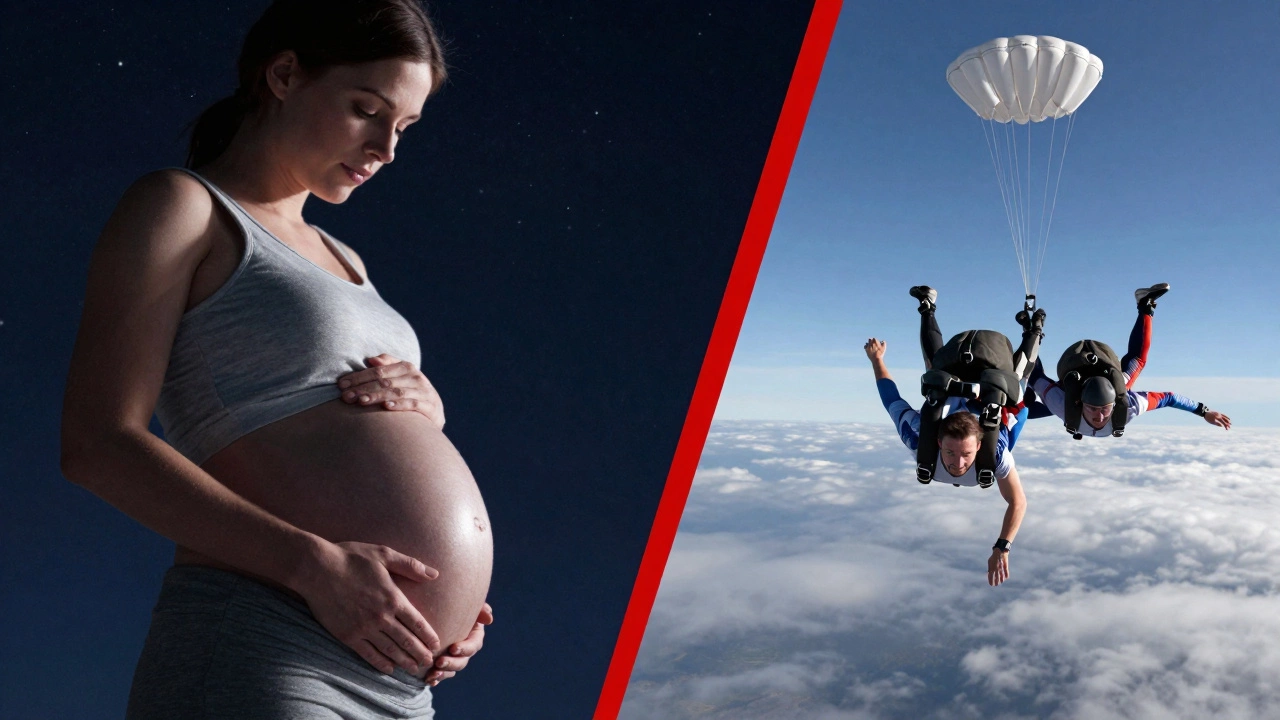
Pregnant women should never skydive. Even in the first trimester, the jolt of deployment, the G-forces during descent, and the risk of sudden deceleration can trigger placental abruption or premature labor. There’s no safe stage of pregnancy for skydiving.One woman in Mysore jumped at 10 weeks, thinking it was "just a little bounce." She lost the baby within hours. No skydiving company in India will let you jump if you’re pregnant-but some might not ask. Don’t rely on their screening. Your body is already under stress. Adding extreme physical forces isn’t bravery-it’s reckless.
Seizure Disorders or Epilepsy
If you’ve ever had a seizure-even once-you shouldn’t skydive. The altitude change, sensory overload, and adrenaline spike can trigger an episode. If you black out at 10,000 feet, you won’t wake up until you hit the ground. And no parachute can prevent that.India has strict aviation medical guidelines. The Directorate General of Civil Aviation (DGCA) explicitly prohibits individuals with seizure disorders from participating in skydiving. Even if you’re on medication and haven’t had a seizure in five years, the risk remains. A 2023 incident at a drop zone in Hyderabad involved a jumper who had a seizure during freefall. The tandem instructor had to manually deploy the parachute while the passenger was unconscious. They landed safely, but the trauma was severe. Don’t gamble with your brain’s electrical stability.
Vertigo or Severe Acrophobia
Fear of heights isn’t just "nerves." If you get dizzy looking down from a balcony, you’re not ready for 15,000 feet. Vertigo can strike suddenly during ascent or freefall. You might lose spatial awareness, panic, and forget to follow instructions. In extreme cases, you could grab the instructor, twist the harness, or even try to unhook yourself.Most skydiving centers in India offer a ground-based simulation before the jump. If you feel nauseous, disoriented, or overwhelmed during that test, don’t proceed. Many people think they can "push through" fear-but in freefall, your body takes over. Your instincts will scream to survive, and you won’t be in control. If you’ve ever passed out from looking down from a tall building, skydiving is not your adventure.
Underage Jumpers Without Proper Authorization
In India, the legal minimum age for skydiving is 18. Some centers allow 16- and 17-year-olds with parental consent, but only under strict conditions. Even then, minors must pass a physical screening and psychological evaluation. If you’re under 18 and your parents think it’s a "rite of passage," think again.Adolescent bones are still developing. Their cardiovascular systems are more sensitive to rapid pressure changes. A 17-year-old in Coonoor suffered a collapsed lung after a tandem jump in 2024 because his rib cage couldn’t handle the G-force. He was cleared by his pediatrician-but the doctor didn’t know what skydiving involved. Never assume a parent’s permission overrides medical reality.
Obesity and Poor Physical Fitness
Skydiving isn’t a weight-based restriction-but it is a fitness test. If you can’t climb stairs without getting winded, or if you struggle to carry 15 kg of luggage, you’re not ready. The harness is tight. The exit from the plane requires strength. The landing demands balance and coordination.Most Indian drop zones have a weight limit of 100 kg for tandem jumps. But even below that, excess body fat increases the risk of injury. Fat doesn’t cushion impact-it compresses and transfers force to internal organs. A 2025 analysis from the National Institute of Aviation Safety found that jumpers over 90 kg had a 37% higher chance of bruising, dislocations, or joint injuries on landing. If you’re overweight and out of shape, start with hiking or swimming first. Build strength. Then reconsider.
Drug or Alcohol Use
Skydiving and substances don’t mix. Alcohol, marijuana, prescription sedatives, or even over-the-counter sleep aids can slow your reaction time, blur your judgment, and interfere with oxygen absorption at altitude.Indian skydiving centers perform a quick breathalyzer and behavioral check before every jump. But many people show up buzzed from the night before. One center in Goa banned a group of 10 tourists after they arrived smelling of alcohol and giggling uncontrollably. They were turned away-but not before one tried to sneak in by hiding a bottle in his sock. That’s not just dangerous-it’s irresponsible. If you’ve had even one drink in the last 12 hours, don’t jump.
Chronic Respiratory Conditions
If you have asthma, COPD, or any condition that makes breathing hard at high altitudes, skydiving is risky. At 15,000 feet, oxygen levels are 40% lower than at sea level. If your lungs are already struggling, you could pass out before the parachute opens.Even if you use an inhaler, your body might not respond fast enough during freefall. A 2024 incident in Bangalore involved a jumper with asthma who forgot his inhaler. He started wheezing at 12,000 feet. The instructor had to cut the jump short and land early. They landed safely, but the man spent three days in the hospital. If you can’t run 500 meters without gasping, you’re not ready for the sky.
What If You’re Not Sure?
If you’re on the fence-if you have a minor condition, a past injury, or just feel uneasy-talk to a doctor who knows skydiving. Not your general practitioner. Find someone who understands aviation medicine or sports physiology. In cities like Mumbai, Delhi, and Pune, there are specialists who review skydiving medical forms.Don’t rely on the drop zone’s medical waiver. It’s a legal form, not a health assessment. Your body knows when something’s wrong. If you’re asking yourself whether you should jump, the answer is probably no.
Skydiving isn’t for everyone. And that’s okay. There are plenty of other ways to feel alive-paragliding, rock climbing, scuba diving, or even a long hike in the Himalayas. You don’t need to jump out of a plane to prove you’re brave. Sometimes, the bravest thing you can do is say no.
Can I skydive if I have diabetes?
Yes, but only if your diabetes is well-controlled. You must be able to manage your blood sugar without insulin spikes or drops during physical stress. Bring glucose tablets, check your levels before and after, and avoid jumping if you’ve had recent hypoglycemic episodes. Some skydiving centers require a doctor’s note confirming stable glucose control.
Is there an age limit for skydiving in India?
The legal minimum age is 18. Some centers allow 16- and 17-year-olds with parental consent and a medical clearance. There’s no official upper age limit, but most centers require a health assessment for jumpers over 60. Many people in their 70s have jumped safely-but only if they’re in excellent physical condition.
Can I skydive if I’m on blood thinners?
No. Blood thinners like warfarin, aspirin, or apixaban increase the risk of internal bleeding from impact. Even a minor bruise can become serious. Most skydiving centers in India will refuse you if you’re on these medications. Wait until you’re off them and cleared by your doctor.
What if I’m afraid of heights but still want to try?
Fear of heights is normal. But if it causes dizziness, nausea, or panic, you’re not ready. Most centers offer a ground simulation to test your reaction. If you feel unwell during that, skip it. Skydiving isn’t about conquering fear-it’s about being in full control. If your body shuts down mid-air, you’re putting yourself and your instructor at risk.
Are there any medical tests required before skydiving in India?
No formal medical test is required by law, but reputable centers ask you to complete a health declaration form. If you answer "yes" to any major health questions, they’ll ask for a doctor’s note. Always be honest. Lying on the form doesn’t protect you-it puts lives at risk.