Orient Express Value Calculator
Calculate Your Experience Value
Input your travel details to compare the value of the Orient Express versus alternative travel options.
Your Value Assessment
85/100
You prioritize luxury and cultural connection over time savings.
Cost Comparison
| Option | Cost | Key Benefits |
|---|---|---|
| Orient Express | $6,450 | Private dining car, personalized service, 1920s art deco suite |
| First-Class Flight + Hotel | $2,400 | Comfortable travel, hotel stay with less personal attention |
| Standard Train + Hotel | $800 | Efficient travel, basic accommodation |
Value Assessment: The Orient Express offers exceptional value if you prioritize luxury, cultural immersion, and a unique travel experience over speed and budget. Your score of 85/100 indicates this is a high-value investment for your travel preferences.
Recommendation
For travelers seeking a once-in-a-lifetime experience, the Orient Express delivers unmatched value. At $6,450 for your Paris-Venice journey, it costs 2.7x more than a first-class flight plus hotel. But you're paying for an experience that combines:
- Private dining car with sommelier service
- Hand-crafted art deco cabins
- Personalized attention with 1:1 staff ratio
- Scenery you can't see from an airplane
- Memories that last a lifetime
The article mentions one couple who saved for 15 years specifically for this trip—they said it was "the most meaningful thing they'd ever done."
When you hear the name Orient Express, you think of gilded carriages, crystal chandeliers, and a bygone era of elegance. But in 2026, that same name comes with a price tag that can hit $10,000 for a two-night trip. Is it just a fancy way to sit on a train-or is there real value in paying five figures to travel from Paris to Istanbul?
What you actually get on the Venice Simplon-Orient-Express
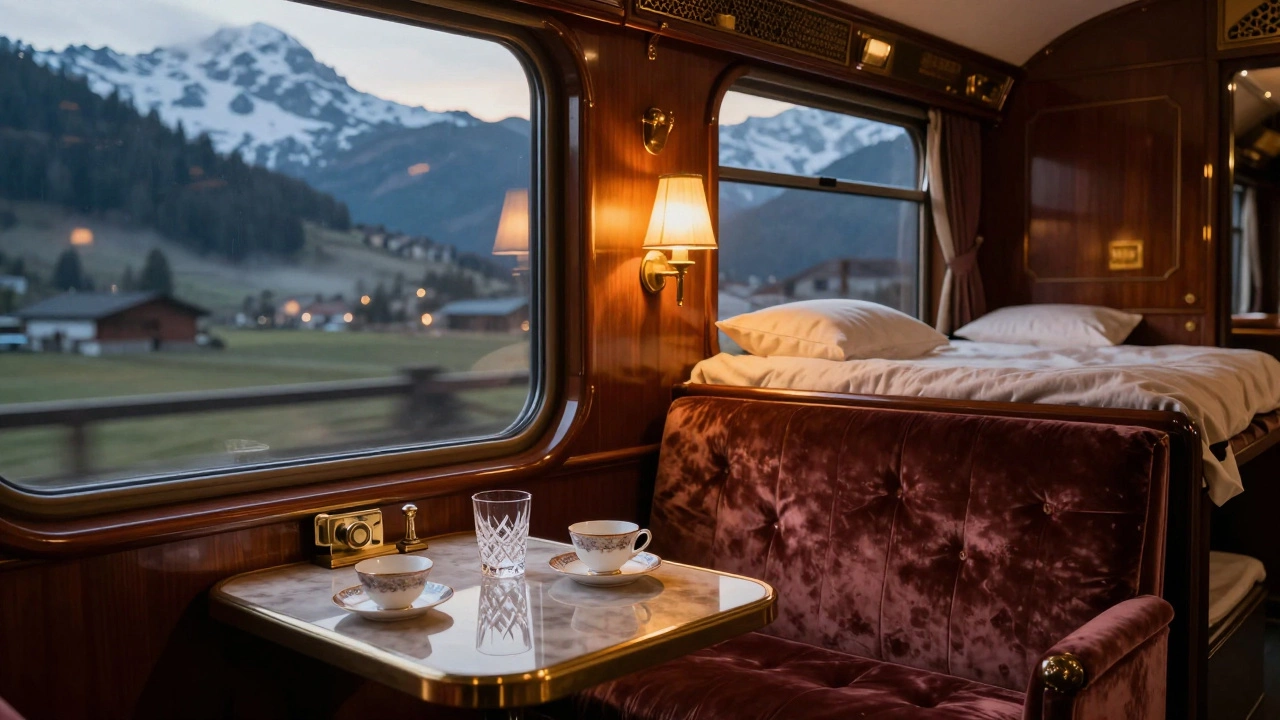
The modern Orient Express isn’t the same train that Agatha Christie wrote about. It’s the Venice Simplon-Orient-Express, operated by Belmond. These aren’t just trains-they’re museum pieces with five-star service. Each cabin is a hand-crafted jewel box: mahogany paneling, plush velvet, brass fittings, and a real bed that folds away at night. You don’t sleep on a train-you sleep in a 1920s art deco suite.
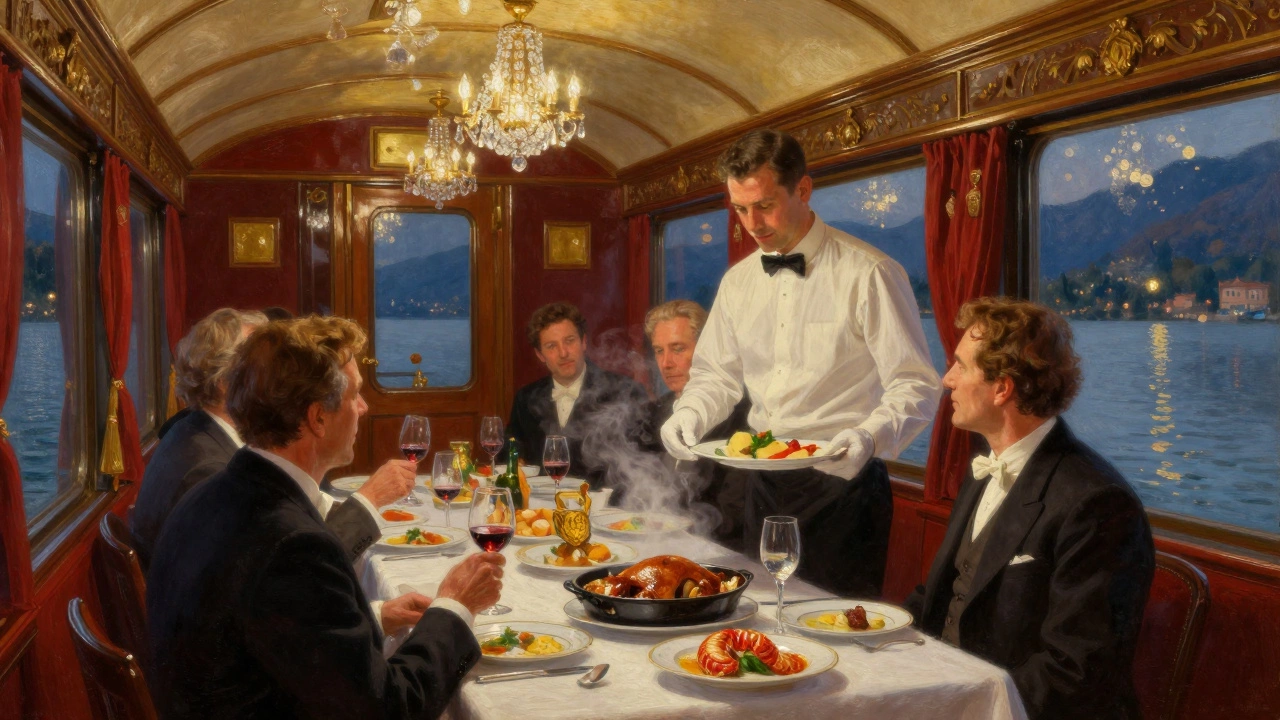
Meals are included, and they’re not your average buffet. You eat in a dining car where white-gloved waiters serve multi-course meals on fine china. Think duck confit with truffle jus, lobster thermidor, and dessert wines poured from bottles older than your car. The chef works with seasonal ingredients sourced from local markets along the route. On the Paris-to-Venice run, you get fresh seafood from the Adriatic. On the London-to-Istanbul leg, you taste Bulgarian rosewater pastries and Turkish delight.
There’s no Wi-Fi. No streaming. No distractions. You’re meant to read a book, play chess in the bar car, or stare out the window as the Alps blur past. That’s the point. This isn’t about efficiency. It’s about presence.
How much does it really cost?
A standard cabin on the Paris-to-Venice route starts at $5,200 per person. That’s for two nights. The Grand Suite? That’ll run you $10,800. For comparison, a first-class flight from Paris to Venice costs about $600. A luxury hotel in Venice for two nights? Around $1,200. So why pay nearly ten times more?
Because you’re not paying for transport. You’re paying for an experience that doesn’t exist anywhere else. No airline offers a private dining car with a sommelier. No hotel gives you a moving suite that changes scenery every hour. The Orient Express turns travel into theater. And like any great performance, the ticket price reflects the production value.
There’s also the exclusivity factor. Only 64 guests board each train. The staff-to-guest ratio is nearly 1:1. You’re not a passenger-you’re a guest. Your cabin steward remembers your name, your preferred tea, and whether you like your champagne chilled or at room temperature.
Who is this for? Who should skip it?
If you’re looking for a quick, efficient way to get from A to B, this isn’t for you. The Paris-to-Venice journey takes 22 hours. That’s longer than a direct flight with layovers. If you’re the kind of person who checks your phone every five minutes, you’ll find this unbearable.
But if you’ve ever dreamed of stepping into a 1920s novel-if you love slow travel, fine dining, and the quiet luxury of being pampered without having to ask-then this is your moment. It’s a birthday gift, a milestone anniversary, a celebration of a life well-lived. People book this when they want to feel like they’ve done something extraordinary.
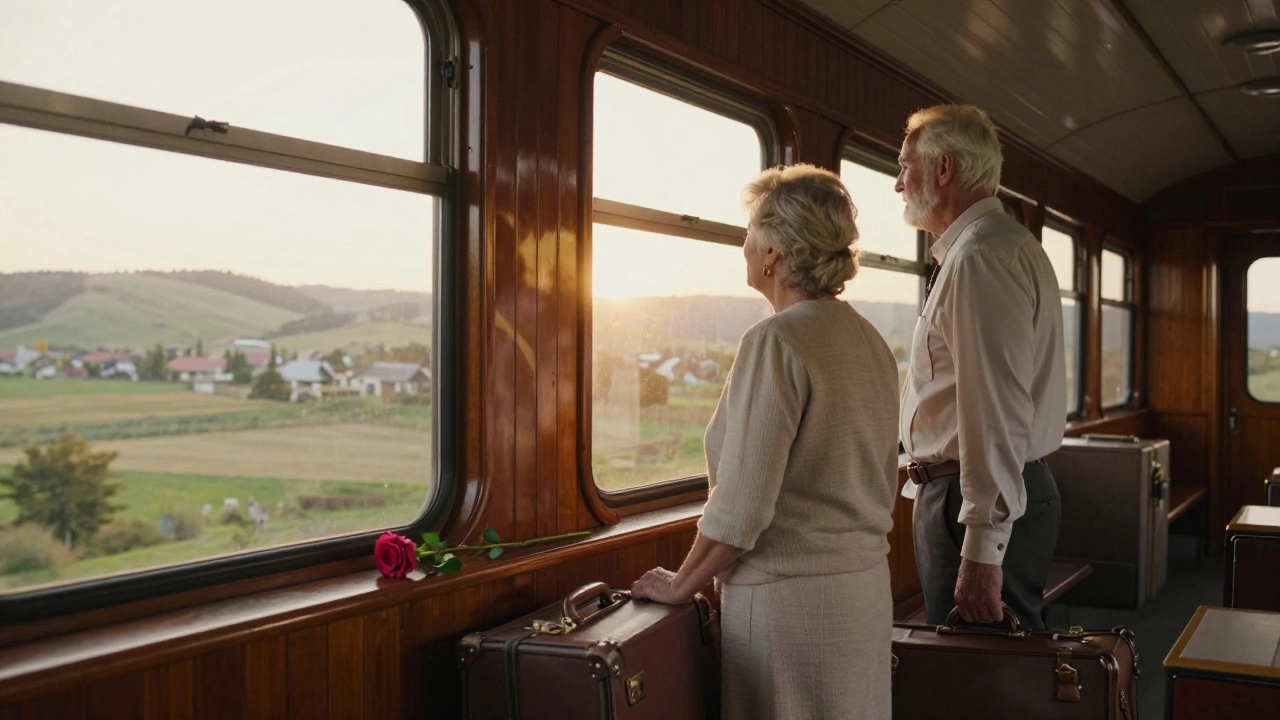
It’s also popular with retirees who’ve saved for decades. One couple from Melbourne told me they spent 15 years putting aside $100 a month just for this trip. They didn’t buy a new car. They didn’t upgrade their house. They saved for this train. And when they finally boarded, they said it was the most meaningful thing they’d ever done.
The hidden costs you won’t see on the website
There’s no hidden fee for the cabin or meals. But there are extras. A bottle of vintage champagne? $180. A guided tour in Venice? $120. A private transfer from the station to your hotel? $200. These aren’t mandatory, but they’re part of the full experience. Most guests end up spending another $500-$800 on top of the base fare.
Also, the train doesn’t run every day. It operates on a seasonal schedule-mostly spring, summer, and fall. You can’t just book it on a whim. You need to plan months ahead. And if you want the Grand Suite? You might need to wait a year.
Is it better than flying first class?
First-class flights are comfortable. You get legroom, good food, and priority boarding. But you’re still in a metal tube at 35,000 feet. The Orient Express moves at 60 miles per hour. You see the countryside. You smell the rain on the Alps. You hear the clink of glasses in the bar car as the sun sets over Lake Como.
One woman I spoke to, a former airline executive, said she flew first class for 20 years. Then she took the Orient Express. “I realized,” she told me, “I’d been traveling in comfort, but never in wonder.”
What’s the alternative?
If $10,000 is out of reach, there are other luxury trains. The Blue Train in South Africa offers similar service for about $3,500. The Golden Eagle Danube Express runs through Eastern Europe for $4,800. The Shiki-Shima in Japan is even more exclusive, with rooms shaped like traditional tatami houses and kaiseki meals served by geisha.
But none of them have the name, the history, or the mythos of the Orient Express. It’s not just a train. It’s a legend.
Final verdict: Is it worth the money?
If you’re asking this question, you already know the answer. You’re not looking for a deal. You’re looking for a memory.
The Orient Express isn’t a mode of transport. It’s a time machine. It’s a piece of art you can sleep in. It’s a story you’ll tell for the rest of your life.
For most people, it’s a once-in-a-lifetime splurge. And if you can afford it, if you’ve earned it, if you’re ready to slow down and savor every moment-then yes. It’s worth every penny.
Is the Orient Express still running in 2026?
Yes. The Venice Simplon-Orient-Express is operating on its regular seasonal schedule through 2026. Routes include Paris to Venice, London to Venice, and the full journey from London to Istanbul. Bookings open 12-18 months in advance, and availability is extremely limited.
What’s included in the price of the Orient Express?
The base fare includes your cabin accommodation, all meals (breakfast, lunch, afternoon tea, and dinner), premium wines and spirits with meals, and onboard entertainment like piano performances and guided commentary. Transfers to and from stations are not included unless you book a premium package.
Can you take the Orient Express without staying overnight?
No. All journeys require an overnight stay. The shortest trip is two nights (Paris to Venice). There are no day-trip options. The experience is built around slow travel and immersive luxury-you can’t rush it.
Is the Orient Express accessible for people with mobility issues?
The train has limited accessibility. Cabins are small, with narrow doorways and steps to reach the bed. There are no elevators or ramps onboard. While staff will assist, the train is not designed for wheelchairs or mobility scooters. If you have mobility concerns, contact Belmond directly before booking.
How far in advance should I book the Orient Express?
Book at least 9-12 months in advance. Popular routes like London to Venice sell out within days of opening. The Grand Suites often disappear within hours. If you have a specific date in mind-like an anniversary or birthday-book as soon as the schedule is released.
Are children allowed on the Orient Express?
Children over the age of five are permitted, but the experience is designed for adults. There are no kids’ menus, play areas, or entertainment tailored for children. The quiet, refined atmosphere makes it less ideal for families with young kids. Most guests are couples or solo travelers seeking luxury and calm.
What’s the dress code on the Orient Express?
Daytime attire is smart casual-think tailored trousers, blouses, or dresses. Evening dress is formal: men wear suits or tuxedos, women wear cocktail dresses or evening gowns. There’s no strict enforcement, but most guests embrace the elegance. It’s part of the magic.