Mixed World Heritage Site Matcher
India has only two UNESCO Mixed World Heritage Sites. Which one fits your travel style? Take this quick assessment or compare their features directly.
| Feature | Konark Sun Temple | Sundarbans National Park |
|---|---|---|
| Primary Focus | Architectural & Religious History | Ecosystem & Human-Wildlife Coexistence |
| Best Time to Visit | October to March (Cooler weather) |
November to February (Post-monsoon, active wildlife) |
| Key Experience | Viewing intricate stone carvings and sundials | Boat safaris to spot tigers, crocodiles, and birds |
| Cultural Element | Hindu mythology, Kalinga architecture | Folk beliefs (Bonbibi), fishing/honey harvesting traditions |
| Natural Element | Coastal erosion patterns, dune formation | Mangrove forests, tidal mudflats, estuarine systems |
| Accessibility | Easy access via road from Puri/Bhubaneswar | Requires boat entry from Kolkata/South 24 Parganas |
| Family Friendly? | Moderate (Lots of walking, abstract history) | High (Engaging boat rides, animal sightings) |
You’ve probably heard of the Taj Mahal. It’s iconic, beautiful, and strictly cultural. But did you know that UNESCO has a special category for places that are both? These are called Mixed World Heritage Sites, which is a designation for properties that satisfy criteria for both natural and cultural significance under the World Heritage Convention. They are rare. Globally, there are only about 40 of them. In India, out of over 40 World Heritage Sites, only two hold this dual status.
Why does this matter to you as a traveler? Because these sites offer a double dose of wonder. You aren’t just looking at old stones; you’re witnessing how human culture evolved alongside specific ecosystems. One site shows how ancient people carved divinity into granite hills. The other shows how living communities coexist with one of the planet’s most dangerous predators. If you’re planning a trip to India and want to see where nature and history collide, these are the two spots you need on your list.
Understanding the Mixed Designation
Before we get to the map pins, let’s clear up what "Mixed" actually means. Most people think of heritage as either ruins (cultural) or parks (natural). A mixed site breaks that binary. According to the UNESCO World Heritage Committee, which is the body responsible for evaluating nominations and managing the World Heritage List, a site must meet at least one criterion from both categories to be listed as mixed.
This isn’t just a label. It changes how the site is managed. Conservationists have to protect the biodiversity while also preserving the architectural integrity. It’s a balancing act. For travelers, it means the experience is layered. You might be hiking through a jungle in the morning and visiting a temple complex built by ancestors who revered those same trees in the afternoon.
Konark Sun Temple: Stone Chariot on the Coast
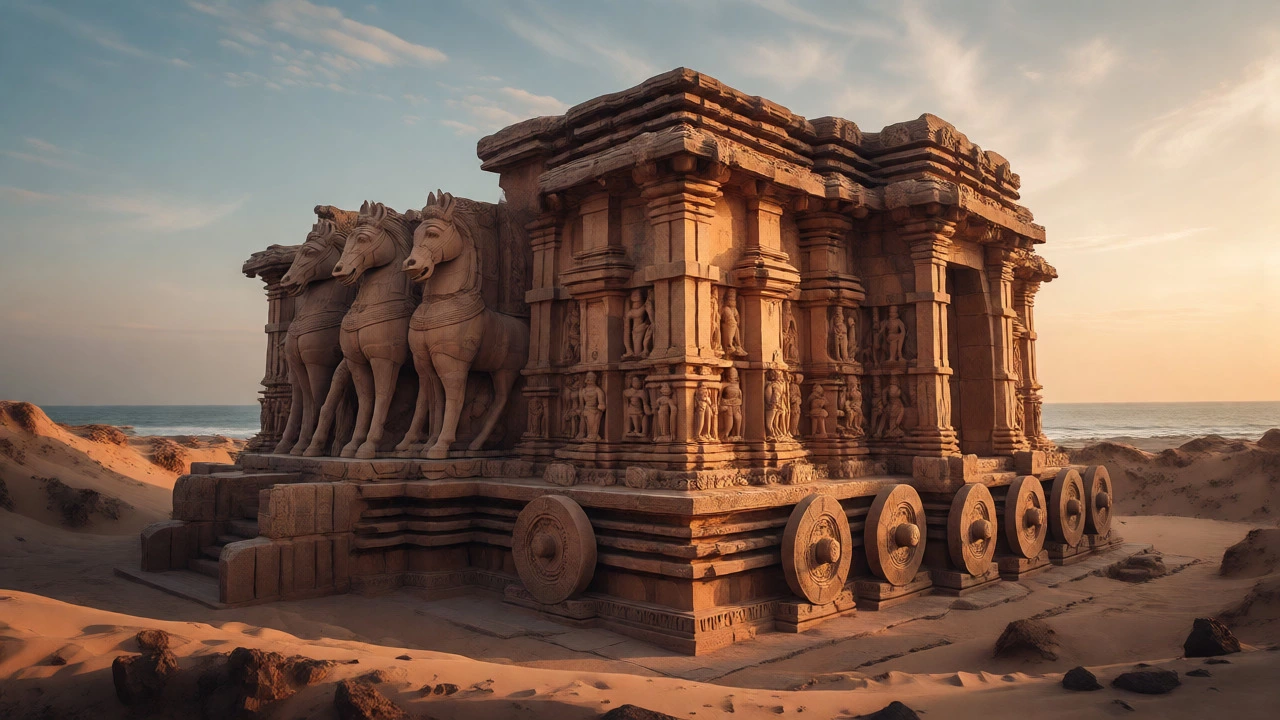
Let’s start with the first Indian mixed site: the Konark Sun Temple, located in Odisha, is a 13th-century monument dedicated to the Hindu sun god Surya, renowned for its intricate stone carvings and chariot-like structure. Built around 1250 CE by King Narasimhadeva I of the Eastern Ganga Dynasty, it’s not just a temple; it’s a massive sculpture.
The temple is designed as a giant chariot for the sun god, drawn by seven horses on twelve pairs of wheels. Each wheel acts as a sundial, telling time when placed in sunlight. But here’s the mixed part. While the architecture is undeniably cultural, the site’s setting and the surrounding coastal ecosystem play a crucial role in its preservation and aesthetic. The interaction between the sea winds, the laterite stone used in construction, and the local ecology creates a unique micro-environment. Over centuries, the temple has been partially reclaimed by sand dunes, which ironically helped preserve parts of it from further destruction until excavations began in the early 20th century.
Visiting Konark isn’t just about looking at erotic sculptures (yes, they are there, but don’t let that be the only reason you go). It’s about understanding how Odia society viewed the cosmos. The carvings depict daily life, animals, and deities, offering a snapshot of 13th-century India. The proximity to the Bay of Bengal adds a natural layer to the visit. You can walk along the Chandrabhaga beach nearby, seeing the same horizon the priests watched during rituals. This blend of monumental art and coastal landscape is why it earned its mixed status.
Sundarbans National Park: Tigers, Tides, and Folklore
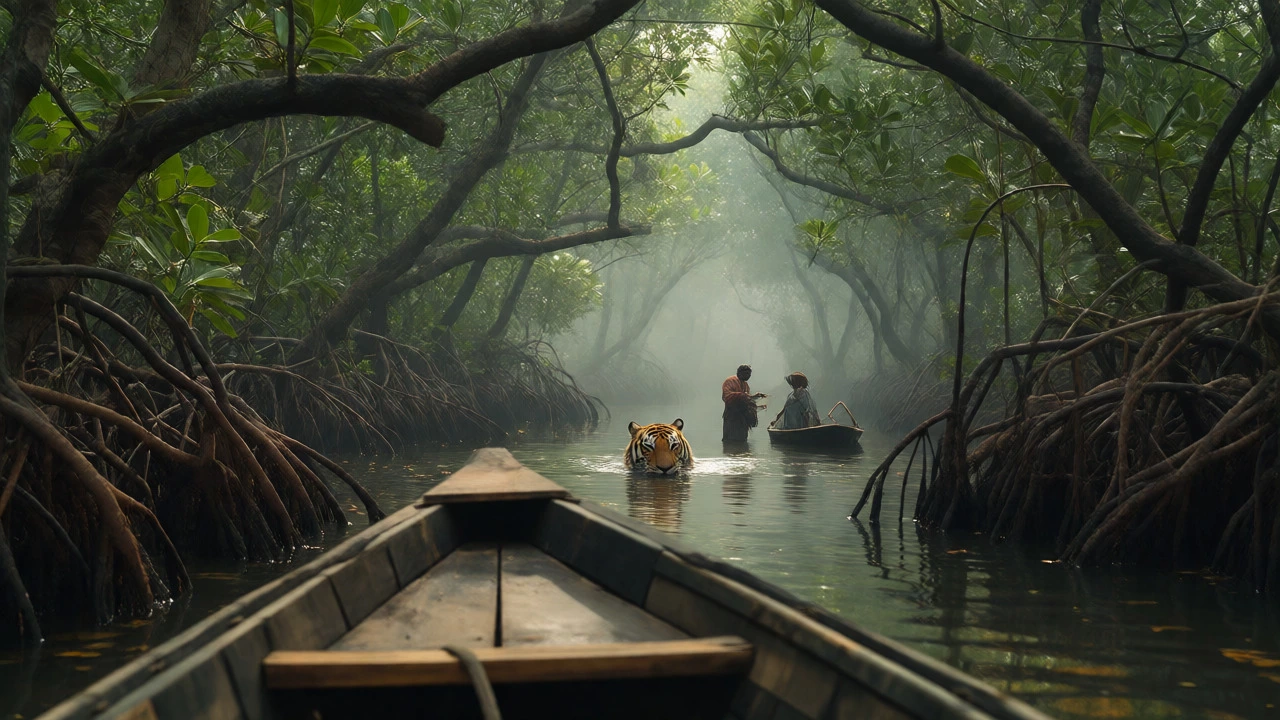
If Konark is about stone enduring time, the Sundarbans National Park in West Bengal is the largest mangrove forest in the world, home to the Royal Bengal Tiger and a unique tidal ecosystem. It’s a place where land and water constantly negotiate boundaries. This is the second-and perhaps more famous-mixed site in India.
Naturally, the Sundarbans is a biological marvel. It’s the only place on Earth where tigers swim across saltwater channels to hunt. The mangroves themselves are engineering feats, filtering salt and preventing erosion. But what pushes it into the "mixed" category is the deep cultural entanglement with the environment. The local Munda and Bengali communities have lived here for centuries, developing a distinct culture shaped entirely by the forest’s dangers and resources.
You’ll hear stories of Bonbibi, the guardian spirit of the forest. Her shrine is central to the lives of honey collectors and woodcutters who risk their lives entering the tiger’s territory. This isn’t just folklore; it’s a survival mechanism embedded in religion. The cultural practices here-how boats are built, how honey is harvested, how villages are constructed on stilts-are direct responses to the natural conditions. When you take a boat tour through the narrow creeks, you aren’t just spotting wildlife; you’re observing a living cultural landscape. The boundary between "nature reserve" and "human habitat" is blurred, which is exactly what UNESCO looks for in mixed sites.
Comparing India’s Two Mixed Gems
How do these two differ? One is static; the other is dynamic. One is man-made; the other is mostly wild. Here’s a quick breakdown to help you decide which fits your travel style better.
| Feature | Konark Sun Temple | Sundarbans National Park |
|---|---|---|
| Primary Focus | Architectural & Religious History | Ecosystem & Human-Wildlife Coexistence |
| Best Time to Visit | October to March (Cooler weather) | November to February (Post-monsoon, active wildlife) |
| Key Experience | Viewing intricate stone carvings and sundials | Boat safaris to spot tigers, crocodiles, and birds |
| Cultural Element | Hindu mythology, Kalinga architecture | Folk beliefs (Bonbibi), fishing/honey harvesting traditions |
| Natural Element | Coastal erosion patterns, dune formation | Mangrove forests, tidal mudflats, estuarine systems |
| Accessibility | Easy access via road from Puri/Bhubaneswar | Requires boat entry from Kolkata/South 24 Parganas |
Why Other Famous Sites Don’t Qualify
You might be wondering, "What about Khajuraho?" or "Why isn’t Kaziranga mixed?" This is a common point of confusion. Khajuraho Group of Monuments is a group of Hindu and Jain temples in Madhya Pradesh, known for their nagara-style architecture and erotic sculptures. It’s stunning, but it’s listed purely as Cultural. Why? Because while the temples were built using local materials and influenced by the region, the site itself doesn’t possess outstanding universal value in terms of natural phenomena like geology or biodiversity. It’s a masterpiece of human creative genius, but the land around it isn’t the star of the show.
Similarly, Kaziranga National Park is a protected area in Assam famous for hosting two-thirds of the world's great one-horned rhinoceroses. It’s a Natural site. The conservation success story is incredible, but the cultural aspect, while present, wasn’t deemed sufficient to meet the strict "outstanding universal value" threshold for the mixed category. To be mixed, the cultural and natural values must be inseparable and equally significant on a global scale. In Kaziranga, the primary global value is the ecological recovery of the rhino population.
Planning Your Visit: Practical Tips
If you’re adding these to your itinerary, here’s how to handle them without wasting time or money.
- Konark Logistics: Fly into Bhubaneswar (BBI). From there, hire a taxi to Konark (approx. 2 hours). Combine it with Puri (the holy city next door) for a full day. Stay in Puri for better hotel options. Note that photography inside the main sanctum is restricted, but the outer walls are open game.
- Sundarbans Logistics: You cannot drive into the core zone. You must book a licensed boat operator from Godkhali or Sonakhali. Avoid cheap, unlicensed operators; safety standards vary wildly. Book at least two nights on the boat to increase your chances of seeing a tiger. Bring binoculars; the vegetation is dense, and sightings are often distant.
- Guides Matter: At Konark, hire an ASI (Archaeological Survey of India) guide. Without context, the carvings look like random figures. With a guide, they become a narrative. In Sundarbans, your boat captain is your best guide. Ask them about the tides; timing your movements with the tide affects your ability to navigate certain creeks.
The Broader Context: Global Rarity
It’s worth noting how exclusive this club is. As of 2026, there are fewer than 40 mixed sites worldwide. Places like Machu Picchu (Peru) and Tikal (Guatemala) are other examples. India holding two slots is a testament to the sheer density of its historical and ecological diversity. We have landscapes that didn’t just host history-they shaped it. The mangroves dictated the shape of Bengali culture. The coastal geology preserved the Kalinga architectural style. This interplay is what makes these trips intellectually rewarding, not just visually pretty.
Travelers often rush through India trying to hit every major site. But slowing down at these two locations offers a deeper payoff. You leave with a clearer picture of how humans and nature have danced together for millennia. It’s a reminder that our heritage isn’t just in museums-it’s in the soil, the water, and the stories we tell about them.
Are there any new mixed World Heritage Sites in India?
As of late 2026, no new sites have been added to the mixed category. India currently maintains its count of two: Konark and Sundarbans. Nominations are submitted years in advance, so any changes would likely appear in future UNESCO sessions.
Can I visit Sundarbans independently?
No. Entry to the core zones of Sundarbans National Park requires a registered guide and usually a boat permit. Independent trekking is limited to buffer zones. Boat tours are the standard and safest way to explore the waterways.
Is Konark open every day?
Yes, the Konark Sun Temple is generally open daily from sunrise to sunset. However, special lighting ceremonies occur on Sundays and holidays, which may affect viewing times. Check the Archaeological Survey of India website for holiday closures.
Why is the Taj Mahal not a mixed site?
The Taj Mahal is classified solely as a Cultural site. While it is set within a garden (Charbagh), the natural elements are considered part of the artistic design rather than possessing independent Outstanding Universal Value in terms of natural science or ecology.
Which site is better for families with children?
Sundarbans is often more engaging for kids due to the boat rides and potential animal sightings. Konark involves a lot of walking and abstract historical concepts, which younger children might find less interesting unless they enjoy detailed storytelling.