Ancient Temple Reality Checker
Curious about the true age of India's most famous temples? Select a temple below to reveal the gap between popular myths and verified archaeological history.
You’re standing in a dusty archive or scrolling through a travel forum, and you see the claim: "This temple is 5,000 years old." It sounds incredible. Five thousand years ago, the Pyramids of Giza were just being planned, Stonehenge was still a collection of loose stones, and most of Europe was in the Bronze Age. So, which temple in India actually holds this title? Is it a single structure, or is it a complex that has been rebuilt over millennia?
Here’s the tricky part: archaeologists rarely find a single building that has stood untouched for five millennia. Instead, they find evidence of continuous worship at a site dating back to that era. When people ask about the 5,000-year-old temple, they are usually referring to one of two specific candidates: the Kailasa Temple (often misdated) or, more accurately, the ancient sanctums within complexes like Meenakshi Amman Temple or Jagannath Temple. But if we are talking about verified archaeological continuity rather than mythological timelines, the answer shifts toward the Mehrgarh area influences or the foundational layers of major South Indian shrines.
| Temple Name | Location | Claimed Age | Archaeological Reality | Best For |
|---|---|---|---|---|
| Kailasa Temple | Ellora Caves, Maharashtra | 8th Century CE (Often rumored older) | Rashtrakuta Dynasty; carved from rock in 18 years. | Rock-cut architecture enthusiasts |
| Meenakshi Amman Temple | Madurai, Tamil Nadu | ~2,500+ years (Myth says 3,000+) | Continuous worship since Sangam period; current structure is Nayak era. | Cultural immersion & history buffs |
| Jagannath Temple | Puri, Odisha | ~5,000 years (Mythological) | Current structure built in 12th century; site worship dates to tribal origins. | Religious pilgrims & mystery seekers |
| Somnath Temple | Gujarat | ~5,000 years (Mythological) | Rebuilt 7 times; first stone temple 649 CE. | Resilience stories & coastal views |
The Myth vs. The Stone: Understanding the Timeline
Let’s clear up the confusion right away. In India, age is often measured in two ways: mythological time and archaeological time. If you read a guidebook claiming a temple is 5,000 years old, it’s likely referencing the Puranas-ancient texts that describe events from thousands of years ago. For example, the Jagannath Temple in Puri claims its deity has been worshipped here for 5,000 years. However, the wooden idol we see today is replaced every 12 to 19 years during the Nabakalebara festival. The stone temple surrounding it was constructed by King Anantavarman Chodaganga in the 12th century.
So, where do you go if you want to touch stones that might actually be close to that 5,000-year mark? You look at the Indus Valley Civilization sites. While there aren't many "temples" left from the Harappan era (they didn't build massive stone gods), the spiritual continuity in places like Varanasi is undeniable. Varanasi is considered one of the oldest living cities in the world, with references in the Rigveda dating back to around 1500 BCE. That’s only 3,500 years ago, but the oral traditions push it further back.
Candidate 1: The Jagannath Temple, Puri
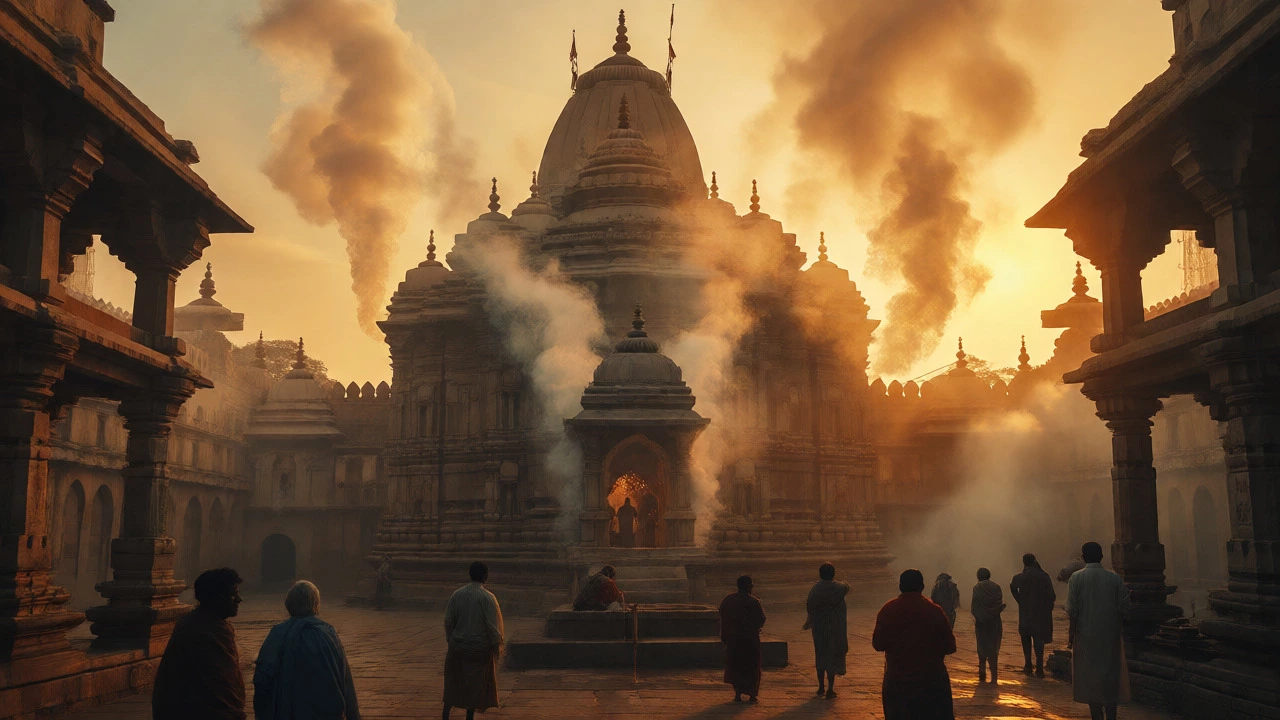
If you want the feeling of 5,000 years, Puri is your best bet. The legend states that Lord Vishnu appeared here as Nila Madhaba before becoming Jagannath. Archaeologically, the site shows evidence of Buddhist and Jain influence before Hindu dominance took over in the early medieval period. But don’t let the 12th-century construction date fool you into thinking it’s "new." The rituals performed inside have roots in tribal traditions that predate Vedic orthodoxy.
Visiting Puri isn't just about looking at a building. It’s about witnessing a living fossil of culture. The temple complex is surrounded by a high wall called the Meghanada Prachira. Inside, you’ll find the Ratna Vedi, or Altar of Gems, where the deities sit. The air smells of camphor and sandalwood, a scent that hasn't changed in centuries. Pro tip: Visit during Rath Yatra if you can handle the crowds. It’s one of the largest religious gatherings on Earth, drawing millions who believe pulling the chariot brings liberation.
Candidate 2: The Meenakshi Amman Temple, Madurai
Down south, the Meenakshi Amman Temple in Madurai makes a strong case for antiquity. The city itself is mentioned in Greek records from the 3rd century BCE. The temple is dedicated to Goddess Parvati (as Meenakshi) and Lord Shiva (as Sundareswarar). The current gopurams (towers) are colorful and relatively new, restored frequently. But the inner sanctum? That has seen continuous worship since the Sangam period, roughly 300 BCE to 300 CE.
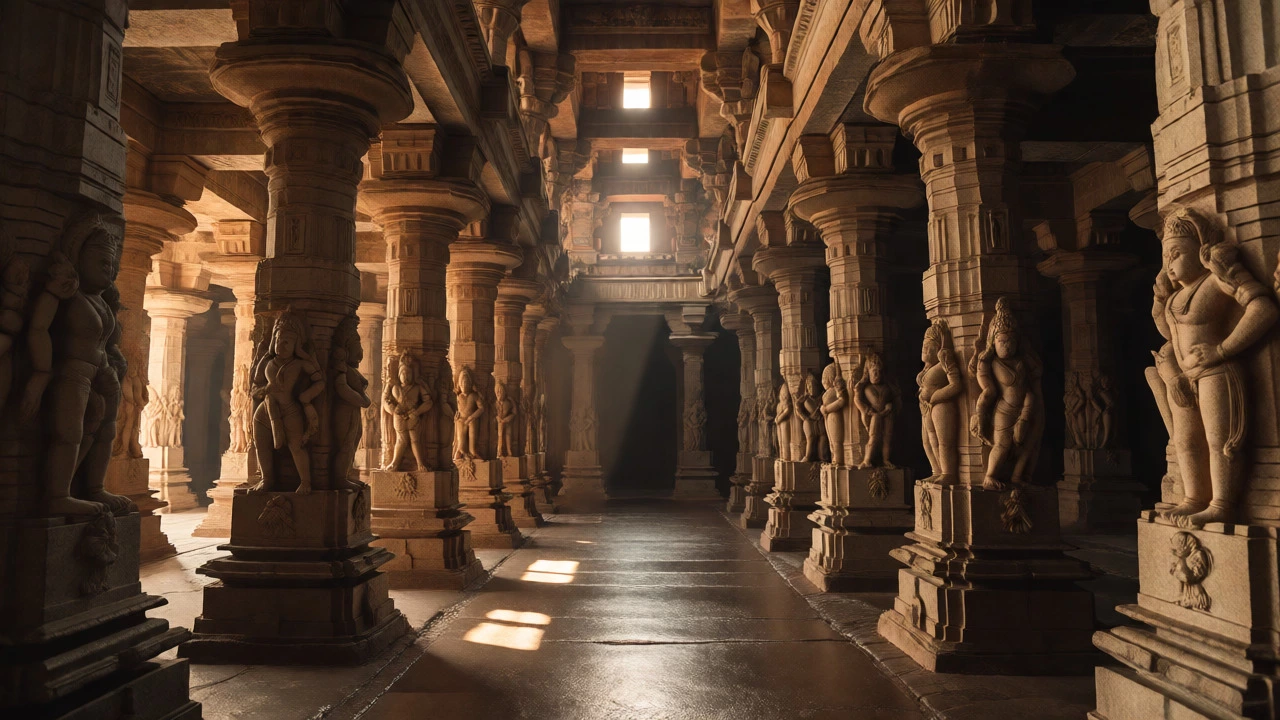
Why does this matter? Because while the wood and stone may have been replaced due to fires and invasions, the *site* is sacred. The layout follows the Agamic texts, which codified temple worship thousands of years ago. Walking through the Thousand Pillar Hall, you realize this wasn't just a place of prayer; it was a university, a market, and a court of law. The pillars themselves tell stories of kings and battles. If you’re interested in how religion shaped society, this is the classroom.
Candidate 3: The Kailasa Temple, Ellora
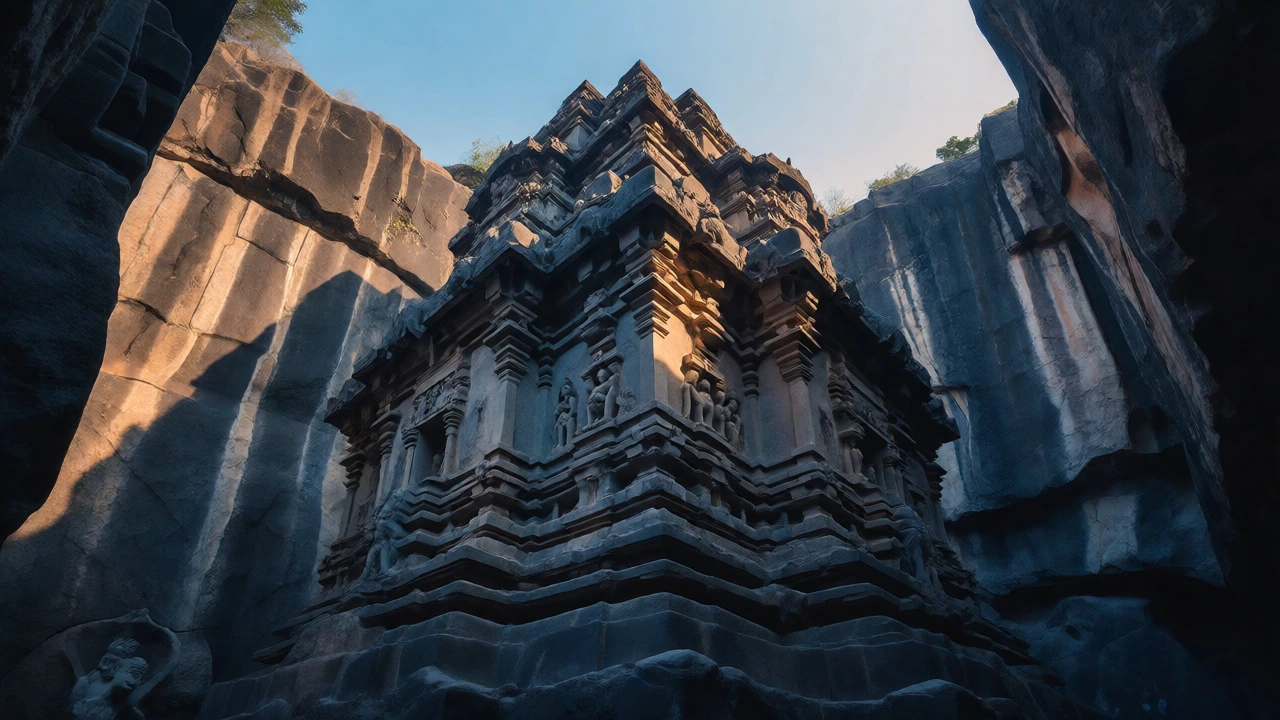
Now, let’s address the elephant in the room: the Kailasa Temple at Ellora. Many viral videos claim this monolithic wonder is 5,000 years old because it looks impossible to build with ancient tools. The truth? It was carved out of a single basalt rock cliff between 756 and 773 CE under King Krishna I. That’s only about 1,250 years old.
But why do people think it’s older? The engineering precision is mind-blowing. They carved top-down, removing 200,000 tons of rock without scaffolding. No debris was found outside the cave, suggesting it was reused or carefully managed. While it doesn't fit the 5,000-year criteria, it fits the "mystery" criteria perfectly. If you’re already in India, adding Ellora to your itinerary is non-negotiable. It’s a UNESCO World Heritage Site for a reason.
How to Plan Your Ancient Temple Tour
Planning a trip to these sites requires different strategies depending on what you’re chasing: history, spirituality, or photography.
- For History Buffs: Start in Madurai. Hire a local guide who knows the inscriptions. The Tamil language used in the temple records is a direct link to the past. Spend at least two days here to explore the museum and the palace ruins nearby.
- For Spiritual Seekers: Go to Puri. Book a hotel near the beach so you can walk to the temple at dawn. The Arati ceremony at sunrise is powerful. Note that non-Hindus cannot enter the main sanctum, but the outer courtyard is open to all.
- For Photographers: Ellora is your playground. The light hits the basalt rocks differently throughout the day. Early morning avoids the tour bus crowds. Use a wide-angle lens to capture the scale of the Kailasa Temple.
One thing to remember: India is hot. These temples are made of stone, which absorbs heat. Wear comfortable shoes because you will be walking barefoot on hot granite. Carry water. And respect the dress code-shoulders and knees covered is the standard rule, even if you’re not praying.
Common Misconceptions About Ancient Temples
A lot of travelers get tripped up by the term "original." In India, temples are living entities. They are repainted, re-roofed, and sometimes completely rebuilt. The Somnath Temple in Gujarat, for instance, has been destroyed and rebuilt seven times. The current structure is modern concrete and stone, finished in 1951. Yet, the soul of the place remains. Does that make it less authentic? Not necessarily. It makes it resilient.
Another misconception is that older means simpler. The opposite is true. The craftsmanship required to carve intricate details without power tools was immense. Look closely at the jewelry on the statues in Madurai. Each bead is distinct. This level of detail suggests a highly organized guild system of artisans, something that takes centuries to develop.
Beyond the Big Names: Hidden Gems
If you want to avoid the tourist traps, consider visiting the Brihadisvara Temple in Thanjavur. Built in the 11th century by Rajaraja Chola I, it’s a UNESCO site that showcases the peak of Chola architecture. The vimana (tower) is 66 meters tall, visible from miles away. The frescoes inside depict daily life, hunting scenes, and religious processions. It’s quieter than Madurai and offers a deeper dive into royal patronage of the arts.
Or head north to Khajuraho. While famous for erotic sculptures, the temples there are also masterpieces of Nagara-style architecture. Built between 950 and 1050 CE, they represent a different regional tradition. The lack of large courtyards compared to South Indian temples changes the flow of movement and meditation.
Final Thoughts on Dating the Divine
So, which temple is 5,000 years old? Strictly speaking, none of the standing structures. But spiritually and culturally, several claim that lineage. The value of visiting these places isn't just in checking off a date on a calendar. It’s in understanding how humans have sought connection with the divine across millennia. Whether you stand in Puri, Madurai, or Ellora, you’re participating in a conversation that started long before you were born and will continue long after.
Don’t get too hung up on the carbon dating of the lintel. Focus on the experience. The chants, the incense, the community kitchens serving free meals (prasadam) to thousands daily-these are the real markers of antiquity. They prove that the institution is older than the bricks.
Is there any temple in India confirmed to be 5,000 years old?
No single standing temple structure has been archaeologically confirmed to be 5,000 years old. Most major temples currently standing were built or significantly renovated between 1,000 and 1,500 years ago. However, sites like Puri and Madurai have evidence of continuous worship dating back much further, even if the physical buildings are younger.
Why do some websites claim the Kailasa Temple is 5,000 years old?
Viral social media posts often exaggerate ages to highlight the mysterious engineering of the Kailasa Temple. Historical records and inscriptions clearly date its construction to the 8th century CE under the Rashtrakuta dynasty. The "impossible" nature of carving a multi-story temple from a single rock leads to speculative dating.
Can non-Hindus enter the Jagannath Temple in Puri?
Non-Hindus are generally not allowed inside the main sanctum sanctorum (garbhagriha) of the Jagannath Temple. However, they can visit the outer premises, the Ratna Bhandar (treasure house), and participate in festivals like Rath Yatra from the streets. Access rules can vary, so checking with temple authorities before your visit is wise.
What is the oldest city in India associated with temples?
Varanasi is widely considered the oldest continuously inhabited city in India, with origins potentially dating back to 1400-1500 BCE. While many of its current temples are newer reconstructions, the city's spiritual significance spans thousands of years, making it a hub for ancient religious practices.
Are the idols in these ancient temples original?
In many cases, no. Idols are often replaced due to damage, theft, or ritual cycles. For example, the wooden idols at Jagannath Temple are ritually renewed every 12-19 years. At other sites, metal or stone idols may be copies of ancient originals, kept in museums for preservation while replicas serve in worship.