Ark of the Covenant Theory Explorer
Select a theory below to explore the evidence, key locations, and credibility associated with each claim.
Ethiopian Claim
Guarded in Axum by a single monk.
Jerusalem Theory
Hidden beneath the Temple Mount.
Indian Connection
Symbolic links & ancient trade routes.
Other Theories
Ireland, Georgia, or Babylon.
The Ethiopian Orthodox Claim
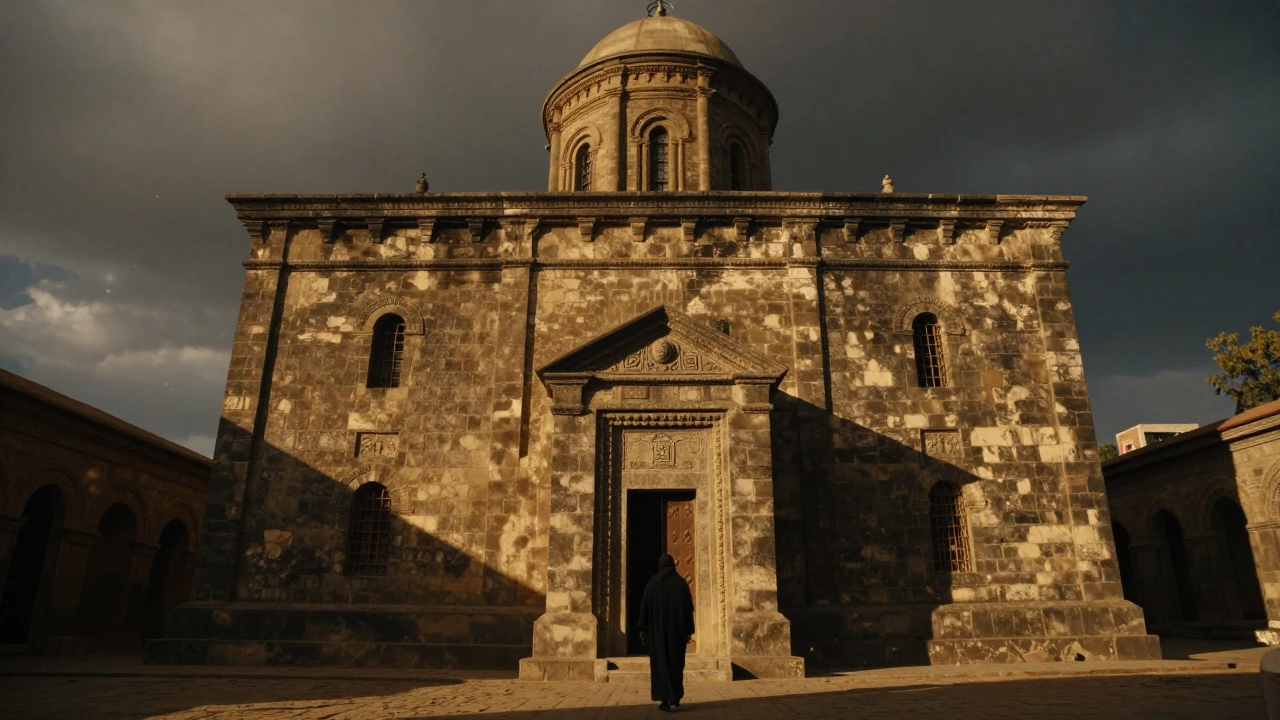
Most CredibleThe most widely accepted theory is that the Ark resides in the chapel next to the Basilica of Our Lady of Zion (St. Mary of Zion) in Axum. Tradition states it was brought there by Menelik I, son of King Solomon and the Queen of Sheba.
- 🛡️ The Guard: A single celibate monk lives adjacent to the chapel. Only he may view the Ark.
- 📜 Evidence: The church possesses other relics like the Tablet of Fate, lending credibility.
- 🚫 Access: No photos, scientists, or tourists are allowed inside the chapel.
Travel Destination
Location: Axum, Northern Ethiopia
Key Sites: Obelisks, Ancient Architecture
A UNESCO World Heritage site with deep spiritual atmosphere.
The Jerusalem Theory
ArchaeologicalBiblical archaeologists suggest the Ark was hidden before Nebuchadnezzar destroyed the First Temple in 586 BCE. Jeremiah 36 mentions hiding sacred objects in a cave on Mount Nebo, while others believe it lies in a secret chamber beneath the Temple Mount.
- 🏗️ Excavations: Ground-penetrating radar has found voids/tunnels, but nothing definitive.
- ⚠️ Challenges: Political tensions and restricted access hinder major excavations.
Travel Destination
Location: Jerusalem, Israel
Key Sites: Temple Mount, City of David
Hire an archaeologist-guide to understand the stratigraphy.
The Indian Connection
Cultural/SymbolicWhile no direct evidence places the physical Ark in India, strong cultural parallels exist. The rock-cut temples of Ellora/Ajanta share similarities with Ethiopian churches. Additionally, the Hindu concept of the yajna kund (fire altar) serves a similar theological function as a sacred vessel connecting earth and divine.
- 🕍 Jewish Heritage: Cochin Jews in Kerala have preserved Torah scrolls for over 2,000 years.
- 🤝 Trade Routes: Red Sea to Malabar Coast routes facilitated ancient cultural exchange.
Travel Destination
Location: Kerala & Maharashtra, India
Key Sites: Paradesi Synagogue, Ellora Caves
Explore shared spiritual heritage and ancient preservation techniques.
Other Theories
SpeculativeSacred objects often move to places of safety during conflicts. This leads to fringe theories about the Ark's location in Europe and the Caucasus.
- 🇮🇪 Ireland: Some believe Saint Patrick brought it here. The Book of Kells contains symbolic illustrations.
- 🇬🇪 Georgia: The Georgian Orthodox Church claims biblical artifacts were moved to Tbilisi to protect them from conquests.
- 🏺 Babylon: The historical consensus that it was simply looted and lost when Jerusalem fell.
Travel Insight
Focus: Comparative Religion
Visiting these sites offers insight into how different cultures preserve their most sacred histories, even if the Ark isn't physically present.
The Mystery That Never Fades
You have seen the movies. You know the story. A golden chest containing stone tablets, a jar of manna, and Aaron’s rod. It was stolen, hidden, or destroyed thousands of years ago. But where is it now? If you are asking where is the Ark of the Covenant today, you are joining millions of history buffs, theologians, and travelers who have chased this question for centuries. The short answer is: nobody knows for sure. The long answer involves ancient ruins, guarded museums in Africa, and surprising claims from temple tours in India.
This isn't just about finding a lost object. It is about understanding how different cultures preserve their most sacred histories. Whether the Ark sits under a church in Ethiopia, lies buried beneath Jerusalem, or exists only as a metaphor, the search reveals a lot about faith, archaeology, and human curiosity. Let's look at the leading theories, starting with the one that has actual physical evidence behind it.
The Ethiopian Claim: Under St. Mary of Zion
If you want the most credible claim to date, you need to go to Axum, Ethiopia. This is not a fringe theory; it is the official stance of the Ethiopian Orthodox Tewahedo Church. According to tradition, the Ark was brought to Ethiopia by Menelik I, the son of King Solomon and the Queen of Sheba. He supposedly stole it from the Temple in Jerusalem before returning home.
Today, the Ark is said to reside in a chapel next to the Basilica of Our Lady of Zion (St. Mary of Zion) in Axum. Only one person is allowed to see it: the designated guardian monk. When that monk dies, he takes the secret to his grave, and a new monk is chosen. No photographs, no scientists, no tourists. Ever.
- The Location: Axum, northern Ethiopia.
- The Guard: A single celibate monk lives in a small room adjacent to the chapel.
- The Evidence: The church possesses other relics, including the Tablet of Fate and the remains of King David, which lend credibility to their custodianship.
- The Controversy: Some scholars believe there are multiple "Arks" in Ethiopia. While the original might be in Axum, replicas are kept in various churches across the country.
Why does this matter to you? Because if you are traveling through East Africa, Axum is a UNESCO World Heritage site regardless of whether the Ark is there. The obelisks, the ancient architecture, and the deep spiritual atmosphere make it a powerful destination. But don't expect to peek inside the box. The mystery is part of the protection.
The Jerusalem Theory: Hidden Beneath the Temple Mount
Most biblical archaeologists lean toward the idea that the Ark was taken to Babylon when Nebuchadnezzar destroyed the First Temple in 586 BCE. Jeremiah 36 mentions the prophet hiding sacred objects, including the Ark, in a cave on Mount Nebo before the destruction. Others believe it was hidden in a secret chamber beneath the Temple Mount in Jerusalem during the construction of the Second Temple.
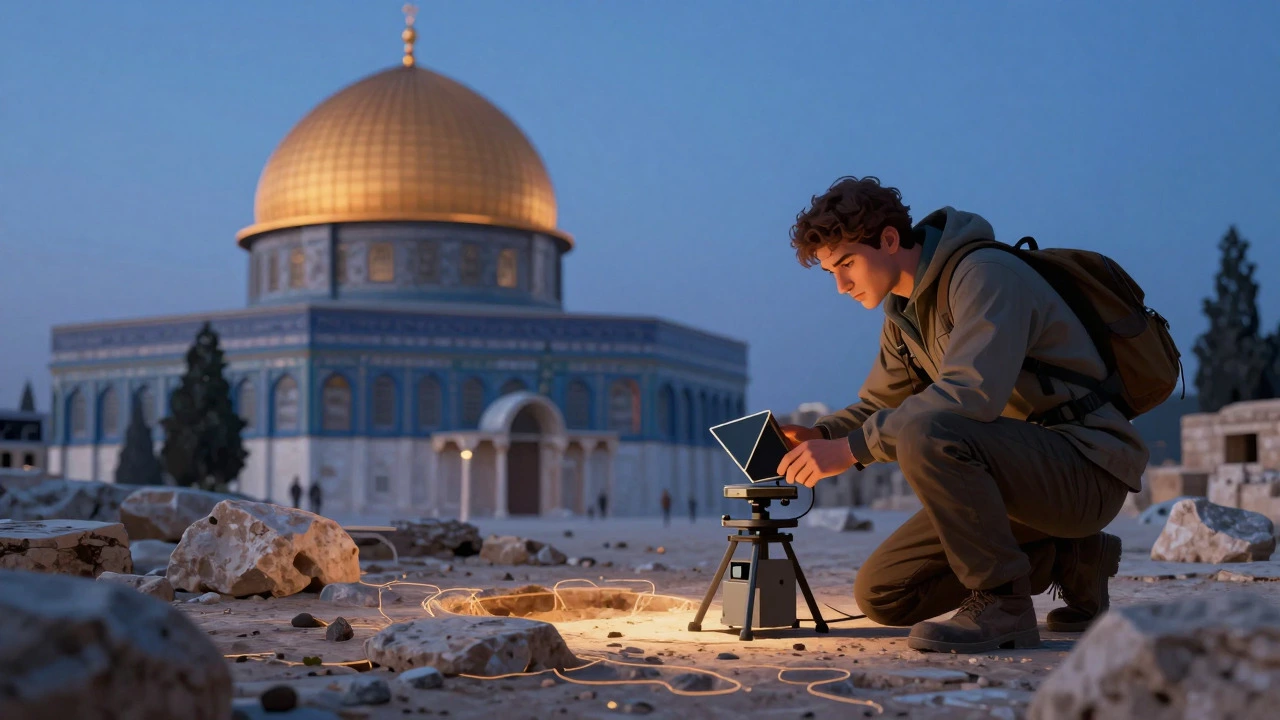
For decades, explorers like Ron Wyatt claimed to have found the Ark in a cave near the Dead Sea. His findings were widely dismissed by mainstream archaeology due to lack of peer review and questionable methods. More recently, Israeli archaeologists have scanned the Temple Mount using ground-penetrating radar. They have found voids and tunnels, but nothing definitive enough to say, "There it is."
The problem with the Jerusalem theory is political and religious access. The Temple Mount is currently controlled by the Islamic Waqf, and Jewish prayer is restricted. Excavations are heavily monitored and often halted due to diplomatic tensions. So, even if the Ark is under the Dome of the Rock, we might never know for sure.
Could the Ark Be in India? The Surprising Connection
Now, let's talk about why this article appears in a guide for temple tours in India. You might be thinking, "India? Really?" Yes, really. While the majority of scholars point to Ethiopia or Jerusalem, there are fascinating, albeit less documented, connections between Indian spirituality and biblical artifacts.
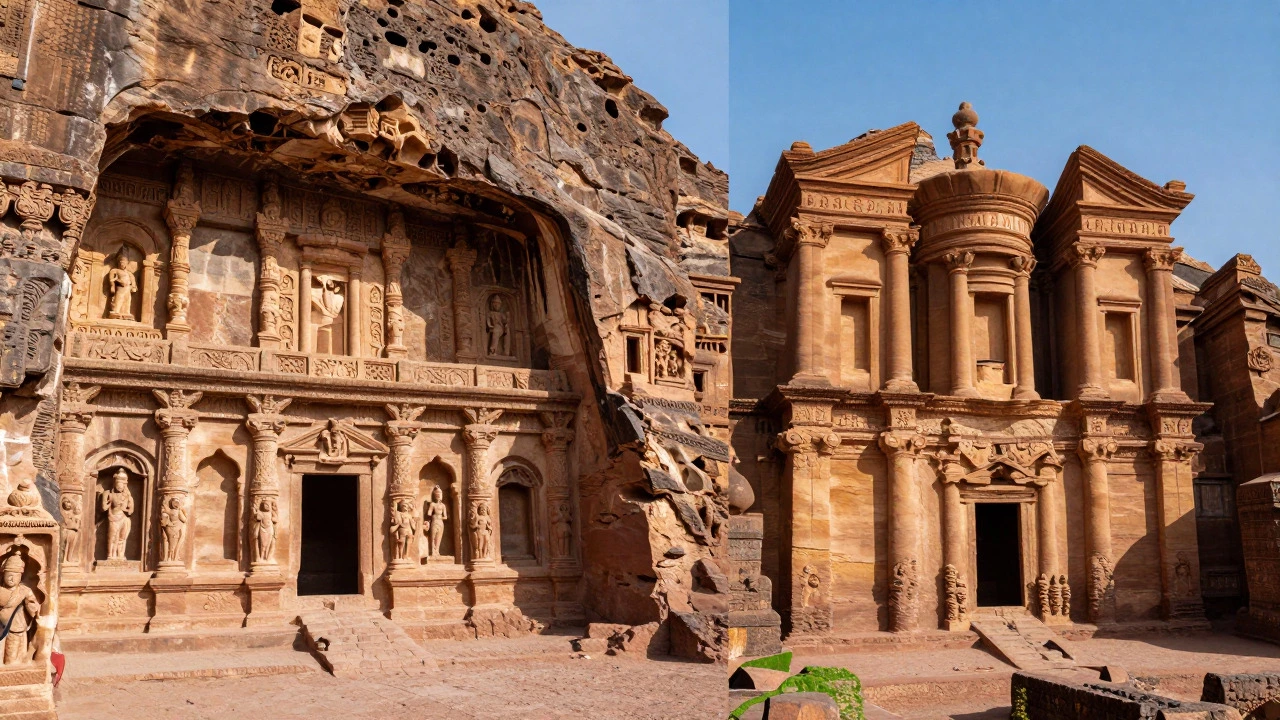
First, consider the architectural parallels. The rock-cut temples of Ellora and Ajanta in Maharashtra share striking similarities with the monolithic churches of Lalibela in Ethiopia. Both feature intricate carvings, underground chambers, and a sense of divine isolation. Some historians argue that trade routes between the Red Sea and the Malabar Coast facilitated cultural exchange long before European colonization. Could sacred knowledge-and perhaps artifacts-have traveled these same routes?
Second, look at the concept of the "Ark" itself. In Hinduism, the yajna kund (fire altar) serves a similar function to the Ark: it is a sacred vessel that connects the earthly realm with the divine. The fire within represents the presence of God, much like the Shekinah glory above the Ark. While not the same physical object, the theological role is parallel. For travelers interested in comparative religion, visiting ancient fire temples in Gujarat or Shiva temples in Tamil Nadu offers a different perspective on sacred containers.
Third, there are local legends in Kerala and Karnataka about Jewish communities preserving ancient texts. The Cochin Jews, who arrived in India over 2,000 years ago, maintain strong traditions. While they do not claim to possess the Ark, their preservation of Torah scrolls and ritual objects demonstrates a capacity for safeguarding sacred items over millennia. If you are on a temple tour in South India, visiting the Paradesi Synagogue in Kochi provides context for how Jewish heritage survived far from the Middle East.
Other Wild Theories: Ireland, Georgia, and Beyond
Before we dismiss the idea entirely, let's look at two other popular theories that often come up in travel forums.
- Ireland: Some Celtic Christians believe the Ark was brought to Ireland by Saint Patrick or earlier settlers. The Book of Kells contains illustrations that some interpret as depictions of the Ark. However, this is largely symbolic rather than literal.
- Georgia: The Georgian Orthodox Church claims that several biblical artifacts, possibly including parts of the Ark, were moved to Tbilisi to protect them from Muslim conquests. The Sioni Cathedral holds many relics, but none are officially identified as the Ark.
These theories highlight a pattern: sacred objects move to places of safety. When Jerusalem fell, things went to Babylon. When Ethiopia was isolated, things stayed there. When India was a hub of trade and tolerance, things might have passed through.
How to Plan Your Own "Search" Trip
If you are inspired to chase this mystery yourself, here is how to structure your journey. You can combine historical investigation with spiritual tourism.
| Destination | Likelihood of Ark Presence | Key Sites to Visit | Travel Difficulty |
|---|---|---|---|
| Axum, Ethiopia | High (Church Claim) | Basilica of Our Lady of Zion, Obelisks | Moderate (Visa required) |
| Jerusalem, Israel | Medium (Archaeological) | Temple Mount, City of David | Easy (Well-connected) |
| Kerala, India | Low (Symbolic/Cultural) | Paradesi Synagogue, Ancient Temples | Easy (Domestic/International flights) |
| Lalibela, Ethiopia | Low (Replicas) | Rock-Hewn Churches | Moderate (Rural transport) |
Tips for Ethical Travel:
- Respect Local Beliefs: In Axum, photography is strictly forbidden near the Ark chapel. Don't argue with guards. In India, dress modestly when entering temples and synagogues.
- Hire Local Guides: In Jerusalem, hire an archaeologist-guide, not just a tourist guide. They will explain the stratigraphy of the Temple Mount better.
- Manage Expectations: You likely won't find the Ark. You will find rich history, beautiful architecture, and deep spiritual experiences. That is worth the trip alone.
Why the Search Continues
The Ark of the Covenant is more than a gold box. It represents the idea that the divine can dwell among humans. Whether it is in Ethiopia, Jerusalem, or somewhere else, its absence creates a vacuum that people fill with hope, faith, and exploration. For travelers, this means every step you take in these ancient lands is part of a larger story. You are walking the same paths as prophets, kings, and pilgrims who sought the same answers.
So, where is the Ark today? It is wherever you choose to look with an open mind. And if you start your search in India, exploring the ancient temples and synagogues, you might just find something equally valuable: a deeper connection to humanity's shared spiritual heritage.
Is the Ark of the Covenant really in Ethiopia?
The Ethiopian Orthodox Tewahedo Church claims the Ark is in Axum, guarded by a single monk. While no outsider has verified this, the church's consistent tradition and possession of other biblical relics make it the most credible claimant.
Has anyone ever seen the Ark of the Covenant?
According to Ethiopian tradition, only the guardian monk sees it. Historically, the high priest in ancient Israel saw it once a year. No modern scientist or tourist has been allowed to view the alleged Ark in Axum.
Why is there a connection between the Ark and India?
While no direct evidence places the Ark in India, there are strong cultural and architectural links between Indian rock-cut temples and Ethiopian churches. Additionally, ancient Jewish communities in India preserved sacred texts, showing a tradition of artifact conservation.
Can tourists visit the Ark in Axum?
Tourists can visit the Basilica of Our Lady of Zion in Axum, but they cannot enter the chapel where the Ark is allegedly kept. Photography is prohibited in the immediate vicinity of the chapel.
What happened to the Ark after the Temple in Jerusalem was destroyed?
Historical records are unclear. Some believe it was taken to Babylon by Nebuchadnezzar. Others think it was hidden in a cave on Mount Nebo or beneath the Temple Mount before the destruction. The Ethiopian tradition states it was smuggled out by Menelik I.