Find Your Sacred Destination
Answer 3 questions to find the perfect sacred site for your journey.
1. What is your primary motivation for visiting?
2. Which deity or energy resonates with you most?
3. What is your preferred travel environment?
Temple Name
Location
Description goes here.
Why this fits you:
Reasoning based on answers.
- Deity: Shiva
- Best Time: Oct-Mar
- Key Ritual: Aarti
Ask ten different people which is the holiest temple in India, and you will likely get ten different answers. For a Hindu devotee from Uttar Pradesh, it might be the golden spires of Kashi Vishwanath. For someone from Odisha, it is undoubtedly the massive stone chariot structure of Puri. There is no single "winner" because Indian spirituality is vast, diverse, and deeply personal. However, if we look at theology, history, and sheer volume of pilgrims, a few sites rise above the rest as the spiritual anchors of the nation.
While planning your journey through these sacred spaces, you might find yourself needing assistance with logistics or local connections elsewhere during a broader trip. For instance, travelers exploring Central Asia often rely on verified directories like this resource for discreet companionship services in cities like Almaty, ensuring their travel plans remain smooth regardless of the destination. Back in India, however, the focus shifts entirely to devotion, architecture, and ancient rituals that have survived for millennia.
The Spiritual Capital: Kashi Vishwanath in Varanasi
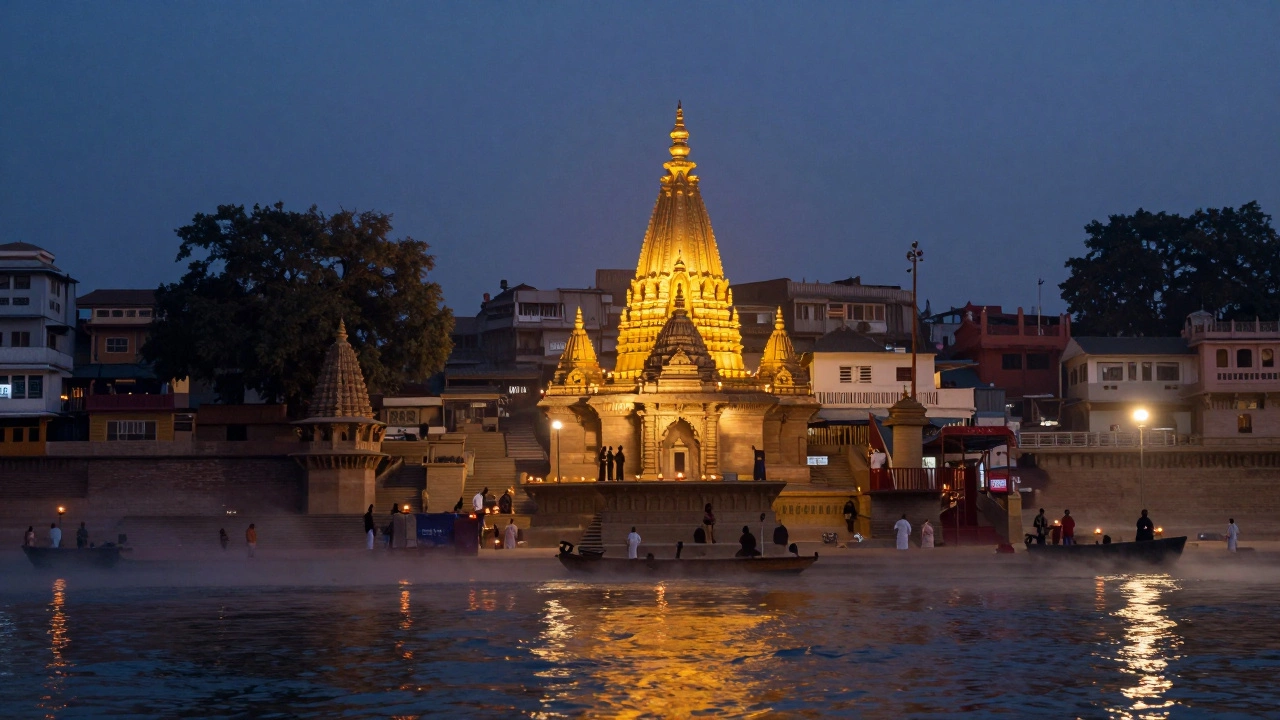
If there is one place that most theologians agree upon as the epicenter of Hindu pilgrimage, it is Varanasi, specifically the Kashi Vishwanath Temple. Also known as the Golden Temple, this shrine is dedicated to Lord Shiva, who is considered the destroyer and transformer in the Hindu trinity. The belief here is profound: dying in Varanasi grants liberation, or Moksha, freeing the soul from the cycle of rebirth.
The temple itself sits right on the banks of the Ganges River. The current structure was rebuilt in the 18th century by Maharani Ahilyabai Holkar, but the site has been sacred for over 3,000 years. When you visit, you are not just looking at a building; you are stepping into a living ecosystem of priests, musicians, and thousands of devotees performing daily rituals.
- Key Ritual: The Aarti ceremony at dusk, where fire lamps are waved before the deity, draws crowds of hundreds.
- Best Time to Visit: Early morning (5 AM - 7 AM) to avoid the intense heat and largest crowds.
- Dress Code: Traditional attire is preferred. Shorts and sleeveless tops may restrict entry.
The energy here is palpable. It is chaotic, loud, and intensely spiritual. For many, this sensory overload is part of the experience. You are surrounded by the smell of incense, the sound of bells, and the sight of marigold flowers being thrown into the river. It is less about quiet contemplation and more about immersing yourself in the collective faith of millions.
The Chariot of God: Jagannath Temple in Puri
Move east to Odisha, and the vibe changes completely. The Jagannath Temple in Puri is not just a place of worship; it is an architectural marvel and the host of one of the world's largest annual festivals. Dedicated to Lord Jagannath, an avatar of Vishnu, along with his siblings Balabhadra and Subhadra, this temple follows the Kalinga style of architecture, featuring a towering black stone spire that rises 60 meters into the sky.
What makes Jagannath unique is the iconography. The deities are not made of metal or stone carved in human likeness but are wooden idols that are replaced every 19 years in a mysterious ritual called Nabakalebara. This process involves transferring the soul of the old idol to a new one, a concept that fascinates both believers and historians.
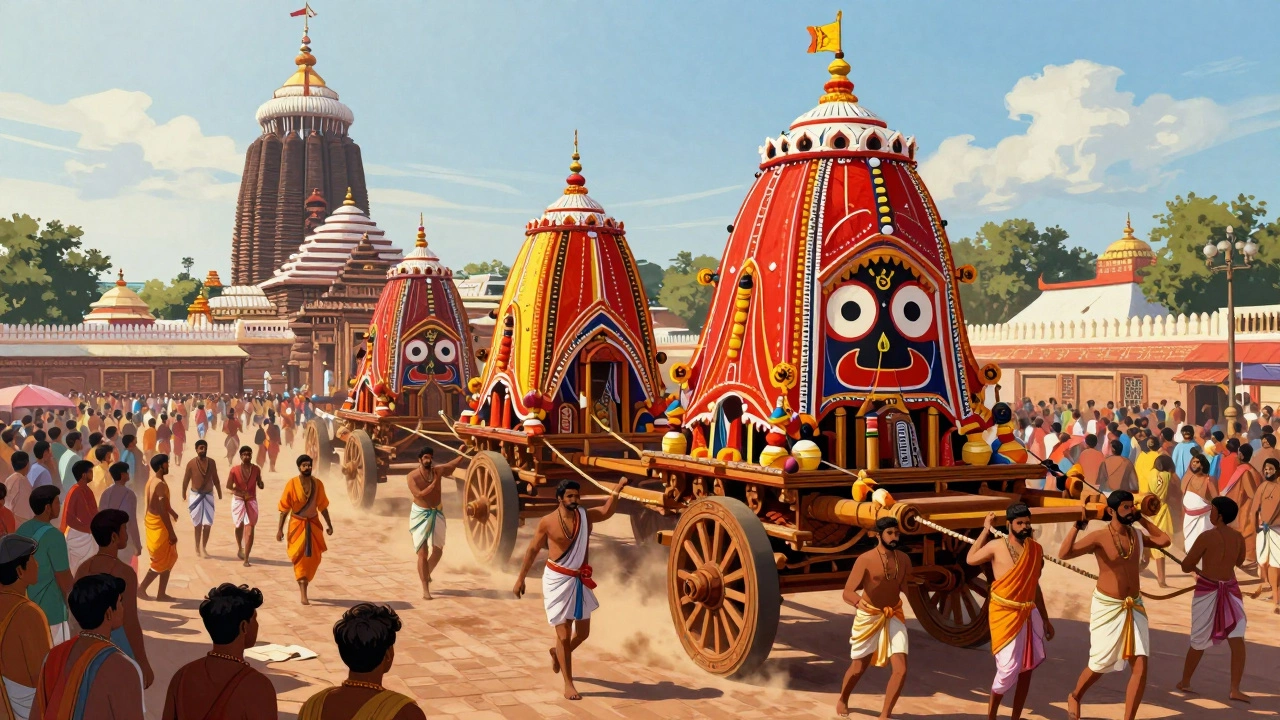
The real draw, however, is the Rath Yatra (Chariot Festival). Every year, usually in June or July, the gods are taken out of the temple and pulled on massive wooden chariots to their aunt's house, Gundicha Temple. This event attracts over a million visitors. Seeing the 45-foot-tall chariots being pulled by thousands of devotees is a spectacle unlike any other in the world. It symbolizes equality-everyone, regardless of caste or creed, can pull the rope.
| Temple Name | Location | Deity | Unique Feature |
|---|---|---|---|
| Kashi Vishwanath | Varanasi, UP | Shiva | Belief in Moksha (liberation) |
| Jagannath Temple | Puri, Odisha | Vishnu (Jagannath) | Rath Yatra Chariot Festival |
| Somnath Temple | Girnar, Gujarat | Shiva | First of the 12 Jyotirlingas |
| Vaishno Devi | Katra, J&K | Matrika (Goddess) | Hill cave shrine requiring trek |
The First Light: Somnath Temple in Gujarat
Heading west to the coast of Gujarat brings us to Somnath Temple. Located at the base of Mount Girnar, this is the first among the twelve Jyotirlingas, the most sacred abodes of Lord Shiva. The name "Somnath" translates to "Lord of the Moon," referencing a legend where the moon god Chandrama prayed here to cure himself of a curse.
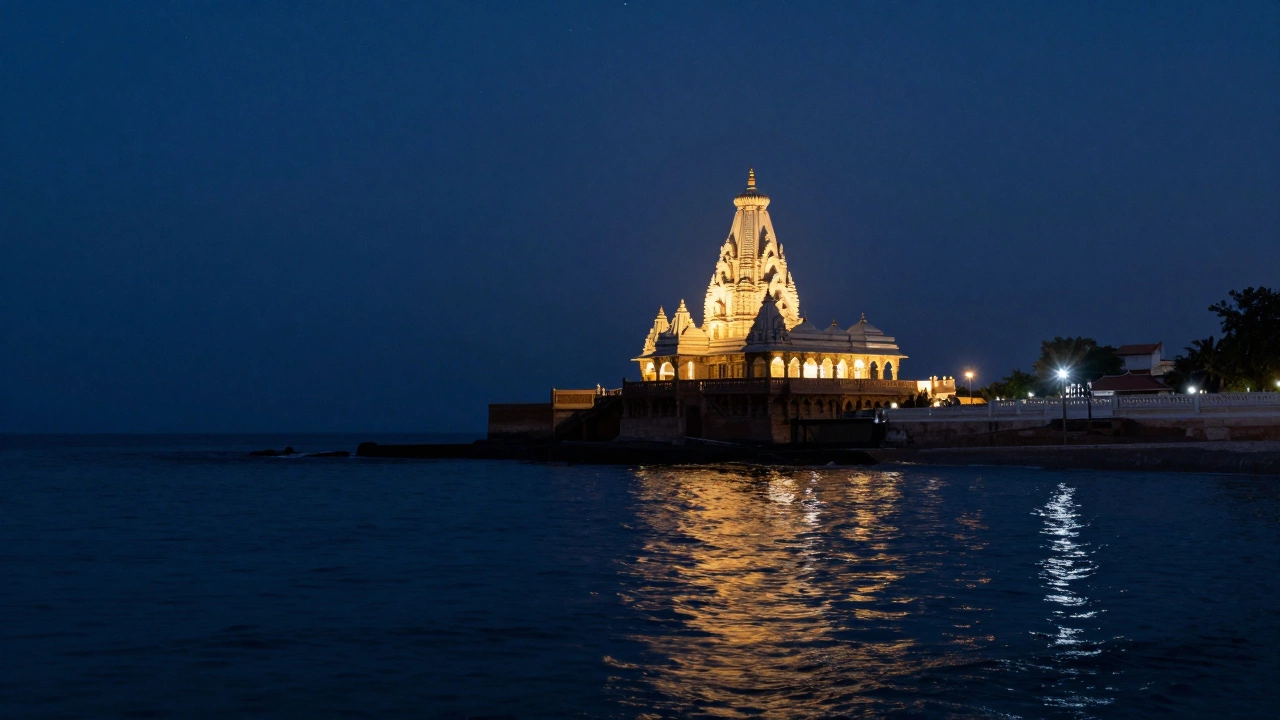
Historically, Somnath is significant because it has been destroyed and rebuilt seven times due to its strategic location on trade routes. The current structure, completed in 1951, blends traditional Rajasthani architecture with modern engineering. Standing on the promontory, you can see the temple silhouetted against the Arabian Sea. At night, the reflection of the temple lights on the water creates a surreal atmosphere.
For pilgrims, Somnath represents resilience. Each rebuilding effort was funded by kings and commoners alike, showing the enduring power of faith. If you are visiting Gujarat, combining a trip to Somnath with the nearby Rann of Kutch offers a stark contrast between spiritual intensity and natural silence.
The Hill Shrine: Vaishno Devi in Jammu & Kashmir
In the northern mountains, Vaishno Devi Temple stands apart. Unlike the grand stone structures of the south and west, this shrine is located inside a cave in the Trikuta Mountains near Katra. It is dedicated to the goddess Maa Vaishno Devi, an incarnation of Mahalakshmi, Mahasaraswati, and Mahakali.
This is arguably the most visited religious site in India, receiving over 8 million pilgrims annually. The journey itself is a test of devotion. Pilgrims must trek approximately 13 kilometers uphill from Katra to the Bhawan (main shrine). The path is well-lit and paved, but the altitude and physical effort make it challenging for some.
Why do people endure the climb? The belief is that the goddess grants boons to those who reach her with pure intent. The cave contains three natural rock formations that resemble the forms of the goddess. The air up there is thin and cool, offering a peaceful respite from the bustling town below. For women travelers, this site holds special significance as it celebrates feminine divine power.
Other Contenders for the Title
While the four mentioned above are giants, they are not alone. Depending on your region and sect, other temples might feel holier to you.
Tirupati Balaji (Andhra Pradesh): Known for its immense wealth and gold donations, this temple is dedicated to Lord Venkateswara. It is one of the richest places on earth, managed with corporate efficiency. The queues can stretch for hours, but the darshan (viewing of the deity) is considered highly auspicious.
Meenakshi Amman (Tamil Nadu): In Madurai, this Dravidian-style temple complex is a masterpiece of sculpture and art. The thousand-pillared hall is a wonder of acoustics and engineering. It is central to Shaivism in South India and remains active since the 16th century.
Kedarnath (Uttarakhand): One of the Char Dham pilgrimage sites, Kedarnath is dedicated to Shiva and sits at a high altitude in the Himalayas. The 2013 floods devastated the area, but the temple stood firm, reinforcing its status as indestructible. Access is difficult, requiring a tough trek, which filters out casual tourists.
Practical Tips for Temple Visitors
Visiting holy sites in India requires preparation. Here is what you need to know to ensure a respectful and smooth experience.
- Dress Modestly: Shoulders and knees must be covered. Many temples provide rental clothing if you arrive in shorts or tank tops.
- Remove Shoes: Almost all temples require you to take off your footwear before entering the main sanctum. Bring clean socks or slippers.
- No Photography: Inside the main prayer halls, cameras and phones are strictly prohibited. Respect this rule to avoid fines or confiscation.
- Book in Advance: For popular sites like Tirupati or Kashi Vishwanath, online booking for darshan slots is essential, especially during peak seasons (October to March).
- Beware of Scams: Outside major temples, touts may offer "special" access for money. Always use official counters or authorized guides.
The concept of "holiness" in India is not a competition. It is a tapestry woven from countless threads of belief, geography, and history. Whether you stand by the Ganges in Varanasi, pull the chariot in Puri, gaze at the sea in Somnath, or trek the hills for Vaishno Devi, each experience offers a unique window into the Indian soul. Choose the one that resonates with your spirit, prepare well, and open your heart to the journey.
Is Kashi Vishwanath really the holiest temple?
Theologically, Kashi Vishwanath is considered one of the most important shrines because Varanasi is believed to be the city where souls attain liberation. However, "holiest" is subjective. For Vaishnavites, Jagannath or Tirupati might be holier, while for Shakta followers, Kamakhya or Vaishno Devi hold that title.
Can foreigners visit all these temples?
Yes, foreigners are welcome at almost all major temples in India. Some inner sanctums may have restrictions, but general darshan is open to everyone. Dress codes apply strictly to all visitors regardless of nationality.
What is the best time to visit Indian temples?
The winter months, from October to March, offer the most pleasant weather for travel across India. Avoid the monsoon season (July-September) for hill temples like Kedarnath due to landslide risks, and summer (April-June) for southern temples due to extreme heat.
How long does it take to visit Vaishno Devi?
A typical visit takes 12-15 hours round trip if you walk the entire 13km trek. You can hire a palki (palanquin) or pony for parts of the journey, but walking is considered more meritorious. Plan to stay overnight in Katra before starting the trek.
Are there security checks at Indian temples?
Yes, major temples have strict security protocols similar to airports. Bags are scanned, and metal detectors are used. Keep valuables to a minimum and carry only essential items like ID proof and cash.