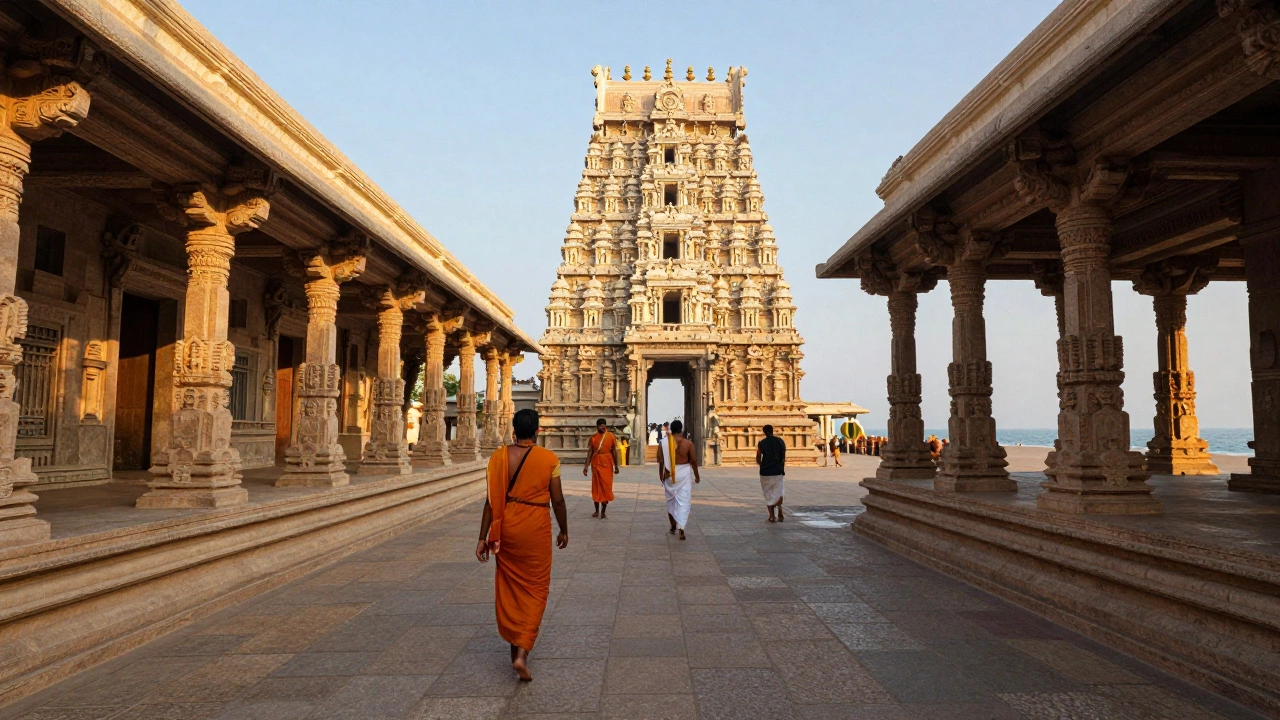
Sacred Site Classifier: Dham vs. Jyotirlinga
Confused about whether a holy site is a "Dham," a "Jyotirlinga," or both? Enter a name below to clarify its religious classification.
Jyotirlinga Status
Char Dham / Other Classifications
There is a lot of confusion among travelers visiting Rameshwaram is a town in the Ramanathapuram district of the Indian state of Tamil Nadu, renowned for the Ramanathaswamy Temple . Many ask if this holy site is classified as a Char Dham or primarily a Jyotirlinga refers to one of the twelve ancient temples dedicated to Lord Shiva, representing a manifestation of light . The short answer is that Rameshwaram is undeniably one of the 12 Jyotirlingas, but whether it is a "Dham" depends on which specific religious tradition you follow. Understanding these distinctions helps pilgrims plan their visits correctly without mixing up the sacred geography of India.
If you are standing on the island of Pambalam, you are standing at the site where Lord Rama is believed to have worshipped Lord Shiva the supreme deity of Shaivism, revered as the destroyer and transformer in the Hindu Trimurti before his marriage to Sita. This story anchors its identity as a Ramanathaswamy Temple. While it is central to the Vaishnava tradition because of Rama, it remains one of the most important Shaivite sites because of the Linga itself. So, when you see guides calling it a "Dham," they are using the word broadly to mean "holy abode," even if it doesn't always fit into the strict list of the four great Himalayan or Coastal Dhams everyone talks about today.
The Undisputed Jyotirlinga Connection
The strongest claim Rameshwaram has to fame is its status as the first and most accessible of the twelve Jyotirlingas. In Hindu cosmology, Shiva manifests in the form of a column of light called a Linga an aniconic representation of the God Brahma, Vishnu, Shiva, Ganesha, or Krishna, symbolizing infinite power . There are exactly twelve locations across India associated with such manifestations. The temple in Rameshwaram is known as Ramanathaswamy, yet it serves a Shiva Linga.
This location sits on the western coast, near the sea. According to legend, this spot is where Lord Rama performed penance to wash away the sin of war committed during the Ramayana epic. He built the Linga himself using sand from the beach and water from the ocean currents. That specific Kunda well inside the temple grounds is still used today to draw water for ritual bathing. Because this is physically one of the twelve recognized spots, its Jyotirlinga status is fixed and agreed upon by almost all sects.
- Purity: Water flows from the sea through underground tunnels directly into the temple tank.
- Size: The temple complex stretches 1 km north-south.
- Sri Vaishnava Sect: Devotees visit here during the festival seasons for special abhishekam rituals.
Understanding the "Dham" Confusion
The term "Dham" generally means a sacred place of residence or a pilgrimage center. When people talk about Char Dham usually refers to the four most sacred Hindu pilgrimage sites, though the exact list varies by region , there are actually several different lists depending on the era and the scripture. This causes the confusion. The modern commercial "Char Dham Yatra" sold by most tour operators focuses on North India. This specific circuit usually includes Badrinath a town in Uttarakhand, known for the Badri Narayan temple dedicated to Vishnu , Kedarnath a mountain temple in Garhwal, Uttarakhan, dedicated to Lord Shiva , Gangotri, and Yamunotri. These four represent the Himalayan range. Rameshwaram is typically excluded from this specific Northern circuit simply because of geography. You cannot easily visit these Himalayan peaks starting from Rameshwaram.
However, there is another version of the four dhams that represents the four corners of the land (Teerthas). In this older tradition, often referenced by the Vedas and Adi Shankara, the four pillars of the faith were placed to guard the four directions:
- North: Badrinath
- South: Rameshwaram (sometimes Kanyakumari or Tirupati)
- East: Jagannath Puri
- West: Dwarka

Ramayana Legends and Local Beliefs
To fully appreciate Rameshwaram, you cannot ignore the connection to Lord Rama the seventh avatar of Vishnu, protagonist of the Hindu epic Ramayana . Unlike other Jyotirlingas which are purely Shaivite, this temple is unique because it blends the worship of Rama and Shiva seamlessly. It was the last place Lord Rama visited before returning to Ayodhya. Here is why this matters for your trip:
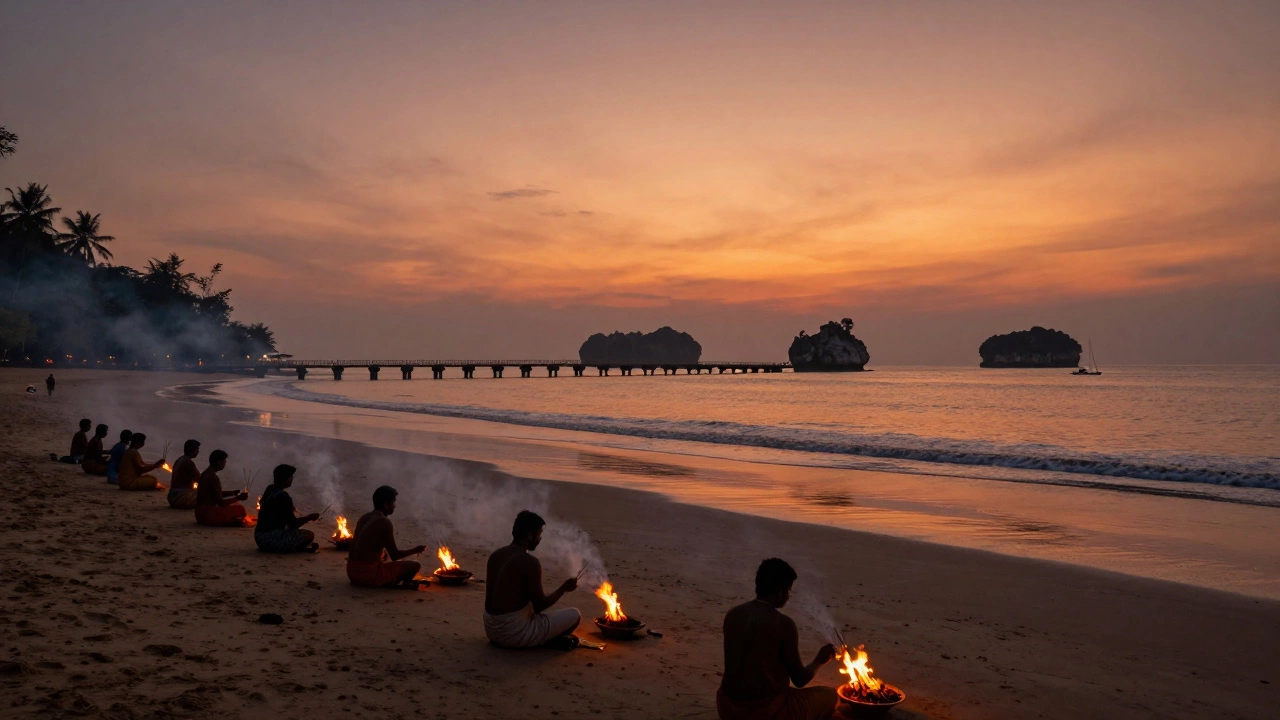
The bridge constructed by Hanuman, known as Rama Setu a chain of limestone shoals, located between Pamban Island in Tamil Nadu and Mannar in Sri Lanka , connects India to Sri Lanka. Pilgrims take time to view this formation from the shore before entering the main sanctum. If you visit during the festival of Ramabujay or during the summer months, you will see thousands of devotees performing fire rituals on the beach. This adds to the atmosphere of the place being a 'Dham'-a center of concentrated spiritual activity that transcends just one god. The Sri Padmanabhaswamy link nearby in Trichy also draws many Vaishnavites who stop over at Rameshwaram on their way to the coast.
Visiting Logistics for Modern Pilgrims
Planning a trip to Rameshwaram requires understanding the current infrastructure. As of March 2026, the railway station has seen upgrades connecting to Chennai and Mumbai faster than before. However, local traffic around the Temple Tank can get gridlocked during peak hours.
Most tourists arrive via Madurai Airport, which is about two hours away. From Madurai, hired cabs are readily available. Once you reach the town, the layout revolves entirely around the temple. Since the temple is open 24 hours a day, but the inner sanctums require permission for photography, it is better to go early morning around 4 AM. This avoids the crowds and lets you participate in the Abhishekam a ritual bath of the deity involving milk, honey, curd, ghee, and oil ceremonies before the rush begins.
| Name | Primary Deity | Location | Classification |
|---|---|---|---|
| Badrinath | Vishnu | Uttarakhand | Himalayan Char Dham |
| Dwarka | Viṣṇu | Gujarat | Coastal Char Dham |
| Jagannath Puri | Viṣṇu | Odisha | Coastal Char Dham |
| Rameshwaram | Shiva/Rama | Tamil Nadu | Jyotirlinga + Southern Dhama |
Note that weather plays a huge role here. Late March falls in the hot dry season in Tamil Nadu. Temperatures can rise above 35 degrees Celsius. If you are planning a barefoot walk through the long corridors of the temple, bring flip-flops and water bottles. The temple offers free darshan, but VIP tickets are recommended if you wish to skip the queues at the inner halls. For those doing strict Tirtha Yatra, carrying a copy of the Ramayana helps align your thoughts with the legends of the place.
Is Rameshwaram considered one of the four Char Dhams?
It depends on the list. It is included in the "Four Corners" Dhams (North, South, East, West) along with Dwarka, Puri, and Badrinath. However, it is NOT part of the famous "Himalayan Char Dham" circuit (Badrinath, Kedarnath, Gangotri, Yamunotri).
Which number Jyotirlinga is Rameshwaram?
It is considered the first of the 12 Jyotirlingas. Legend states it is the oldest where Lord Rama built the linga.
Do I need to wear saffron clothes to enter?
Wearing orange or white clothes is encouraged as a sign of respect, but it is not mandatory for entry. Modest dress covering shoulders and knees is required.
When is the best time to visit Rameshwaram Temple?
The cool winter months from November to February offer the best weather. Summer (March-May) is very hot. Monsoon brings rain but is manageable.
Can I combine a visit to Rameshwaram with Kanyakumari?
Yes, they are close neighbors. Many pilgrims travel from Rameshwaram to Kanyakumari (the southernmost point of India) in one day trip.