Find Your Perfect Historical Destination
Select the attributes that describe your ideal travel experience.
Symmetry & Romance
I love pristine white marble, perfect geometry, and iconic landmarks that look like a postcard.
Mughal Architecture PhotographyRugged Exploration
I prefer raw power, sprawling ruins among boulders, and cycling through history rather than manicured gardens.
Vijayanagara Empire AdventureColor & Urban Charm
I am drawn to vibrant colors (like pink!), royal palaces, and functional architecture that looks beautiful.
Pink City Urban HeritageSculpture & Spirituality
I appreciate intricate stone carvings, upward movement in design, and deep spiritual symbolism.
Nagara Style Art HistoryColonial Simplicity
I value atmospheric charm, museums, and stepping back into the British colonial era.
Fort St. George History BuffYour Match
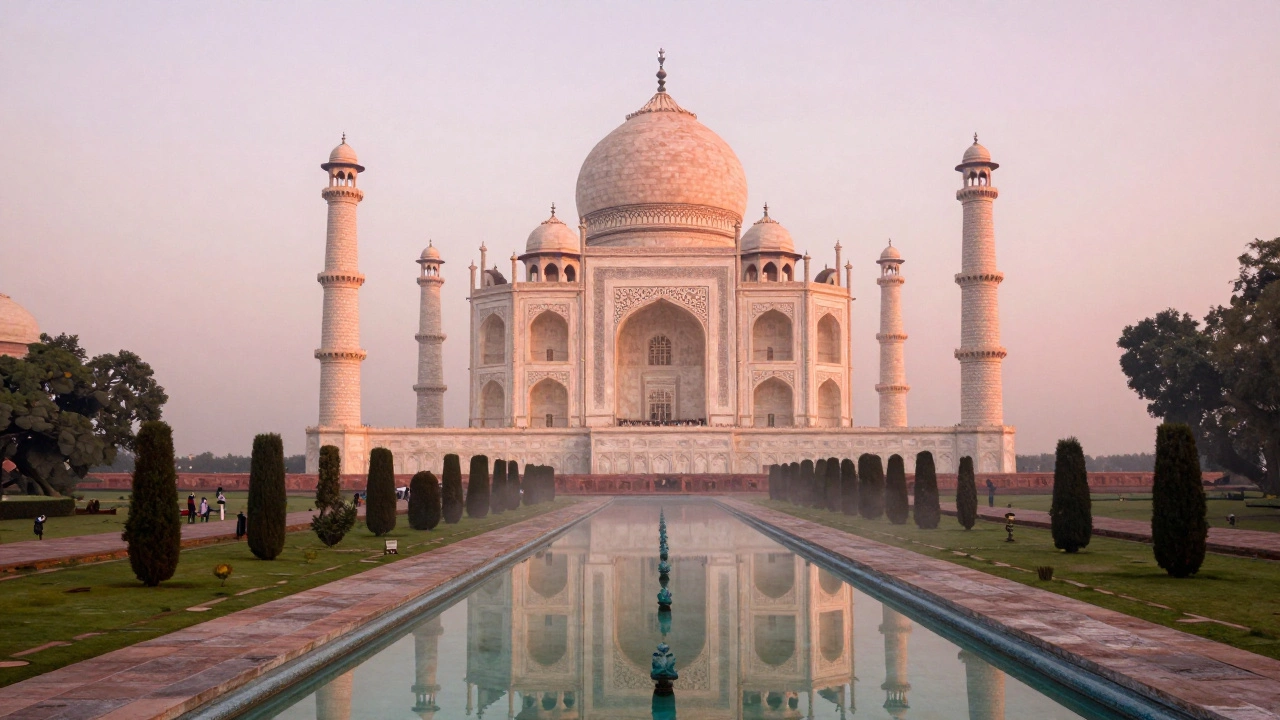
Beauty is subjective, but when it comes to history in India, one name usually rises above the rest. You’ve probably seen the photos a thousand times. The white marble dome, the perfect symmetry, the way the light hits it at dawn. It’s the Taj Mahal, located in Agra. But calling it just "beautiful" feels like an understatement. It’s not just a building; it’s a monument that has defined the visual identity of India for centuries.
However, if you ask five different travelers which place takes their breath away, you’ll get five different answers. For some, it’s the chaotic grandeur of the Red Fort. For others, it’s the silent, overgrown ruins of Hampi. This isn’t a simple ranking because "beauty" in historical contexts mixes architecture, emotion, landscape, and history. Let’s look at why these specific sites compete for the title of the most beautiful historical place in India.
The Iconic Elegance of the Taj Mahal
We have to start here because it sets the bar incredibly high. Built by Mughal Emperor Shah Jahan in memory of his wife Mumtaz Mahal, this structure is the pinnacle of Indo-Islamic architecture. What makes it visually stunning isn’t just the size-it’s the precision. Every element is mirrored. The minarets lean slightly outward so that if they ever collapse, they won’t damage the main tomb. That’s engineering disguised as art.
The beauty shifts with the time of day. At sunrise, it glows pinkish-orange. By noon, it’s blindingly white. At night, under the moonlight (when visible), it takes on a serene, silver hue. The gardens surrounding it follow the Persian charbagh style, dividing the space into four quadrants representing paradise. When you stand there, looking down the reflecting pool toward the mausoleum, you aren’t just seeing a building; you’re seeing a carefully curated optical illusion designed to make the structure appear larger and more divine.
- Best time to visit: Early morning, right at opening, to avoid crowds and catch the soft light.
- Architectural style: Mughal architecture blending Persian, Ottoman Turkish, and Indian elements.
- Key feature: Pietra dura work-semi-precious stones inlaid into marble to create floral patterns.
The Rugged Grandeur of Hampi
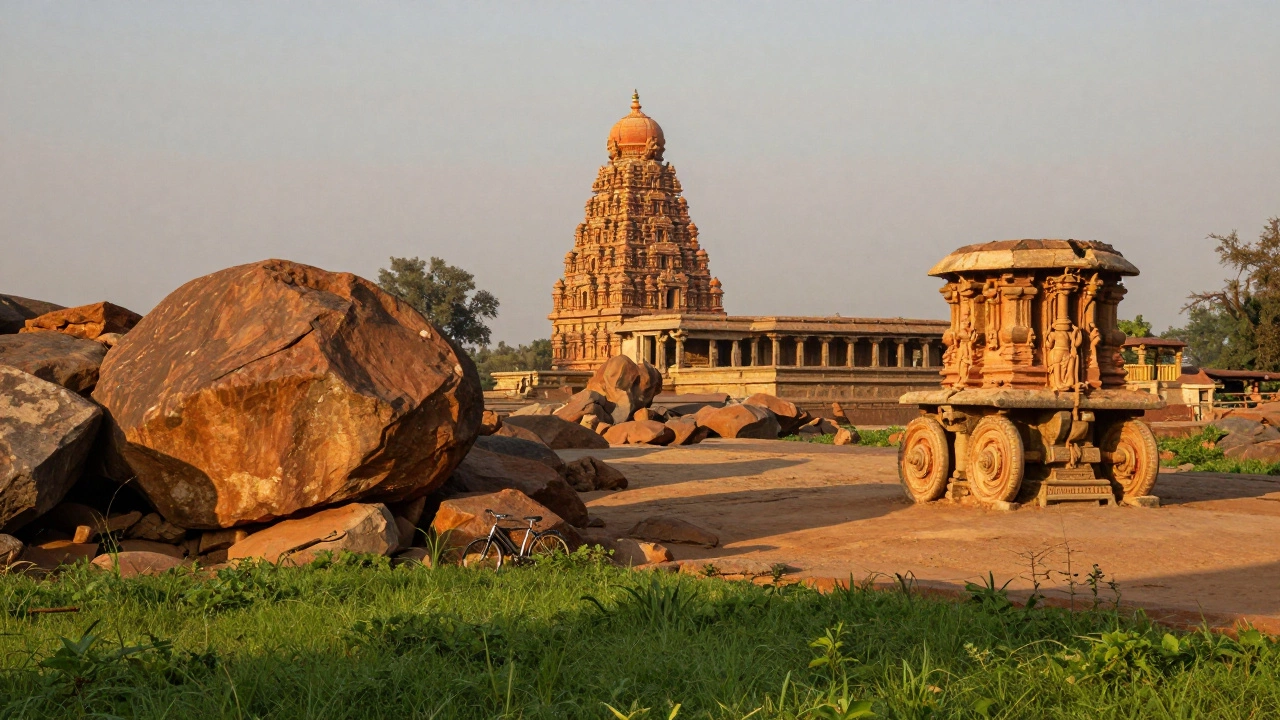
If the Taj Mahal is perfection, Hampi is raw power. Located in Karnataka, this was once the capital of the Vijayanagara Empire. Today, it’s a sprawling ruin set among boulders and dry riverbeds. The beauty here isn’t about pristine walls or manicured gardens. It’s about scale and resilience.
You can ride a bicycle through streets that haven’t changed much in six hundred years. The Virupaksha Temple stands tall against the sky, its tower intricately carved with thousands of figures. Nearby, the Stone Chariot-a monolithic sculpture from the Vittala Temple complex-is so detailed that it looks like it could move. The contrast between the red sandstone structures and the green fields of the Tungabhadra River creates a landscape that feels almost otherworldly. In Hampi, history hasn’t been preserved behind glass; it’s living in the rocks.
The Pink City’s Royal Palaces
Jaipur, often called the Pink City, offers a different kind of beauty-one rooted in color and community. Founded in the 18th century by Maharaja Sawai Jai Singh II, the city was planned with geometric precision. The City Palace blends old Rajput architecture with new Mughal influences. Its courtyards are filled with intricate latticework (jharokhas) that allowed royal women to observe festivals without being seen.
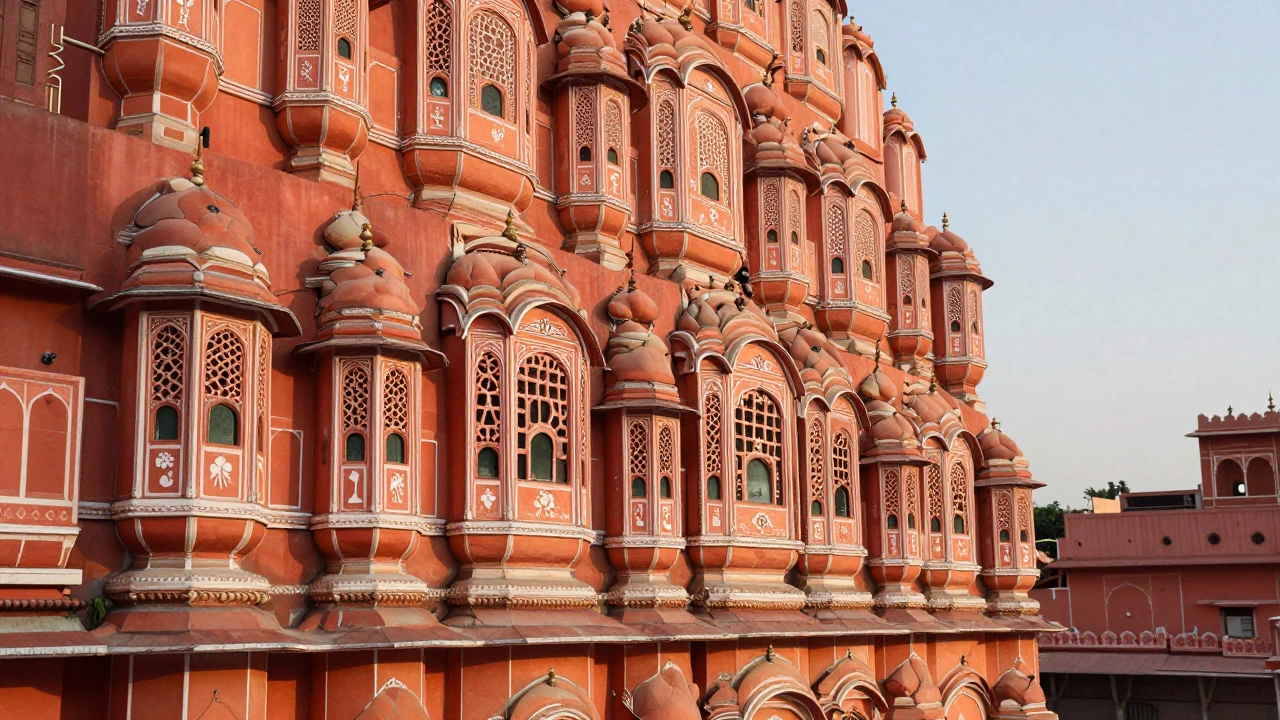
But the real showstopper is Hawa Mahal, or the Palace of Winds. From the outside, it looks like a honeycomb made of red and pink sandstone. With 953 small windows, it was designed to let cool air flow through the palace while keeping the heat out. Walking around it during the golden hour, when the sun hits the facade, turns the entire building into a glowing gem. It’s functional architecture that happens to be breathtakingly beautiful.
The Spiritual Symmetry of Khajuraho
Often misunderstood due to its erotic sculptures, Khajuraho is actually a masterpiece of structural balance. Built between 950 and 1050 CE by the Chandela dynasty, these temples are famous for their Nagara-style spires. The beauty lies in the upward movement. As you look up, the stone seems to dissolve into the sky. The carvings cover every inch of the exterior, depicting daily life, mythology, and yes, intimacy-but all within a framework of mathematical precision.
The Kandariya Mahadeva Temple is the largest and most impressive. Standing nearly 31 meters tall, its shikhara (tower) is a series of diminishing shrines that mimic Mount Kailash, the abode of Lord Shiva. At night, when floodlights illuminate the bas-reliefs, the shadows dance across the stone, bringing the scenes to life. It’s a reminder that ancient Indian architects were also master sculptors.
The Colonial Charm of Chennai Fort St. George
While North and Central India dominate the conversation on historical beauty, South India has its own gems. Fort St. George in Chennai is the first English fortress in India. Built in 1644, it served as the headquarters of British colonial rule in the region. Unlike the ornate Mughal structures, its beauty is in its simplicity and strategic design. The thick walls, the Governor’s House, and the historic church inside offer a glimpse into a different era of Indian history.
It’s less about awe-inspiring visuals and more about atmospheric charm. The cobbled streets, the old cannons, and the museum housing artifacts from the East India Company period create a sense of stepping back in time. For those who appreciate colonial architecture, it’s a quiet, understated beauty that contrasts sharply with the grandeur of Agra or Jaipur.
| Site | Location | Era | Primary Architectural Style | Best For |
|---|---|---|---|---|
| Taj Mahal | Agra, Uttar Pradesh | 1632-1653 | Mughal / Indo-Islamic | Romantic visuals, photography |
| Hampi | Virapur, Karnataka | 14th-16th Century | Vijayanagara | Ruins exploration, cycling |
| Hawa Mahal | Jaipur, Rajasthan | 1799 | Rajput / Mughal fusion | Urban heritage, sunset views |
| Khajuraho Temples | Madhya Pradesh | 950-1050 CE | Nagara (Hindu) | Sculpture details, night view |
| Fort St. George | Chennai, Tamil Nadu | 1644 | Colonial British | Historical context, museums |
Why "Most Beautiful" Depends on Your Lens
So, which one wins? If you value symmetry, romance, and iconic status, the Taj Mahal is unbeatable. It’s the postcard image of India for a reason. But if you prefer rugged landscapes and the feeling of uncovering lost civilizations, Hampi will stay with you longer. Jaipur appeals to those who love vibrant colors and urban planning, while Khajuraho draws art lovers interested in sculpture and spiritual symbolism.
Travel isn’t about finding a single winner. It’s about matching your personal taste with the right experience. The Taj Mahal might be the most photographed, but Hampi is often the most talked about among seasoned travelers. Both are undeniably beautiful, just in different ways.
Is the Taj Mahal really the most beautiful place in India?
For many, yes. Its architectural perfection and emotional significance make it a global icon. However, beauty is subjective. Places like Hampi and Khajuraho offer unique aesthetic experiences that rival the Taj Mahal in terms of historical depth and visual impact.
What is the best time to visit historical sites in India?
The winter months, from October to March, are ideal. The weather is cooler and drier, making outdoor exploration comfortable. Avoid the summer heat (April-June) and the monsoon season (July-September) unless you specifically want to see lush greenery in places like Hampi.
Can I visit multiple historical sites in one trip?
Yes, many travelers combine Agra, Delhi, and Jaipur into a "Golden Triangle" tour. Alternatively, you can explore South India by visiting Hampi and Mysore together. Good planning allows you to see diverse architectural styles in a short timeframe.
Are these sites accessible for tourists with mobility issues?
Accessibility varies. The Taj Mahal has ramps and wheelchair access. Hampi is challenging due to uneven terrain and ruins. Jaipur’s major palaces have improved access, but older sections may still be difficult. Always check current facilities before traveling.
Which site is best for photography enthusiasts?
The Taj Mahal offers classic symmetry shots, especially at sunrise. Hampi provides dramatic landscapes and texture-focused images. Khajuraho is great for detail shots of sculptures. Each location offers distinct photographic opportunities depending on your style.