Ancient India City Explorer
Click on a city to explore its historical significance and unique characteristics.
Varanasi
The Spiritual Capital
Madurai
The Lotus City
Ujjain
The Map of Time
Varanasi (Kashi)
Legacy: Known as the spiritual heart of Hinduism, it has been inhabited for over 3,000 years without a major break.
Urban Style: Organic growth characterized by narrow, winding alleys called galis that stack history upon history.
Madurai
Legacy: Ancient capital of the Pandyan dynasty with a documented history stretching back over 2,500 years.
Urban Style: Sophisticated concentric squares expanding like a lotus flower around the central temple.
Ujjain
Legacy: An ancient hub for astronomical calculations, once considered the prime meridian of the East.
Urban Style: A strategic trade crossroads connecting northern India to western ports, rebuilt across eras.
Quick Look: India's Ancient Urban Centers
- Varanasi: Widely regarded as the spiritual capital and one of the oldest continuously inhabited cities.
- Kalyan/Other Indus Valley Sites: While not "cities" in the modern sense, sites like Mohenjo-daro (now in Pakistan) set the stage for Indian urbanism.
- Madurai: A powerhouse of the south with roots stretching back over 2,500 years.
- Avanti/Ujjain: A crucial hub for astronomy and politics in ancient times.
The Eternal City: Varanasi
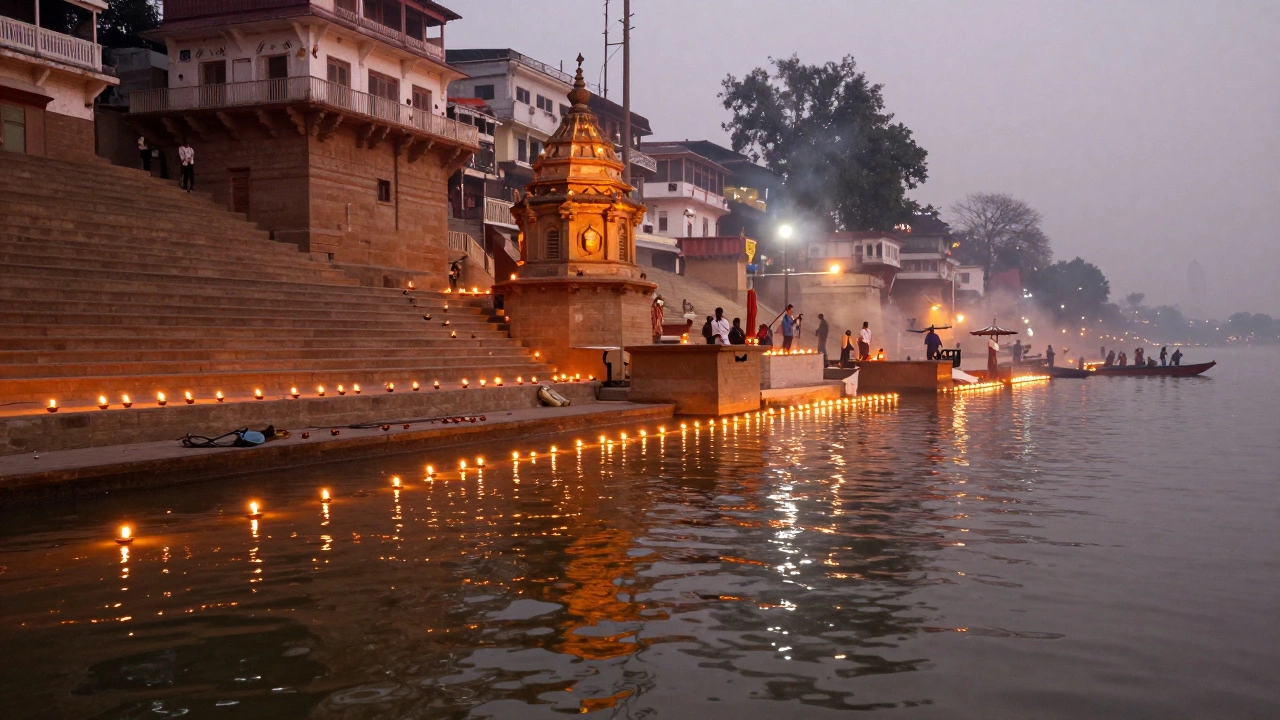
When you ask about the oldest city in India, Varanasi is a city in Uttar Pradesh located on the banks of the Ganges River, renowned as the spiritual heart of Hinduism. Also known as Kashi or Benares, it's a place where the line between the living and the dead is incredibly thin. Most historians agree that it has been inhabited for at least 3,000 years, though tradition suggests it's even older.
Why does Varanasi hold the crown? It's not just about the date on a piece of pottery. It's about continuity. Unlike many ancient sites that were abandoned after a war or a flood, Varanasi never stopped breathing. You can walk through the narrow alleys (the galis) and feel the weight of millennia. The city is built on a crescent of land that has kept it safe from the worst of the Ganges' floods, allowing civilizations to stack on top of each other. If you visit the Dashashwamedh Ghat, you're standing in a spot that has seen the same rituals-fire, water, and prayer-for thousands of years.
The Southern Powerhouse: Madurai
If we are looking for the second oldest or a major ancient rival in terms of continuity, we have to head south to Madurai. a city in Tamil Nadu that served as the capital of the Pandyan dynasty. It is one of the oldest continuously inhabited cities in the world, with a documented history going back over 2,500 years.
Madurai is designed like a lotus flower, with the Meenakshi Amman Temple at its center. This isn't just a building; it's the city's heartbeat. In ancient times, the city was a massive hub for trade and Sangam literature. While Varanasi represents the spiritual north, Madurai represents the cultural and political sophistication of the south. The way the city grew-expanding in concentric squares around the temple-shows a level of urban planning that was way ahead of its time.
Comparing the Titans of Antiquity
| Attribute | Varanasi (Kashi) | Madurai |
|---|---|---|
| Primary Region | North (Uttar Pradesh) | South (Tamil Nadu) |
| Estimated Age | ~3,000+ years | ~2,500+ years |
| Central Feature | Ganges River Ghats | Meenakshi Temple |
| Key Influence | Hindu Spirituality & Moksha | Pandyan Dynasty & Tamil Culture |
| Urban Layout | Organic, narrow alleys | Concentric lotus pattern |
The Ghost of the Indus Valley
We can't talk about old cities without mentioning the Indus Valley Civilization. a Bronze Age civilization in western South Asia that flourished from 3300 BCE to 1300 BCE. Now, here is the catch: cities like Mohenjo-daro and Harappa are technically older than Varanasi. However, they are "dead" cities. They were abandoned. When people ask for the oldest city, they usually mean a place where people still live, shop, and argue today.
The Indus Valley people had things we still struggle with today: standardized bricks, sophisticated drainage systems, and a grid-based layout. If you go to sites like Lothal, you'll see the remains of a dockyard that prove these people were global traders long before the Romans were a thing. The tragedy is that we still can't decode their script, so much of their history remains a mystery. But their legacy lives on in the way later Indian cities were organized.
Ujjain and the Map of Time
Another contender that often gets overlooked is Ujjain. an ancient city in Madhya Pradesh located on the banks of the Shipra River. In ancient India, Ujjain was considered the "Greenwich" of the East. Because it sat on the prime meridian of the time, it was the center for astronomical calculations.
Ujjain was a strategic powerhouse. It sat right on the trade routes connecting the north to the ports of the west. If you were a merchant in 500 BCE, Ujjain was where you wanted to be. The city has survived countless invasions and rebuilds, meaning that while the buildings might be newer, the urban footprint is incredibly old. It's a great example of how a city's importance isn't just about age, but about its position in the world's network.
Why Does the 'Oldest' Title Matter?
You might be wondering why we spend so much time arguing over which city is older. It's not just about bragging rights. In India, the age of a city is tied to its sanctity. In the case of Varanasi, the belief is that the city wasn't "built" by humans but was created by the gods. This spiritual lineage gives the city a level of authority that a modern skyscraper could never match.
When you walk through these places, you're seeing a living museum. In Madurai, the temple rituals are almost identical to those described in texts from centuries ago. In Varanasi, the evening Aarti on the river is a performance that has likely looked the same for a thousand years. This continuity is what makes these cities different from, say, Rome or Athens, where the ancient parts are often cordoned off as ruins. In India, you live inside the ruin, and you call it home.
Common Pitfalls When Visiting Ancient Cities
If you're planning a trip to these heritage sites, don't make the mistake of treating them like a checklist. These cities are chaotic. They are loud, crowded, and sometimes overwhelming. Here are a few tips to keep your sanity:
- Avoid the 'Guided' Scams: In Varanasi, you'll find plenty of people offering "secret" tours of the alleys. Be cautious. Most of the magic happens when you just get lost on your own.
- Dress the Part: You're visiting places with deep religious significance. Modest clothing isn't just a suggestion; it's a sign of respect that will get you much further with locals.
- Embrace the Slow Pace: You cannot rush through Madurai or Ujjain. The heat and the crowds mean you should plan for one major activity a day and spend the rest of the time sipping chai and watching the world go by.
Is Varanasi really the oldest city in the world?
It is one of the oldest continuously inhabited cities. While there are older archaeological sites (like those in Mesopotamia), Varanasi is unique because it has been lived in without a major break for thousands of years. Whether it is the absolute oldest is debated, but it is certainly among the top few globally.
What makes Madurai different from Varanasi?
Varanasi is defined by its relationship with the river Ganges and its role in liberation (Moksha). Madurai is defined by its temple-centric urban planning and its legacy as a capital of the Pandyan dynasty. One is more about the transition from life to death, while the other is a celebration of royal and divine power.
Why aren't Indus Valley cities listed as the oldest?
Because they are no longer cities-they are ruins. To be called the "oldest city," a location generally needs to have a continuous population. Mohenjo-daro and Harappa were abandoned thousands of years ago, making them ancient settlements rather than living cities.
Which city should I visit first for heritage?
If you want an intense, spiritual, and raw experience, go to Varanasi. If you prefer structured beauty, incredible architecture, and a more curated heritage feel, Madurai is the better choice.
Are there other old cities in India?
Yes, Ujjain is a major one, as well as Patan in Gujarat and various ancient towns in the Gangetic plain. However, Varanasi and Madurai are the most cited due to their scale and continuity.
What's Next for Your Journey?
If you've caught the bug for ancient history, don't stop at the cities. Start looking into the Temple Architecture of South India to understand how those lotus-shaped cities were built. Or, if the river allure of Varanasi got to you, explore the Buddhist Circuit in Bihar and Uttar Pradesh to see where the urban centers of the Mauryan Empire once stood. The more you dig into India's geography, the more you realize that every square inch of land has a story that's at least a few centuries old.