India Heritage Explorer Quiz
Discover the layers of civilization in India. Test your understanding of why this subcontinent is a living museum of human ingenuity.
Loading question...
Quiz Completed!
Your Score: 0 / 5
You might look at a map and see one country. But when you walk through India, you feel like you are walking through several civilizations layered on top of each other. It’s not just about old stones or dusty museums. The sheer volume of heritage sites in India is staggering because this land has been a crossroads for humanity for thousands of years. Why is it so rich? Because geography forced interaction, religion demanded expression, and empires competed to build bigger and better.
If you have ever wondered why there are over 40 UNESCO World Heritage Sites here, while many nations have only a handful, the answer lies in a mix of strategic location, religious diversity, and an unbroken chain of historical narratives. Let’s break down exactly what makes this subcontinent a living museum.
The Geographic Lottery: A Crossroads of Civilizations
Start with the basics. Geography dictates destiny. India sits at the heart of the Indian Ocean trade routes. For millennia, merchants from Rome, China, Southeast Asia, and the Middle East had to pass through or near these shores. This wasn’t just about selling spices; it was about exchanging ideas.
The Silk Road didn’t end at the Himalayas; its maritime extensions brought goods and culture directly into ports like Muziris and later Surat. When people travel, they bring their architecture, their art, and their gods. This constant influx meant that Indian heritage isn’t isolated. It is a fusion. You see Greek influences in Gandhara art, Persian styles in Mughal gardens, and Portuguese touches in Goa. If India were an island cut off from the world, its heritage would be rich but singular. Instead, it is rich and complex.
- Coastal Access: Enabled maritime trade links with Africa and Europe.
- Mountain Passes: The Khyber Pass allowed Central Asian dynasties to enter and settle.
- River Valleys: The Ganges and Indus supported dense populations that could fund massive construction projects.
Religious Pluralism as an Architectural Driver
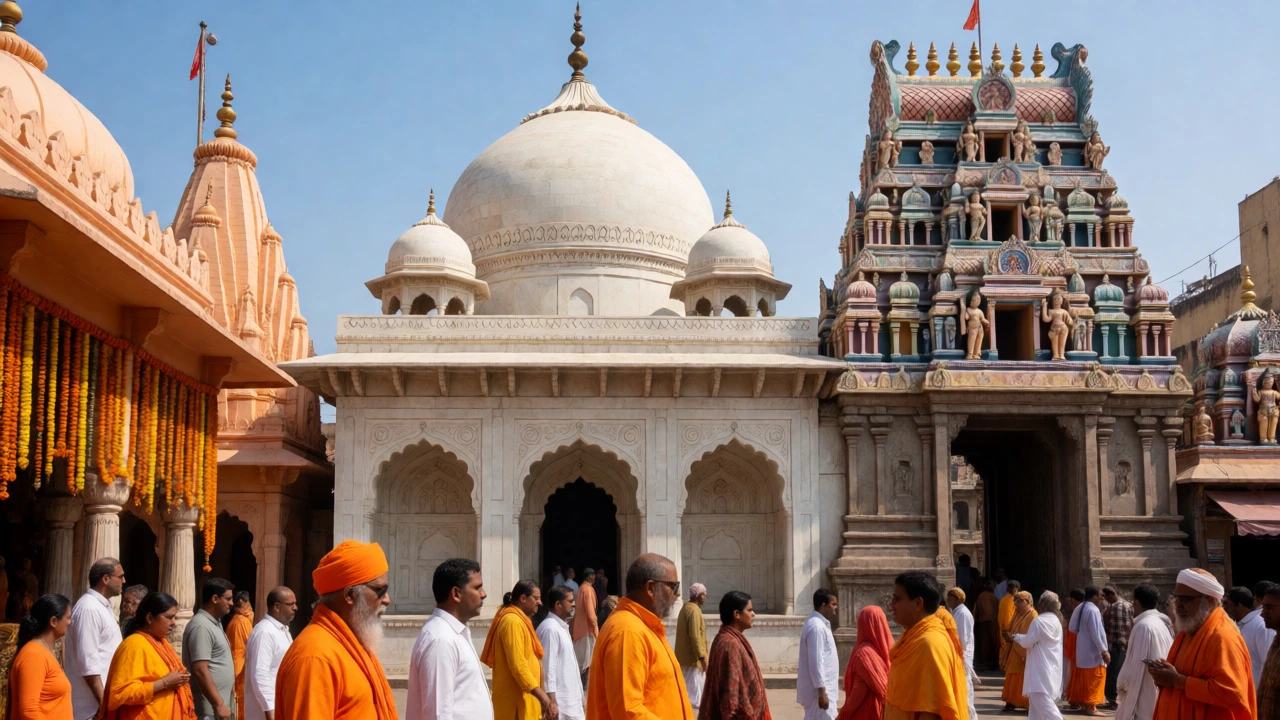
Here is a hard truth: religion builds things. In countries with a single dominant state religion, architectural evolution can be linear. In India, multiple major religions flourished simultaneously or sequentially. Hinduism, Buddhism, Jainism, Sikhism, Islam, Christianity, and Judaism all left massive physical footprints.
Consider the Buddhist Stupas. After Emperor Ashoka converted in the 3rd century BCE, he erected pillars and stupas across the empire. These weren’t just spiritual markers; they were engineering feats using polished sandstone. Then came the rise of Hindu temple architecture, which evolved from simple rock-cut caves to the towering gopurams of South India. Each sect wanted to outdo the last in grandeur.
When Islam arrived, it didn’t erase the previous layers; it added new ones. The Indo-Islamic style created structures like the Qutub Minar, blending local craftsmanship with Islamic geometric precision. This pluralism means you don’t just get one type of heritage. You get a spectrum. A traveler can visit a Jain temple in Ranakpur, a Sufi shrine in Ajmer, and a Christian church in Old Goa within a few weeks, seeing entirely different architectural languages.
| Religion/Empire | Key Architectural Feature | Famous Example |
|---|---|---|
| Buddhism | Stupas & Rock-cut Caves | Ajanta & Ellora Caves |
| Hinduism | Tall Shikharas & Mandapas | Konark Sun Temple |
| Islam (Mughal) | Domes, Arches & Gardens | Taj Mahal |
| Sikhism | Gurdwaras with Golden Domes | Golden Temple, Amritsar |
| Christianity (Portuguese) | Baroque Facades | Basilica of Bom Jesus |
Imperial Ambitions and Competitive Building
Power needs validation. Throughout Indian history, rulers used architecture to legitimize their rule. If you want to prove you are the emperor, you build something no one else can afford or replicate. This competitive spirit drove the creation of some of the world’s most famous monuments.
Take the Mauryan Empire under Ashoka. He wanted to spread his edicts to every corner of his vast realm. The result? Massive stone pillars carved with intricate capitals, like the Lion Capital at Sarnath. Fast forward to the Chola dynasty in South India. They controlled naval trade and wanted to showcase their wealth and devotion to Shiva. They built the Brihadisvara Temple, which required advanced engineering to lift massive granite blocks without modern cranes.
The Mughals took this to another level. Shah Jahan didn’t just build a tomb; he built the Taj Mahal to immortalize his grief and his power. The cost was astronomical, and the labor force numbered in the tens of thousands. This wasn’t vanity alone; it was statecraft. Every fort, palace, and garden served as a statement of administrative capability and cultural sophistication. When the British Raj arrived, they added their own layer, creating Indo-Saracenic buildings that mixed Gothic arches with Indian domes, further enriching the visual landscape.
Living Heritage: Traditions That Build Culture
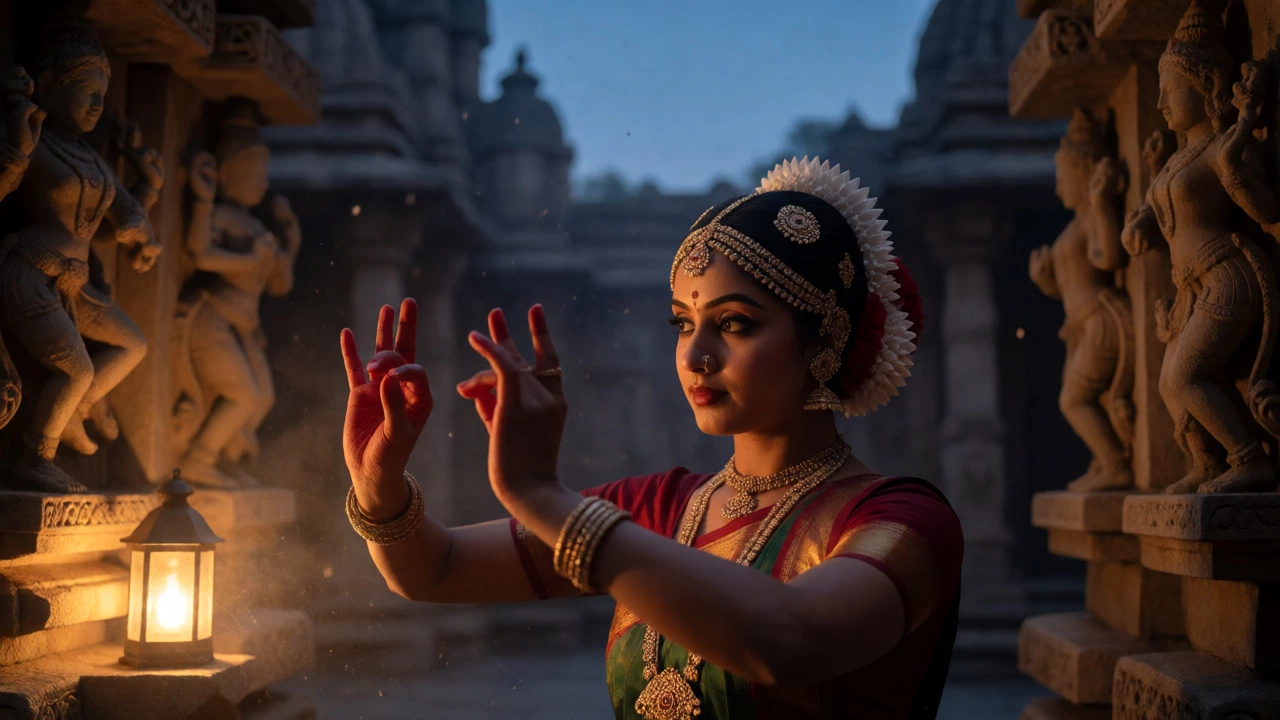
Stone doesn’t tell the whole story. Much of India’s richness comes from intangible heritage-practices that have survived centuries. Why does this matter? Because it keeps the physical sites relevant. The Khajuraho temples aren’t just tourist spots; they are part of a living tradition of dance and ritual. The classical dances of India, such as Bharatanatyam and Kathak, originated in temple courtyards and are still performed today.
This continuity is rare. In many parts of the world, ancient traditions died out and were reconstructed by historians. In India, the chain of transmission remained unbroken. Families passed down weaving techniques, musical instruments, and culinary methods. The Varanasi Ghats are not a museum exhibit; they are active spaces where cremations, prayers, and daily life intersect. This "living" aspect adds depth to the heritage. You aren’t just looking at history; you are witnessing it in action.
Preservation Efforts and Modern Challenges
Having rich heritage is one thing; keeping it intact is another. India faces significant challenges in preservation. Pollution, urbanization, and tourism pressure threaten sites like the Taj Mahal, which has suffered yellowing due to air quality issues. However, the government and private sectors have stepped up efforts.
The Archaeological Survey of India (ASI) manages hundreds of centrally protected monuments. Recent initiatives have focused on digital documentation and sustainable tourism. For instance, ticketing systems now limit visitor numbers at sensitive sites to prevent wear and tear. There is also a growing movement toward community-led conservation, where local villages take pride in maintaining nearby ruins, understanding that heritage brings economic opportunity.
But it’s not just about fixing cracks in walls. It’s about funding. Restoration is expensive. Using white marble for repairs requires specialized artisans whose skills are dwindling. Training the next generation of conservators is crucial. Without them, we risk losing the ability to maintain these treasures authentically.
Why This Matters to Travelers Today
So, why should you care if you’re planning a trip? Because understanding the "why" behind the "what" changes your experience. Knowing that the stepwells of Gujarat were designed for water conservation during arid seasons makes them more impressive than just pretty photo ops. Realizing that the forts of Rajasthan were defensive structures adapted to hilltop terrain helps you appreciate their strategic genius.
India’s heritage is not a static backdrop. It is a dynamic narrative of human ingenuity, faith, and conflict. It offers a mirror to our own global history, showing how cultures merge and evolve. Whether you are a history buff, an architecture student, or just someone who loves beautiful places, the depth available here is unmatched.
How many UNESCO World Heritage Sites are in India?
As of 2026, India has 43 UNESCO World Heritage Sites. This includes cultural, natural, and mixed sites, placing it among the top countries globally for heritage recognition.
What is the oldest heritage site in India?
The Bhimbetka rock shelters in Madhya Pradesh contain evidence of human activity dating back over 100,000 years, making them some of the earliest known examples of prehistoric art and habitation in the region.
Why are there so many different architectural styles in India?
This diversity results from India’s position as a trade hub, its religious pluralism, and the succession of various empires (Mauryan, Gupta, Mughal, Colonial) that introduced distinct artistic and structural techniques over millennia.
Is Indian heritage well-preserved?
Preservation varies. Major sites like the Taj Mahal and Red Fort receive significant attention and funding. However, many lesser-known monuments face threats from pollution, lack of maintenance, and encroachment. Community involvement is increasingly vital for broader conservation.
Can visitors access all heritage sites easily?
Most major sites are accessible via road and rail networks. Remote sites like Hampi or certain hill forts may require more planning. Infrastructure improvements continue, but some areas remain challenging due to terrain or limited transport options.